



Data security and privacy represent the leading concerns for Singapore businesses adopting artificial intelligence, according to Synology’s 2026 Southeast Asia survey. Among respondents from the country, 71.3% cited security and privacy as a challenge, followed by data quality and availability at 46.3% and high implementation costs at 41.7%.
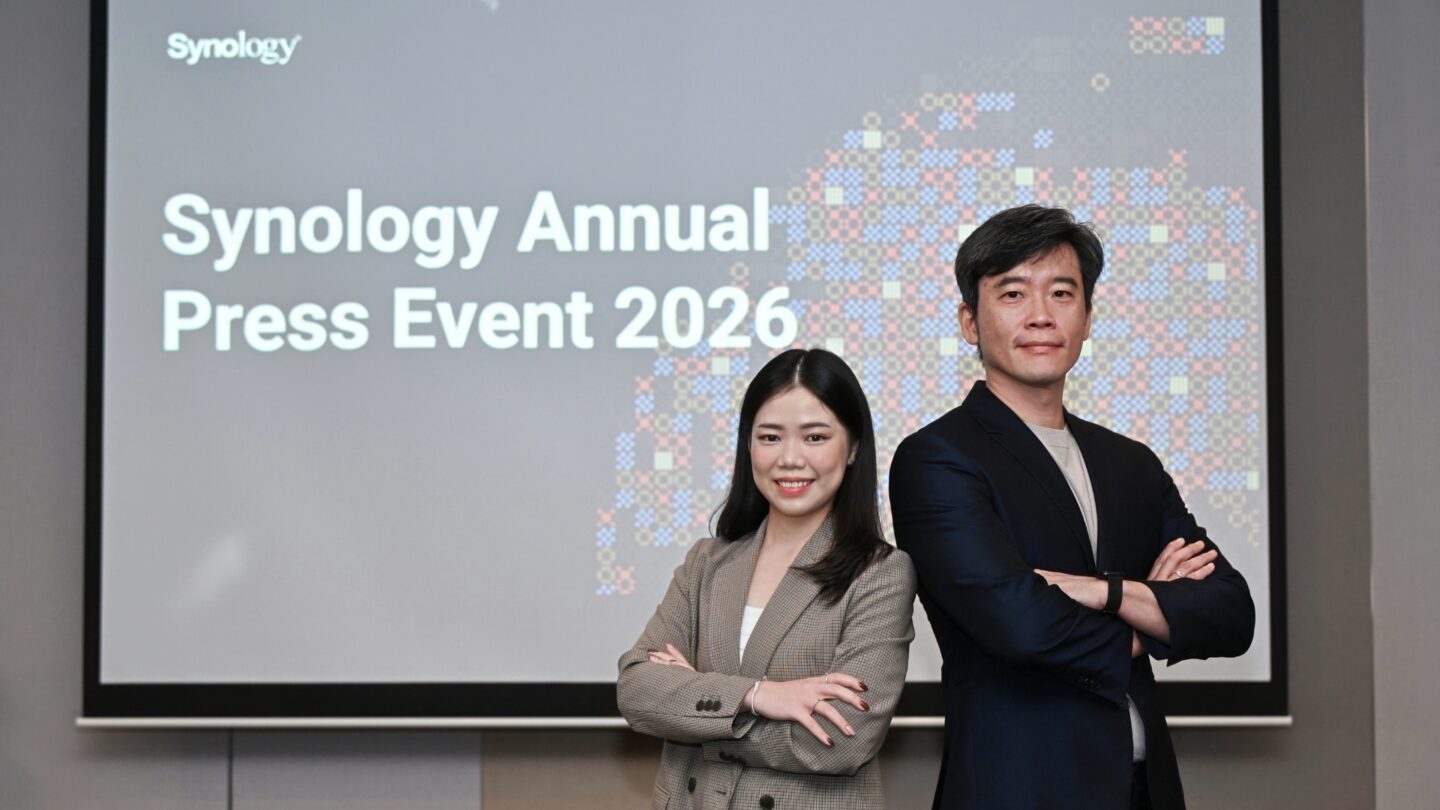
Presented at the Synology Annual Press Event 2026 in Singapore on 4 November, the findings arrived alongside updates across the company’s enterprise storage, data protection and AI productivity portfolios. Synology outlined how organisations can reinforce their data infrastructure, enhance recovery capabilities and retain control over sensitive information as AI adoption expands.
Data control shapes infrastructure investment decisions
The survey found that 58.7% of Singapore respondents prioritised hybrid or on-premises infrastructure, compared with 9.7% prioritising public cloud, a preference suggesting that businesses are placing considerable importance on controlling where their information is stored and processed. Managing information shared with external AI services presents another challenge, with nearly 30% of Singapore respondents reporting no visibility into how data submitted to third-party AI tools is handled.
4 in 10
businesses are fully confident they could produce a complete AI activity log
Resource: Synology, 2026 Southeast Asia Survey
Governance within organisations appears similarly strained. Separate findings presented by Synology showed that more than 60% of businesses do not actively enforce technical controls over employees’ AI use, while only four in ten expressed full confidence that they could produce a complete record of AI activity, indicating limitations in how organisations monitor the use of these tools.
Fragmented enterprise information presents a related obstacle. Synology distinguished between structured data, such as records stored in databases and business applications, and unstructured information, including documents, emails, conversations, images and recordings. When information is spread across separate systems, organisations can find it harder to connect relevant records and use them effectively in AI applications. Synology’s proposed approach involves bringing information together while allowing businesses to run AI workloads closer to where their data is stored. The company also identified data movement costs, sensitive information and regulatory restrictions as factors influencing infrastructure decisions, noting that keeping AI processing within an organisation’s own environment can provide greater control over the information used by these systems.
Cyber resilience remains a concern despite recovery confidence
Singapore businesses expressed varying levels of confidence in their ability to recover from cyberattacks. Although 76% of respondents were confident they could recover quickly from ransomware while keeping backup data protected, only 26.9% described themselves as very confident. Preparedness dropped further regarding newer threats, with another survey finding showing that just 11% of Singapore businesses considered themselves very prepared to defend against and recover from AI-driven cyber threats. In addition, nearly four in five businesses operate without a unified cybersecurity and data protection platform, suggesting that security and recovery responsibilities remain spread across different systems.
“As businesses expand their data infrastructure, they also need confidence that essential services can recover when disruption occurs,” said Emily Oh, Singapore Country Manager of Synology. Synology’s ActiveProtect appliances address this by combining dedicated backup infrastructure with centralised management, protection against unauthorised changes and automated isolation capabilities, features designed to preserve recovery copies when production systems are compromised. The platform includes write-once, read-many (WORM) technology, which prevents protected backup data from being deleted during a specified retention period, while its offline backup capabilities can automatically disconnect network access or shut down power after backup tasks are completed, reducing the time that backup systems remain exposed.
ActiveProtect Manager 2.0 expands protection to additional enterprise platforms, including Nutanix AHV and Proxmox VE, allowing organisations operating different virtualisation environments to manage more of their backup requirements through one platform. Synology is also adding to its ActiveProtect Series with the DP5200, a compact 1U backup appliance designed to protect different workloads without recurring subscription fees. In addition, the company has outlined AI- and machine-learning-powered anomaly detection and flexible cloud deployment as part of its approach to strengthening data protection across enterprise environments.
Storage updates address performance and capacity requirements
Leading the vendor’s 2026 enterprise storage portfolio is the PAS7700, its first NVMe SSD storage solution designed for mission-critical workloads. Built around an end-to-end NVMe architecture, the system uses an active-active design that supports automatic failover across storage, networking and controllers to minimise downtime when infrastructure components experience problems. Updated FS and RS series systems were also introduced for all-flash and general-purpose enterprise storage, with Synology’s performance comparisons showing the FS6420 delivering 41% higher read input/output operations per second (IOPS) and 22% higher write IOPS than the preceding FS6400. In addition, Synology outlined new high-performance storage with GPU-powered data intelligence among its enterprise storage updates.
Storage efficiency represents another focus of the company’s DSM 7.4 developments. Through Synology Tiering, infrequently accessed information is automatically moved to lower-performance storage, allowing faster storage resources to remain available for frequently accessed data and demanding workloads. Data reduction features also use deduplication, compression or both to reduce the space needed to store information, though Synology stated that these capabilities are available exclusively with its purpose-built HDDs and SSDs, making drive compatibility a consideration for businesses evaluating the technology. Beyond on-premises hardware, Synology presented C2 OneStorage, a unified cloud storage offering designed to support cloud backups, object storage, additional surveillance footage and workflows involving multiple sites.
AI productivity and surveillance extend the software portfolio
Synology is expanding the use of AI across workplace productivity and physical security, with an emphasis on keeping organisational information under business control. Addressing operational demands, its presentation cited a survey finding that 72% of employees spend significant time on manual document-related work, ranging from two to ten hours. The on-premises Synology Office Suite provides an environment for collaboration, supported by AI tools that can revise documents, generate presentation slides and identify spreadsheet formulas through natural-language requests. Real-time translation and transcription capabilities were also presented, alongside Synology ChatPlus and Meet for team messaging and online meetings.
Without AI, Manual Work Still Takes
Too Much Time
Resource: Synology, 2026 Southeast Asia Survey
In physical security, the DVA7400 surveillance appliance, launched in 2026, applies AI to video detection and investigation. Its capabilities include detecting people and vehicles, identifying intrusions, monitoring crowds, recognising faces and licence plates, and searching recorded footage. Additional functions include automatic tracking and people and vehicle counting, capabilities designed to help security teams locate relevant incidents more efficiently without manually reviewing lengthy recordings. Alongside the hardware, Synology presented Surveillance365, a cloud-native video surveillance service for managing surveillance operations.
Looking ahead, Synology previewed upcoming scale-out storage and hybrid surveillance solutions. The planned developments are intended to support growing enterprise data requirements and provide more flexible deployment options across on-premises and cloud environments.