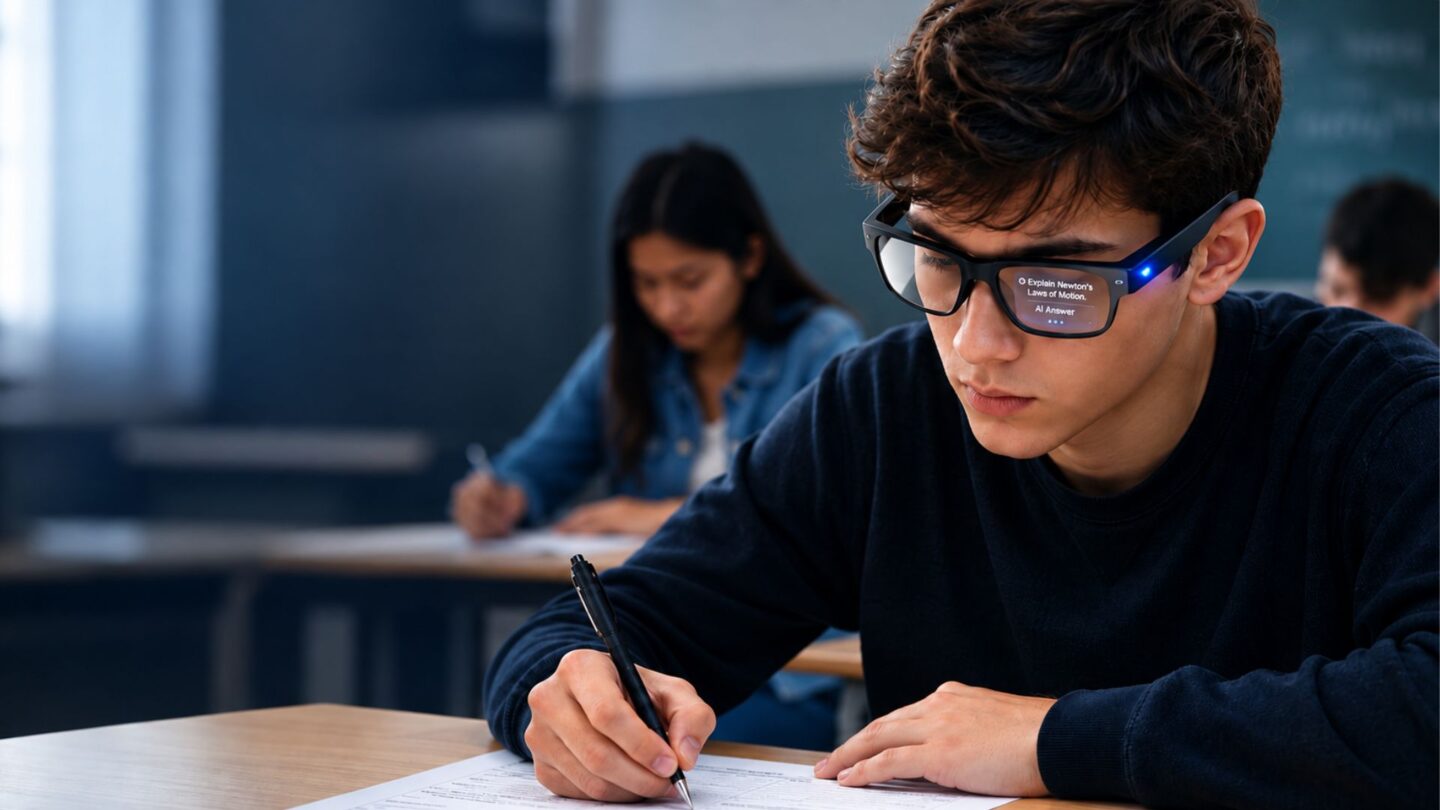
The rapid spread of generative artificial intelligence in education is pushing teachers and universities to rethink how they assess student work. Rather than relying on AI detection software to identify chatbot-written assignments, educators are increasingly designing coursework that requires students to show how they reached their conclusions.
The shift follows growing concerns about the reliability of AI detectors, as well as how quickly generative AI tools are becoming more capable. Earlier efforts focused heavily on identifying whether a chatbot had written a finished essay. Still, educators are increasingly questioning whether that approach addresses the more important issue: whether students are actually developing the skills they are expected to learn.
Educators move beyond AI detection
Rachael Zeleny, who leads the writing programme at the University of Baltimore, previously encouraged instructors to use Brisk, a tool that records how students work on documents in Google Docs. The system can show revisions, edits, pasted material and the amount of time spent working on an assignment.
While the approach provided teachers with more information about how an essay was produced, Zeleny recognised that monitoring students was not a long-term answer. “This is a Band-Aid, this isn’t a solution,” she told instructors last year, according to The Washington Post.
Her approach has since changed. Instead of asking students to submit only a finished essay, instructors are introducing checkpoints that reveal how the work develops. Students may be asked to provide handwritten outlines, recordings explaining their decisions, or transcripts showing how they interacted with an AI chatbot during an assignment.
Zeleny has also incorporated AI into some coursework rather than attempting to keep it completely outside the classroom. Using BoodleBox, she created AI characters that take opposing positions in simulated debates. In one exercise, students participate in a fictional school board discussion about banning books and must respond to AI-generated arguments.
The objective is not simply to establish whether a student used AI. Instead, the exercises are intended to show whether students can assess information, develop an argument and respond to challenges themselves. “In a lot of ways, we have made these assignments harder, but writing should have always had more detailed checkpoints along the way,” Zeleny said.
The focus shifts from cheating to learning
Other educators are taking a similar approach by creating assessments that are more difficult for an AI system to complete without the student understanding the underlying work. Andrew Zeiser, a supply chain management professor at John Carroll University, said the central concern has changed from detecting AI use to determining whether students are learning.
“The big worry now is not if they’re using AI. The big worry is if they’re still learning,” Zeiser said.
His students take part in a decision-making simulation called Supply Chain Wars, in which they make choices in a simulated business environment. They must then explain the reasoning behind those decisions. The method allows instructors to assess how students think, rather than simply judging the quality of a final written response.
The wider education sector is also experimenting with AI literacy and classroom policies. Some schools initially responded to generative AI by restricting access, while others are now teaching students how the technology works, including its limitations and tendency to produce inaccurate information. The Washington Post reported in August that a growing number of US schools were moving towards classroom experimentation and AI literacy rather than relying solely on bans.
The change comes as AI becomes increasingly common among both teachers and students. A September report from The Washington Post said around 60 per cent of teachers surveyed in a 2025 Walton Family Foundation and Gallup study reported using AI for tasks such as grading papers, preparing lessons and communicating with families. Nearly 70 per cent of teenagers surveyed by Common Sense Media said they were using AI, with schoolwork among the main uses.
Schools face a new challenge from AI agents
The debate is becoming more complicated as AI systems evolve beyond simple chatbots. Newer AI agents can interact with websites and software, allowing them to perform tasks rather than generate text.
Anna Mills, an English instructor at College of Marin in California, has warned that these systems could create a new problem for schools. According to The Washington Post, AI agents can potentially access online learning platforms and carry out tasks such as completing tests or coursework on behalf of students.
This development could make traditional AI detection even less useful. A system that completes an assessment directly through a student’s online account may leave teachers with little conventional text to analyse. At the same time, existing detection methods are already criticised for producing false accusations.
The problem is not limited to students attempting to bypass school rules. AI companies are also expanding their presence in education. OpenAI and Anthropic have offered free AI access to teachers and school districts, while Google has expanded access to its Gemini chatbot through Google Classroom for some pupils. These companies argue that AI can support education, while schools continue to decide how to use the technology responsibly.
At the same time, some education authorities continue to impose restrictions. New York City and the Los Angeles Unified School District recently introduced temporary restrictions on generative AI, highlighting the lack of a consistent approach across the education system.
For educators, the emerging strategy appears less focused on keeping AI completely out of classrooms and more focused on making students demonstrate genuine understanding. As generative AI becomes harder to police, teachers are increasingly redesigning assignments around discussion, reflection, working processes and decision-making.
The result could be a broader change in how schools define academic work. Instead of treating a polished final essay as the main evidence of learning, educators are beginning to place greater value on the steps that produced it — a shift that may become increasingly important as AI agents become capable of completing more school tasks themselves.