

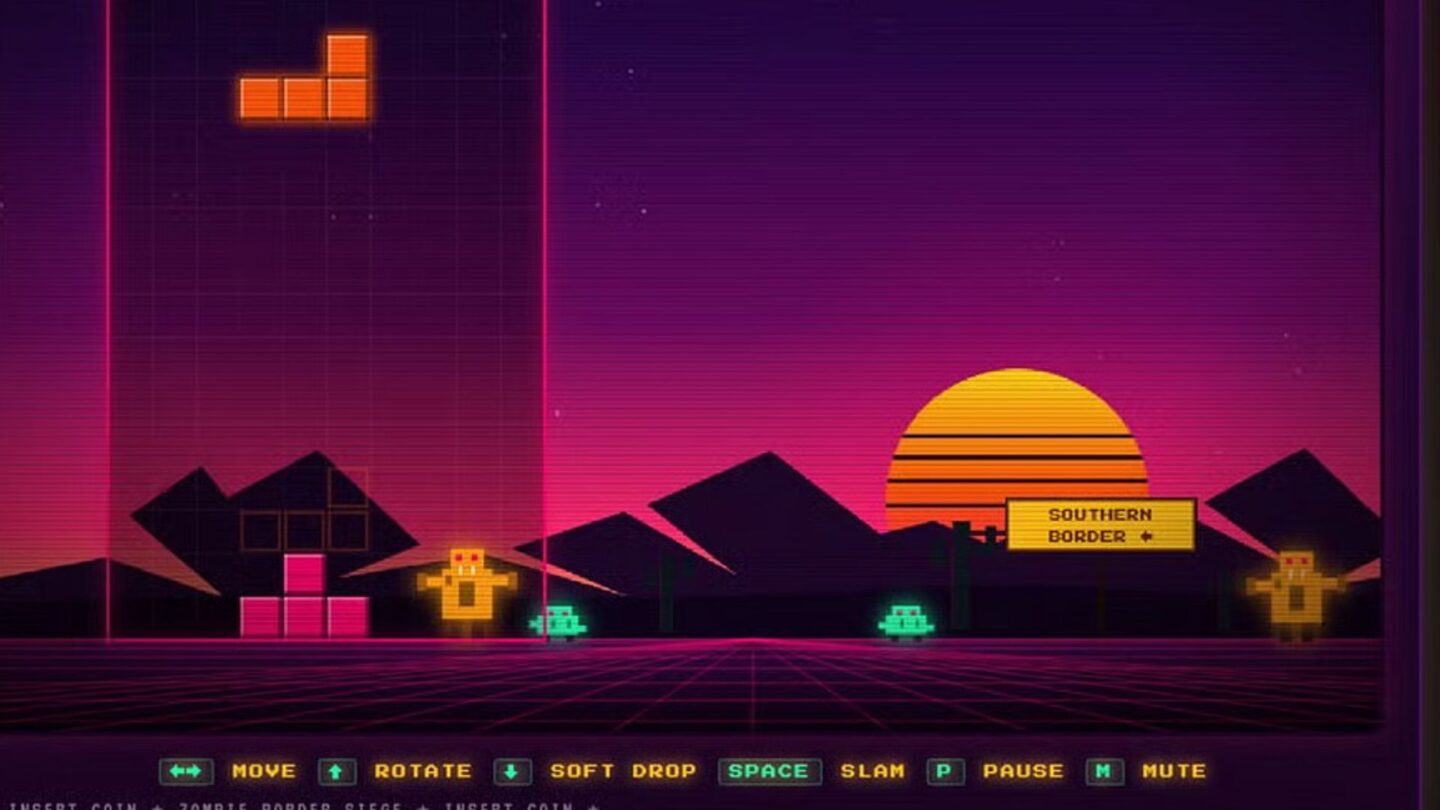
The White House has removed Build the Wall, a browser game that closely resembles Tetris while depicting the construction of a wall along the US-Mexico border, from its online arcade.
The game was among several policy-themed titles the White House launched on 3 September. The game was removed after The Tetris Company publicly distanced itself from the project and raised concerns about potential copyright infringement.
White House launches policy-themed games
The White House introduced Build the Wall as part of a collection of simple browser games. The titles appeared designed to attract online attention by turning political themes and government policies into short, casual games playable directly in a web browser.
The collection included several games that closely resembled existing and well-known titles. Flappy Bill appeared to draw heavily from Flappy Bird, while Rio Run was based on the familiar gameplay of Snake. Build the Wall similarly used the core mechanics and visual concept of Tetris, with players placing bricks to build a border wall.
The games quickly attracted attention online, although Build the Wall generated a particularly strong response because of its similarity to Tetris and the reaction from the company behind the original game. The Tetris Company subsequently made clear that it had not endorsed the project.
Removing Build the Wall leaves the White House arcade without one of its more recognisable policy-themed games. The development also highlights the legal and reputational issues that can arise when public institutions use familiar commercial game concepts for political messaging.
Tetris Company raises concerns
The Tetris Company responded publicly on 4 September through posts on Instagram and X. The company said it disagreed with what it described as divisive rhetoric associated with Build the Wall and emphasised its broader view of games as a way to bring people together.
P.S. The Tetris Company was not involved in the creation of ‘Build the Wall’.
— Tetris (@Tetris_Official) September 4, 2026
P.P.S. We take copyright infringement very seriously. pic.twitter.com/Fu02khRpT3
The company said it believes in “the power of connection and bringing people together.” It also warned that it “takes copyright infringement very seriously”, signalling concerns over the game’s deliberate similarities to Tetris.
The comments came as the game was attracting wider public attention, putting additional focus on the relationship between Build the Wall and the established Tetris brand. Although the company did not immediately announce legal proceedings, its public response made clear that it was examining the situation.
In a further comment to Engadget, The Tetris Company stopped short of confirming whether it would pursue legal action. Instead, it said it was “reviewing the matter” to determine what further response might be necessary.
The company did not publicly confirm what action, if any, it ultimately took regarding the game. However, Build the Wall’s subsequent disappearance from the White House arcade has fuelled speculation that public criticism contributed to its removal.
Game disappears amid wider questions over copies
The White House has not publicly linked Build the Wall’s removal to any detailed explanation, leaving the exact reason unclear. The timing, however, places the decision shortly after The Tetris Company’s public criticism and comments about possible copyright concerns.
The situation illustrates the difficulties of creating unofficial versions of established games, particularly when recognisable mechanics, presentation, or branding are closely associated with existing intellectual property. Even where a game is presented as political commentary or satire, its creators can still face questions about copyright and the use of another company’s distinctive creative work.
Build the Wall was not the only White House game to borrow heavily from a familiar format. The presence of Flappy Bill and Rio Run suggested that the arcade was deliberately built around simple concepts that users would recognise immediately. That approach can make political games easier to understand and share, but it can also draw attention to the source material they are based on.
For the White House, the removal means one of the arcade’s more controversial additions is no longer available. The episode may also warn future projects that use familiar entertainment properties to communicate political messages. The response from The Tetris Company demonstrates how quickly questions over intellectual property can become a public issue when a recognisable game is recreated without the apparent involvement of its rights holder.
The White House has not indicated whether Build the Wall will return in a modified form or whether other arcade games could face similar scrutiny. For now, the game’s removal leaves the circumstances surrounding the decision unresolved.