



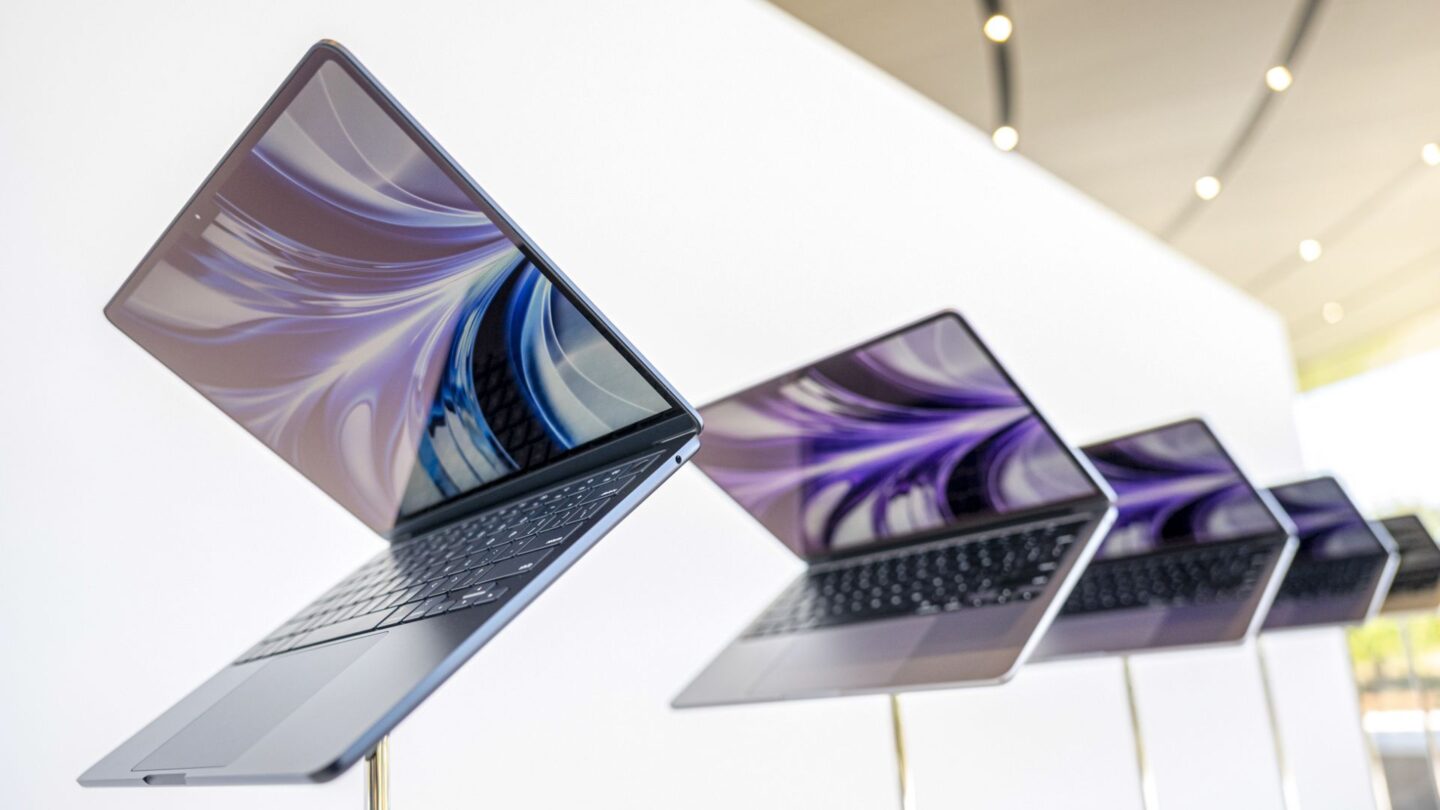
Apple could launch an updated MacBook Air in early 2027, bringing a new processor while retaining the current display technology. The reported release would follow the M5-powered MacBook Air’s arrival in March 2026, keeping the lightweight laptop on a relatively regular annual update cycle.
According to Bloomberg’s Mark Gurman, Apple is preparing to refresh the MacBook Air while planning more substantial changes for its higher-end MacBook Pro models. The Pro lineup is expected to get OLED displays and touch support, a significant shift from Apple’s traditional MacBook design. However, those features are not expected to reach the MacBook Air with its next update.
MacBook Air could receive another annual refresh
The current MacBook Air received its latest major specification update in March 2026, when Apple introduced the M5 chip across the range. The update improved the laptop’s internal hardware while maintaining the familiar design that has helped establish the Air as a popular option for users seeking a thin, lightweight computer for everyday tasks and professional work.
One notable change was storage. Apple doubled the entry-level storage to 512GB, giving users more room for applications, documents, photographs, and other files without requiring a higher-priced configuration. The updated laptop also added Wi-Fi 7 and Bluetooth 6 support through Apple’s N1 wireless chip.
Despite these improvements, the external design remained largely unchanged. The MacBook Air continued its slim, fanless design, allowing it to run quietly without the cooling fans found in many performance-focused laptops. Its Liquid Retina display and advertised battery life of up to 18 hours also remained key features.
An early 2027 release would put the next model about a year after the M5 version arrives. That timing would be consistent with a yearly product refresh, although Apple has not officially confirmed a launch date or announced specifications for the next MacBook Air.
The expected update also suggests that Apple may prioritise internal improvements over a major redesign. Rather than introducing new display technology or changing the laptop’s overall appearance, the company could focus on processor performance, energy efficiency, and maintaining the features that distinguish the Air from the more expensive MacBook Pro.
M6 chip could bring performance and efficiency improvements
The most significant expected change to the 2027 MacBook Air is the introduction of Apple’s M6 processor. The chip is reportedly part of Apple’s next-generation silicon, with a manufacturing process designed to improve performance while reducing power consumption.
The reported M6 specifications include a 12-core central processing unit (CPU) and a 12-core graphics processing unit (GPU). The CPU would handle general computing workloads, including applications, multitasking and background processes. At the same time, the GPU would support graphics-intensive activities such as video editing, image processing and selected creative applications.
The chip is also described as Apple’s first 2-nanometre processor. Moving to a more advanced manufacturing process can improve transistor density and power efficiency, although the actual benefits depend on the processor’s architecture and implementation.
For the MacBook Air, efficiency could be particularly important. The laptop’s fanless design limits its ability to dissipate heat compared with computers equipped with active cooling systems. Improvements in performance per watt could therefore help Apple deliver faster computing without significantly increasing heat output or compromising battery life.
A processor upgrade could also make the laptop better suited to demanding everyday workloads, including running multiple applications, editing media, and using increasingly sophisticated software tools. However, without official benchmarks or confirmed specifications, the scale of any performance improvement over the M5 model remains uncertain.
The reported chip plans also point towards a broader update across Apple’s computer range. The M6 is expected to feature in other products, potentially including an entry-level MacBook Pro and an updated 24-inch iMac. This approach would let Apple extend its next-generation silicon across several computers while maintaining different hardware configurations for different price categories.
Apple has not confirmed the MacBook Air’s final specifications, so treat the reported CPU and GPU configuration as an expectation rather than a guaranteed retail feature.
OLED display and touch support may remain exclusive to Pro models
While the MacBook Air could receive a processor upgrade in early 2027, the display is expected to remain one of the main differences between the Air and the higher-end MacBook Pro. According to the report, Apple is preparing a more substantial MacBook Pro update that could introduce OLED technology and touchscreen functionality.
OLED displays differ from the LCD-based technology used in current MacBook Air models because individual pixels produce their own light. This lets OLED screens display deeper blacks and stronger contrast, since pixels can be switched off completely when showing black. The technology can also provide more vivid colours and improved image quality, depending on the panel and its calibration.
Touch support would represent another significant change to the MacBook Pro experience. Apple has traditionally relied on a keyboard, trackpad, and external pointing devices for Mac computers, even as touchscreens have become common on smartphones, tablets, and some competing laptops. Introducing touch interaction could give users another way to navigate applications and work with on-screen content.
However, these reported features are not expected to arrive on the next MacBook Air. Keeping its current display technology would help Apple maintain a clearer distinction between its mainstream laptop and its professional models, especially if OLED panels and additional hardware features raise manufacturing costs.
The approach would also let the MacBook Air stay focused on portability, battery life, and value rather than adopting every feature introduced in the premium range. For users who primarily need a computer for office work, web browsing, studying and everyday creative tasks, a faster processor could prove more useful than a touchscreen or a more advanced display.
The next MacBook Air is therefore shaping up to be a relatively modest update rather than a complete redesign. An M6 processor could deliver meaningful gains in speed and efficiency, while the familiar form factor and non-OLED display would preserve the existing model’s strengths. Apple has yet to announce the device, its specifications, or its price, so more details are needed before the scale of the upgrade becomes clear.