

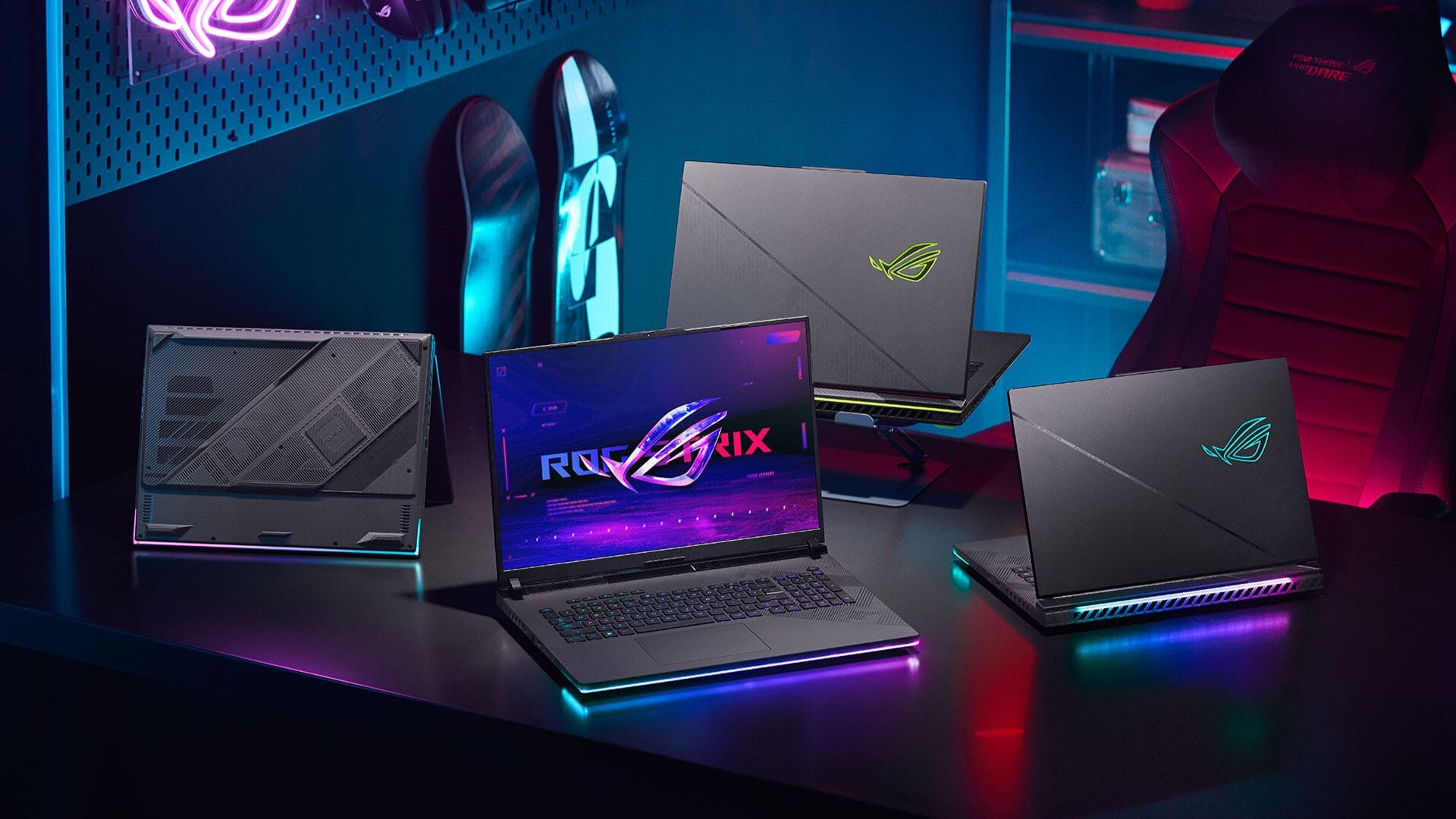
ASUS has unveiled an updated version of its ROG Strix gaming laptop range, introducing refreshed models of the Strix G16 and Strix G18 powered by Intel’s newest Core Ultra 9 290HX Plus processor. The announcement marks the company’s latest push to deliver higher performance for gamers and creative professionals seeking powerful portable machines.
The refreshed laptops are positioned as high-end devices capable of handling a wide range of demanding tasks, from competitive esports titles to graphically intensive AAA games and content creation workflows. ASUS said the new models are designed to offer improved speed, responsiveness, and overall efficiency compared with previous generations.
While the company has yet to disclose pricing or availability, the specifications indicate that the devices will sit at the premium end of the gaming laptop market. ASUS has focused on combining cutting-edge processing hardware with enhanced graphics capabilities and display technology to appeal to users who prioritise performance.
Focus on next-generation performance
At the centre of the new ROG Strix lineup is Intel’s Core Ultra 9 290HX Plus processor, which represents one of the most powerful laptop chips currently available. The processor is designed to handle heavy multitasking, modern gaming demands, and increasingly complex artificial intelligence workloads.
ASUS has paired this processor with up to an NVIDIA GeForce RTX 5080 laptop GPU, creating a configuration designed to deliver high frame rates and faster rendering performance. This combination is expected to support next-generation gaming experiences while also catering to creators working with video editing, 3D modelling, and other intensive applications.
The company said the hardware pairing allows the laptops to maintain consistent performance across a range of scenarios. By integrating advanced CPU and GPU components, ASUS aims to provide a future-ready platform that keeps pace with evolving software requirements and gaming standards.
Improvements in thermal design further support performance. The updated models feature a redesigned cooling system that includes a tri-fan setup and a vapour chamber. This approach is intended to manage heat more effectively and sustain performance levels during prolonged use, particularly under heavy workloads.
High-quality displays and visual experience
The refreshed Strix G16 and G18 models also introduce upgraded display features to enhance the visual experience. The larger Strix G18 comes equipped with an 18-inch MiniLED panel offering a 2.5K resolution and a 240Hz refresh rate, providing smooth motion and detailed visuals for gaming and media consumption.
Both laptops feature ASUS’ ROG Nebula display technology, designed to enhance brightness, contrast, and colour accuracy. The displays support a full DCI-P3 colour gamut, making them suitable not only for gaming but also for creative tasks that require precise colour representation.
The emphasis on display quality reflects the growing importance of visual performance in gaming laptops. High refresh rates and improved colour accuracy are increasingly seen as essential features, particularly for users who split their time between gaming and professional creative work.
ASUS has positioned these enhancements as part of a broader effort to deliver a more immersive experience. The combination of high-resolution panels, fast refresh rates, and advanced display technology is intended to provide smoother gameplay and more lifelike visuals across a variety of use cases.
Expanded memory, storage, and connectivity
In addition to processing and display upgrades, ASUS has expanded the memory and storage options available in the new ROG Strix models. The laptops can be configured with up to 64GB of DDR5 RAM and up to 2TB of solid-state storage, providing ample capacity for demanding applications and large files.
The company has also introduced a tool-less design to simplify memory upgrades, allowing users to access and modify components more easily. This feature is expected to appeal to gamers and enthusiasts who prefer to customise their systems over time.
Connectivity options remain comprehensive, with support for modern standards such as Thunderbolt 5, as well as a LAN port and HDMI. These features ensure compatibility with a wide range of peripherals and external displays, supporting both gaming setups and professional workflows.
Despite the detailed specifications, ASUS has not yet confirmed the official launch date or pricing for the refreshed lineup. However, given the high-end components and expanded capabilities, the new models are likely to command premium prices when they reach the market.