

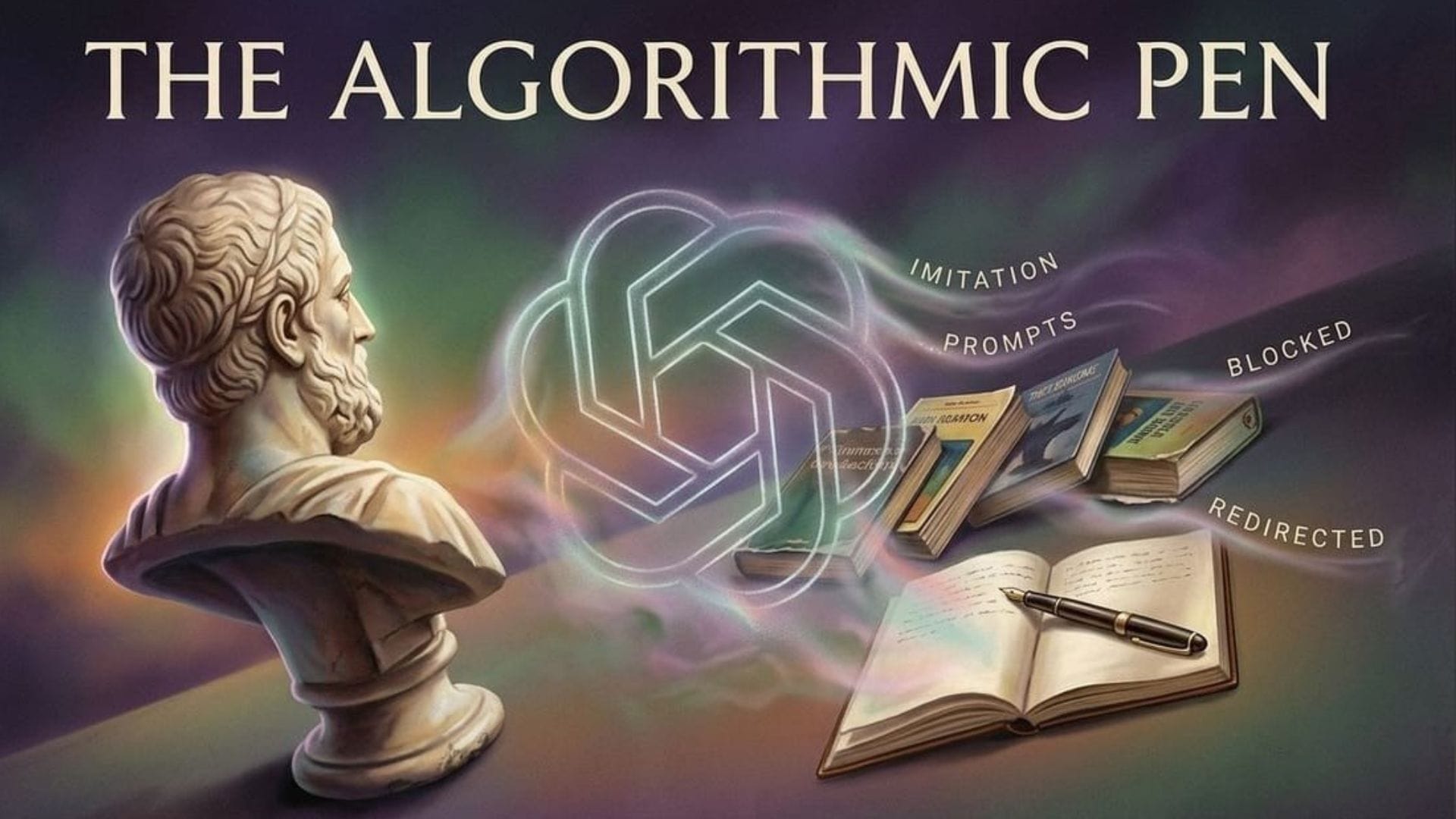
OpenAI’s ChatGPT has reportedly begun refusing requests to produce text that closely imitates the distinctive writing styles of well-known authors, according to a report by Ars Technica. The change appears to apply to both living and deceased writers, marking a shift in how the artificial intelligence chatbot responds to prompts seeking direct stylistic imitation.
The updated behaviour has drawn attention after users shared examples on social media showing the chatbot declining requests to write in the voice of famous novelists. The report suggests that OpenAI has adjusted its approach to reduce the risk of copyright disputes while still allowing users to create original work inspired by the broader qualities of an author’s writing.
ChatGPT changes its response to style imitation requests
Ars Technica tested ChatGPT with prompts asking it to reproduce the writing styles of several well-known authors. According to the publication, the chatbot consistently refused to generate text that closely matched the distinctive voice of either living or deceased writers.
The findings represent a noticeable change from earlier behaviour. A recent study by publication No Latency had previously found that ChatGPT generally accepted requests to imitate the styles of authors who had died. However, it handled living authors more cautiously. The new responses indicate that OpenAI has broadened its restrictions to cover a wider range of literary figures, regardless of whether they are still alive.
Independent testing produced similar results. When asked to write a mystery story in the style of Agatha Christie about a woman investigating the sudden disappearance of her husband, ChatGPT declined the request. Instead of generating a close imitation, the chatbot explained why it could not comply.
“Agatha Christie’s works are still under copyright, so I can’t provide text that closely imitates her distinctive style,” the chatbot responded.
Although the request was refused, ChatGPT did not reject the task entirely. Instead, it suggested an alternative approach that would capture the general characteristics associated with Christie’s storytelling while remaining original.
“I can certainly write something with those characteristics, while remaining original,” the chatbot added.
The response suggests that OpenAI is drawing a clearer distinction between copying an identifiable literary voice and creating original writing that reflects broader storytelling techniques, themes or structural elements.
Original writing remains available through alternative prompts
While ChatGPT now appears less willing to imitate recognised authors directly, it continues to offer users other ways to achieve similar creative goals. Rather than reproducing a specific author’s voice, the chatbot encourages prompts that describe broader literary qualities or narrative techniques.
For example, users can request stories featuring carefully built suspense, intricate mysteries, sharp dialogue or richly detailed settings without asking for an exact imitation of a particular writer. This approach allows the chatbot to produce original content while avoiding text that could be seen as closely resembling copyrighted creative expression.
The distinction is important because literary style is often closely associated with an author’s identity and body of work. By steering users towards broader descriptions rather than direct imitation, OpenAI appears to be encouraging creativity without replicating distinctive elements that could raise intellectual property concerns.
The chatbot’s responses also suggest that the restriction functions more as a safeguard than a complete refusal to help. Instead of ending the conversation, ChatGPT typically offers to generate fresh content inspired by the requested mood, pacing or genre. This allows users to continue with their projects while keeping the resulting work separate from the recognisable voice of any individual author.
For writers, students and content creators, the change may require slightly different prompt wording. Requests that focus on storytelling techniques or thematic qualities are more likely to receive a positive response than prompts asking for an exact recreation of a famous writer’s style.
Copyright concerns may be driving the policy shift
The apparent change comes as artificial intelligence companies continue to face growing legal scrutiny over the use of copyrighted material in training and generating AI content. Several technology firms, including OpenAI, have faced legal challenges related to copyright, with authors, publishers and media organisations questioning how creative works are used in AI systems.
Although OpenAI has not publicly announced a specific policy update regarding author-style prompts, the chatbot’s revised responses suggest a more cautious approach. By declining requests that seek close stylistic imitation while still offering original alternatives, the company may be attempting to reduce potential legal risks without significantly limiting the chatbot’s creative capabilities.
The approach also reflects a broader debate within the AI industry about balancing innovation with respect for intellectual property rights. Developers are under increasing pressure to ensure that AI-generated content does not closely reproduce protected creative works or diminish the value of original authorship.
At the same time, users continue to expect AI tools to assist with creative writing, brainstorming and storytelling. OpenAI’s apparent compromise allows ChatGPT to support those activities while avoiding direct replication of distinctive literary voices. Whether this approach becomes a long-term standard across the industry remains to be seen, but it signals a growing emphasis on original content over direct stylistic imitation.