



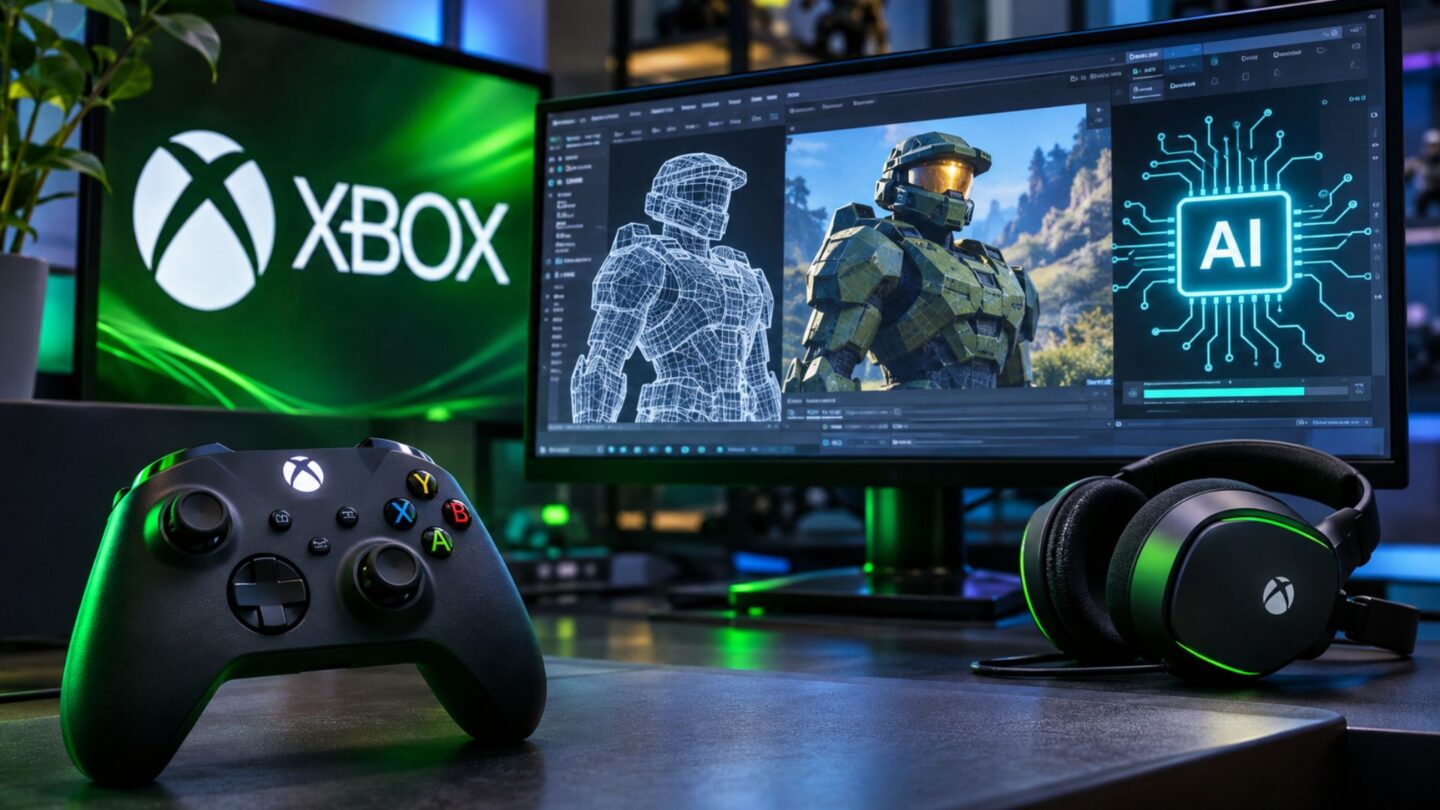
Generative artificial intelligence is becoming an increasingly divisive issue in the video game industry, with developers and players debating how far the technology should be used. The discussion has gained fresh attention after Brandon Stirrup, a strategy manager at Xbox, claimed that the company is already using AI to develop games and suggested that studios denying its use were simply “pretending”.
Stirrup made the comments in social media posts that quickly attracted attention. His remarks prompted questions about Microsoft’s approach to AI in game development and whether the technology is being used more widely across Xbox’s studios than the company has publicly acknowledged. His social media account was deactivated shortly afterwards, although copies of his statements have reportedly been preserved elsewhere.
The comments have added to an ongoing debate about the growing presence of generative AI in game production. While some companies view the technology as a way to reduce development time and costs, others remain concerned about its effects on creative work, employment and the quality of finished games.
Microsoft has not provided an official statement confirming the extent of AI use within Xbox game development. However, the company has already taken several steps that have raised questions about its position. Microsoft is a major investor and developer of AI technology. At the same time, Xbox recently announced the creation of Xbox Labs, a team established partly in response to the growing use of AI-assisted game ports.
Although the announcement did not explicitly confirm that the team would use generative AI, it suggested that artificial intelligence could play a role. This has led to further speculation about how the technology might influence Xbox’s development processes.
Game studios are increasingly adopting AI technology
Generative AI is becoming more common among major video game publishers and developers. Several well-known companies, including Capcom, Square Enix, Sega, Nexon and Activision, have either acknowledged using AI in their operations or expressed plans to introduce it into parts of their development processes.
Epic Games, the company behind Fortnite, has been particularly open about its support for artificial intelligence. Its chief executive, Tim Sweeney, has repeatedly promoted the technology through social media, arguing for its potential role in the future of game development.
Industry research has also suggested that AI adoption among game developers is already widespread. Some studies report adoption rates of about 90%. However, these figures require careful interpretation because the surveys often involve limited groups of participants and may use broad definitions of artificial intelligence.
For example, some developers may consider basic AI-assisted tools, automated testing systems and procedural generation as part of their AI adoption. Others may use the term specifically to describe generative AI systems capable of producing images, audio, dialogue or computer code. These differences make it difficult to establish how many studios are actively using generative AI to create content for commercial games.
Despite the growing interest from major publishers, opposition remains strong across the industry. Several independent developers and smaller studios have publicly expressed concerns about introducing generative AI into their creative processes.
Among them are Finji, the publisher behind Tunic; ConcernedApe, the developer of Stardew Valley; and Strange Scaffold, the studio behind Clickolding. These companies represent part of a wider group of developers who prefer traditional creative methods and have raised concerns about the implications of AI-generated content.
The divide is not limited to developers. Players also have different opinions about whether AI should become standard in video game production. Some accept it as another development tool, while others actively avoid games that use generative AI.
Concerns include the environmental impact of running large AI systems, the potential displacement of artists and other creative professionals, and questions about the originality of machine-generated content. Some players also prefer games made entirely through traditional creative processes.
This growing demand for transparency has encouraged community-led initiatives. Tools such as browser extensions that make Steam’s AI disclosures easier to identify have become more relevant to players who want to make informed purchasing decisions. Some developers have also supported efforts to introduce labels that identify games created without generative AI.
The debate over AI-generated content in video games
One of the most controversial aspects of generative AI in game development involves creating assets that appear in the finished product. These can include character artwork, environmental textures, dialogue, voice recordings and other creative elements.
Some developers deliberately incorporate AI-generated material into their games. The Finals, for example, has attracted attention for its use of AI-generated voices. The decision raised questions about the role of human voice actors and whether synthetic performances should replace traditional recording sessions.
In other cases, AI-generated assets have appeared in finished games, even when developers claim they were only intended as temporary placeholders. Crimson Desert recently faced scrutiny after AI-generated artwork was identified in its content. Such incidents have highlighted the difficulty of distinguishing between experimental development materials and assets that ultimately reach players.
However, not all developers view every application of AI in the same way. Some who oppose AI-generated artwork and voices are more comfortable with using AI-assisted programming tools. These systems can help developers write, check or improve sections of code without necessarily replacing the creative work involved in designing a game’s characters, environments or story.
The broader impact of artificial intelligence on the industry remains uncertain. Although generative AI can assist with individual development tasks, it cannot independently produce a polished, engaging video game without substantial direction, technical knowledge, and creative input from experienced developers.
There are also concerns about how companies might use the technology to justify reducing their workforces. As publishers face rising production costs, some industry observers fear executives could view AI as an opportunity to reduce staffing requirements, particularly in areas involving art production, writing, and programming.
Whether AI will genuinely make large-scale game development faster and more affordable also remains an open question. Integrating generated material into a commercial release still requires human oversight, editing, testing and quality control. Poorly generated assets can create additional work rather than reduce it.
Another visible concern is the growing number of low-quality games that rely heavily on generated content. Steam Next Fest has drawn attention to this, with a noticeable increase in AI-related game demos raising questions about the volume of projects being produced with automated tools.
Some of these releases have been criticised for copying existing concepts and relying on repetitive or poorly developed content. This has fuelled concerns that the growing accessibility of AI tools could lead to more games that prioritise quantity over originality.
Stirrup’s comments have therefore arrived at a time when the industry is still deciding how artificial intelligence should fit into game development. While major publishers continue exploring its potential, independent studios and players are demanding greater transparency about its use. AI is already influencing parts of the industry, but its long-term impact on creative jobs, production standards and the quality of video games remains uncertain.