


Most modern fitness smartwatches try to do everything at once, packing third-party apps, constant alerts, and dense menus into screens that feel increasingly like wrist-worn phones. For people who simply want to track regular workouts and daily habits, that extra capability often adds physical bulk and visual clutter without making routine activity or wellness monitoring easier to read. At the opposite extreme, screenless bands remove on-wrist feedback altogether, forcing users to reach for their phones for even basic information. Choosing a wearable that stays out of the way throughout the day while remaining useful at a glance has become harder than it should be.
The Google Fitbit Edge is a lightweight, comfortable fitness tracker with a clear AMOLED display, improved GPS accuracy and useful health and sleep monitoring. It handles everyday activity tracking well, although heart-rate readings can be inconsistent during demanding workouts. Battery life also drops considerably with the always-on display enabled.
Pros
- Lightweight and comfortable design
- Clear AMOLED display
- Improved built-in GPS tracking
- Extensive health and sleep monitoring
Cons
- Heart-rate inconsistencies during demanding workouts
- Shorter battery life with always-on display
- No NFC payments
Table of contents
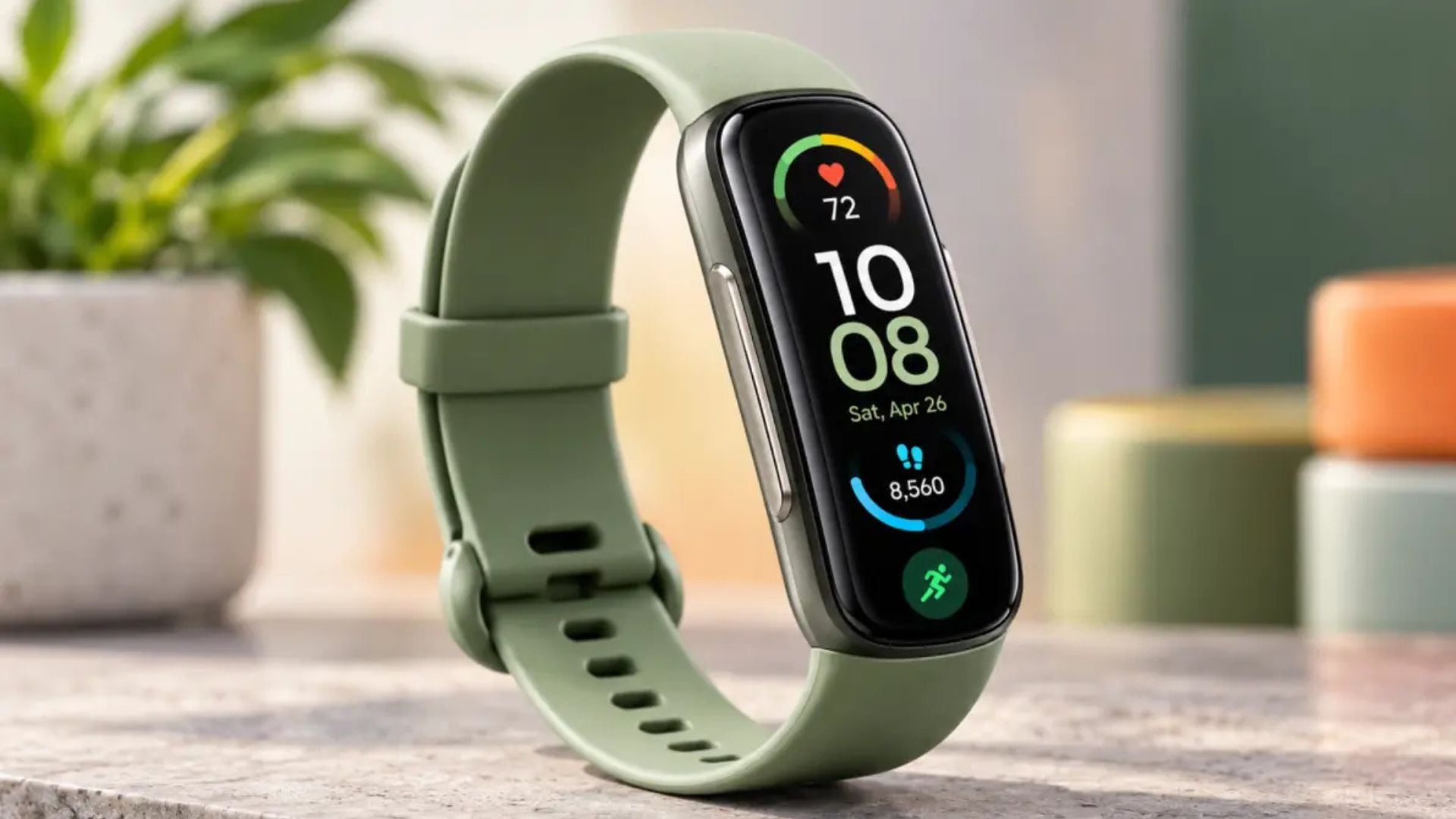
Positioned between a screenless fitness band and a full smartwatch, the Google Fitbit Edge focuses on everyday fitness and health tracking. Rather than matching the size or extensive app selection of a Pixel Watch, it keeps daily activity and health metrics within easy reach on the wrist and leaves longer-term trend analysis to the Google Health app.
A larger display makes daily tracking easier
The Fitbit Edge succeeds the Fitbit Charge 6, introducing a larger 1.3-inch AMOLED display and a physical side button in place of its predecessor’s touch-sensitive control. Housed in a recycled aluminium case weighing 17.7g without the band, its slim profile allows greater freedom of wrist movement during exercise than larger smartwatches. Adjustable brightness and an always-on option support quick checks in different lighting conditions, while a mechanical side button provides a more reliable way to access menus.
Heart rate, step counts, sleep summaries and weather forecasts are accessible with a few swipes. These tiles provide an overview of daily progress without reaching for a phone, though more detailed information is available through Google Health. For example, on the tracker itself, Readiness and sleep tiles cannot be expanded to show how their scores are calculated. The Edge also shows Google Maps directions started on a paired phone and supports notification replies when connected to compatible Android devices, but not iPhones. Beyond that, the lack of NFC payments is another drawback for users who have used their smartwatches for payments.
That reliance on a companion app invites a direct comparison with the screenless Fitbit Air. Both devices support Google Health and automatic activity tracking, but the Air relies almost entirely on a phone for interaction. The Edge’s display lets users check progress and start workouts directly from the wrist, and it includes built-in GPS, an altimeter for elevation tracking, and ECG functionality. The Air is better suited to users who prefer quiet, background health tracking without another screen to manage, whereas the Edge suits people who want to check metrics at a glance and control workouts directly from the wrist.
Built-in GPS improves outdoor workout tracking
The Edge supports more than 50 exercise modes and automatically detects activities such as walking, cycling and gym workouts. This reduces the need to start each workout manually, though automatically recorded outdoor workouts may not include GPS route data. Starting a workout directly on the band remains preferable when recording distance, pace and route information. Because Google Health can default to the GPS of a connected phone, users need to select built-in GPS in the Google Health app for standalone route recording.
GPS comparisons with Garmin, COROS and Suunto devices suggest substantially better GPS accuracy than the Charge 6. During runs and rides, the Edge generally followed routes closely, including routes through wooded areas. The recorded routes showed some deviations at lower speeds and on difficult terrain, but the recorded paths indicate that its GPS handles recreational runs and rides reliably. Accuracy still varies with terrain and conditions.
Heart-rate readings were less consistent during some workouts. During running and high-intensity workouts, readings sometimes took several minutes to match those of reference watches. Readings also varied during cycling, but were generally closer to reference devices during runs. Overall heart-rate trends remain useful for general tracking, though people training to specific heart-rate zones will notice those discrepancies.
Cardio Load, Readiness, and Active Zone Minutes help users understand their training effort and recovery. The Edge also supports structured workouts, but some workout instructions are displayed only on the phone. This is manageable for indoor workouts but less practical for outdoor interval training, when users need to check instructions without reaching for their phone.
Google Health connects health and sleep tracking with personalised guidance
The Edge monitors resting heart rate, heart-rate variability, breathing rate, blood oxygen levels and skin temperature changes, with ECG readings and irregular-rhythm notifications available where supported. Google Health presents these measurements as trends, helping users identify changes over time rather than draw conclusions from individual readings. These indicators can support health awareness but should not be treated as diagnostic results.
For sleep, the tracker estimates duration, stages and interruptions before calculating a Sleep Score. Published comparisons found sleep and wake times generally close to recorded routines, although comparisons with other consumer wearables cannot establish the accuracy of individual sleep stages. Its compact design makes overnight wear comfortable, but the display requires manual sleep-mode control. Without it, movement or contact with bedding may accidentally activate the screen, and the setting must be switched off again in the morning.
The free Google Health app brings these measurements together with activity history, while Google Health Premium adds a Gemini-powered coach that answers questions, suggests workouts and adapts plans to personal goals and schedules. It can consider several metrics when explaining changes, such as whether disrupted sleep or illness might contribute to an elevated resting heart rate. The coach can also adjust exercise recommendations when routines change, although responses are not always consistent and sometimes overlook information already available in the app. Its guidance is better suited to everyday planning and motivation than medical advice.
Eligible purchases include a three-month Premium trial, after which continued coaching requires a subscription. Core tracking remains available without payment, allowing users to assess whether the personalised guidance justifies the additional cost. Those connecting nutrition logs or medical records should also review the app’s privacy settings before sharing sensitive information.
Battery life depends on display and GPS use
Google claims up to seven days of battery life, but enabling the always-on display reduces endurance considerably. Tests recorded battery life of approximately two to three days with the always-on display enabled, particularly with GPS tracking during workouts. Switching to raise-to-wake extends battery life, although longer outdoor workouts will still increase battery consumption. The seven-day estimate is therefore unlikely with the always-on display enabled.
Google rates a full charge at about 90 minutes, and claims that a five-minute top-up provides up to a day of typical use. The battery can also be replaced, potentially extending the Edge’s lifespan as battery capacity declines. Those features make charging manageable, especially for a device that is also worn overnight.
The verdict: Google Fitbit Edge
The Google Fitbit Edge brings together the essential features of a dedicated fitness tracker. It is small enough for continuous wear, keeps essential information accessible on the wrist and improves outdoor workout tracking compared with its predecessor. Google Health also organises activity and health data in a format that is easy to follow.
Its limitations are more apparent during demanding workouts and everyday smartwatch use. Heart-rate readings can take time to stabilise during demanding workouts, detailed health trends still require the Google Health app, and NFC payments are no longer supported. The always-on display also reduces battery life considerably, while personalised coaching brings an optional ongoing expense and inconsistent recommendations. None of these necessarily undermines the basic tracking experience, but they affect how far the Edge can replace a more capable watch.
At S$249 in Singapore, the Fitbit Edge is a reasonable choice for someone who wants a screen, built-in route recording and familiar health metrics without a full smartwatch. It makes less sense for serious training where precision and detailed on-device workout controls are priorities.