


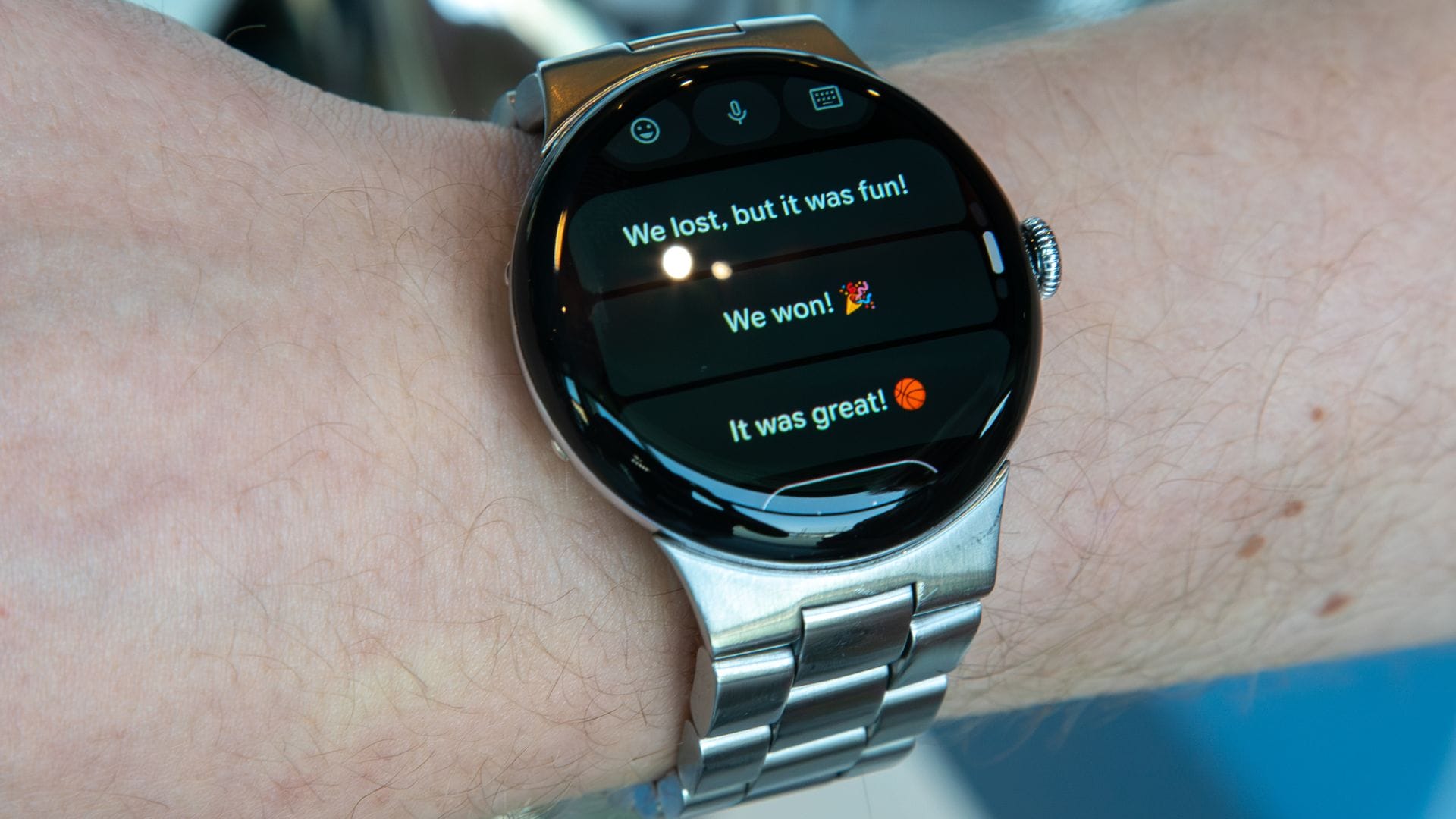
Google has unveiled the Pixel Watch 5, bringing a range of performance, health and artificial intelligence improvements to its latest smartwatch. Although the new model retains much of the design of the Pixel Watch 4, the company is positioning it as a more capable device for fitness tracking, everyday tasks and long-term health monitoring.
The Pixel Watch 5 starts at US$399.99, making it US$50 more expensive than its predecessor. Pre-orders are now available, with shipping scheduled to begin on 20 August. While the hardware changes are relatively limited, Google has added several software-driven features that could make the new watch more useful, particularly for people interested in fitness and health.
Faster performance and more useful AI features
The Pixel Watch 5 is powered by Qualcomm’s Snapdragon W5 Gen 2 Accelerated chip. Google says the new processor delivers a 12 per cent improvement in processing power. In comparison, a 50 per cent increase in RAM results in an overall performance improvement of about 20 per cent over the previous generation.
One of the most notable additions is Gemini running directly on the watch. The on-device assistant can handle tasks such as starting workouts and setting timers without relying on a phone or an internet connection. During a hands-on demonstration, Gemini responded slightly faster than Siri on an Apple Watch Series 11 when both watches were asked to start a timer.
Google has also introduced 11 new complication styles and a proactive intelligence system designed to surface useful information at the right time. The feature, previously known as “Magic Cue” on Pixel phones, can display details such as flight information, boarding passes and remaining bus stops. It can also provide shortcuts based on incoming messages, such as opening a calendar when someone suggests arranging a meeting.
The watch also supports generative watch faces. Users can describe the design they want, and Gemini can create several options for the watch’s home screen. Demonstrations included simple designs as well as more playful concepts, such as a face with cartoon cats forming the shapes of numbers.
GPS and health tracking receive major attention
Google is placing particular emphasis on GPS accuracy with the Pixel Watch 5. The watch retains the dual-band GPS hardware used by its predecessor. Still, the company says its improved route-tracking system delivers the “most accurate GPS route-tracking ever on a Pixel Watch” and offers “two times more accurate route mapping than previous generations in the toughest environments.”
The system combines GPS reference data with technology derived from Android location services. Google says it can use three-dimensional building models created from Maps data to account for interference between satellite signals and surrounding structures. The company also claims its internal July study found the Pixel Watch 5’s route tracking to be more accurate than that of the Apple Watch Ultra 3 and the Garmin Fenix 8 Pro. However, independent testing will be needed to assess those claims.
Health monitoring is also expanding. Google is adding blood pressure and insulin resistance trends to its Health Guardian system, which analyses health data over time and identifies patterns that could indicate potential risks. The Pixel Watch 5 is designed to provide monthly summaries, with data collection for the new features beginning in September and the first reports expected from October.
Google is also expanding its emergency health capabilities with breathing emergency detection. Building on the loss-of-pulse detection introduced two years ago, the feature can use the watch’s sensors to detect a persistent drop in oxygen saturation and contact emergency services if the wearer appears unresponsive. It is expected to launch initially in “many European countries”, with Google working towards making it available in additional markets.
New workout tools aim to make the watch a stronger fitness companion
The Pixel Watch 5 will gain a workout builder in the Google Health app starting in September. The feature provides a library of exercises that can be filtered by equipment, target muscle groups and complexity. Users can create their own routines or ask the Google Health Coach to generate a workout based on their goals, although the Coach requires a Premium subscription.
Workouts can be started from either a phone or the watch. Once a session begins, the watch displays upcoming exercises and can provide audio instructions and rest timers. Users can also record weights and repetitions, making the feature suitable for structured strength and circuit training.
During a hands-on workout, the Pixel Watch 5 guided a circuit that included deadball cleans and presses, battle rope waves, and kettlebell swings. The watch allowed the participant to enter weights and repetitions for each station and displayed a heart rate of around 150 beats per minute after completing multiple rounds. Workouts can also be configured around timed intervals, such as 45 seconds of activity followed by 25 seconds of rest.
The phone’s larger screen provides more detailed exercise guidance, including short looping videos demonstrating individual movements. This could make the Health app particularly useful for people unfamiliar with certain exercises, while the watch itself can concentrate on timing, tracking and prompts during a session.
Despite the expanded software features, the physical Pixel Watch 5 remains largely unchanged from the Pixel Watch 4. It retains the same display and general design, while maintaining repairability for components such as the battery and screen. Google has also continued to offer new colour options, including brighter pink and peach-toned bands.
The Pixel Watch 5 therefore represents more of an evolution than a redesign. Its faster processor, offline Gemini, upgraded GPS and broader health features give it a stronger focus on intelligent assistance and fitness. Still, questions remain around battery life, long-term performance and the accuracy of its new health trend analysis. More extensive testing will be needed to determine whether those additions are enough to justify the higher starting price.