Lenovo’s upcoming Googlebook 15 is shaping up to be a far more ambitious machine than the budget-focused Chromebooks that have traditionally occupied the market. A newly leaked specification sheet suggests the notebook will combine a high-resolution OLED display, Intel Core Ultra hardware, generous memory options and a broad selection of modern connectivity features.
The leak comes only days before Google is expected to showcase the new Googlebook platform at an event on 15 September. Earlier leaked renders had already provided a closer look at the notebook’s design, ports and software interface. At the same time, the latest information offers a much clearer picture of the hardware Lenovo could bring to market.
Premium hardware puts Googlebook above traditional Chromebooks
According to an official specification sheet obtained by Mac Observer, the Lenovo Googlebook 15, listed under model number GB 15IPH12, is expected to feature a 15.3-inch OLED display. The panel reportedly has a 120Hz refresh rate and a 2,880 x 1,800 resolution, along with a 16:10 aspect ratio and a peak brightness of 500 nits. It is also said to cover 100 per cent of the DCI-P3 colour gamut, making the screen suitable for users who value accurate, vibrant colour reproduction.
The display specifications place the Googlebook 15 well above the basic screens commonly associated with entry-level Chromebooks. The combination of OLED technology, a high refresh rate and wide colour coverage suggests Lenovo is targeting consumers who want a more premium visual experience for everyday work, entertainment and creative tasks.
The machine reportedly runs on Intel’s Core Ultra 5 325 processor with integrated graphics. Buyers could choose between 16GB and 32GB of LPDDR5x memory, while storage options are expected to include 256GB and 512GB. Those configurations would give the notebook considerably more headroom for multitasking than many lower-cost ChromeOS machines.
The hardware is also expected to include a 5-megapixel webcam supported by dual microphones and a physical privacy shutter. Four speakers with Dolby Atmos are reportedly built into the system, while a large 50mm by 95mm haptic touchpad should provide plenty of space for navigation and gestures. The backlit keyboard is said to include a dedicated G key positioned between the Fn and Alt keys.
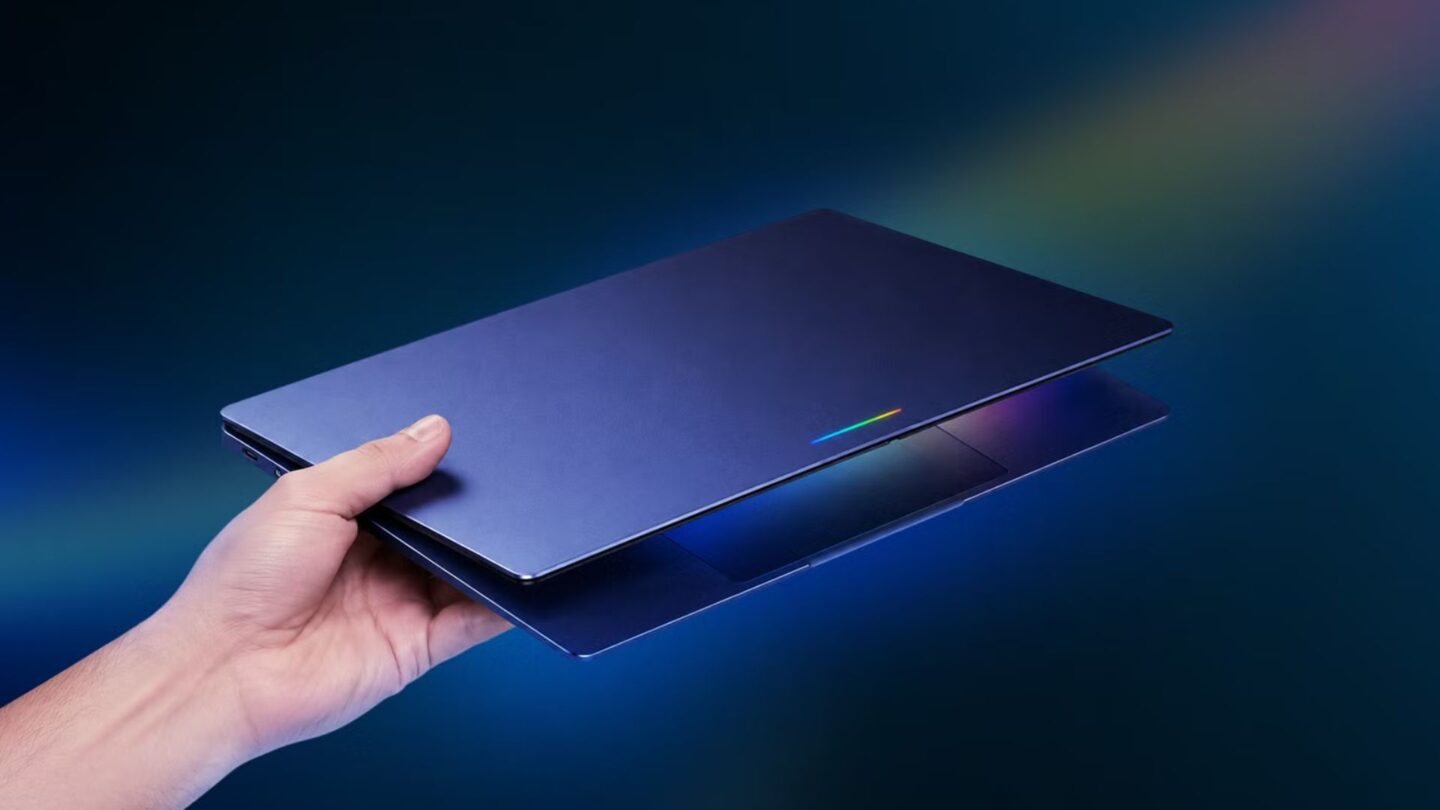
Another unusual design feature is an LED strip running along the upper edge of the display lid. Previous leaks showed the light, but the newly reported documentation reportedly gives it the name Glowbar. Its stated purpose is to display information about the laptop’s battery and charging status.
Gemini and Android integration are central to the experience
The Googlebook 15 is also expected to place artificial intelligence at the centre of its software experience. The leaked specifications reportedly list built-in Gemini Intelligence, suggesting that Google’s AI technology will form a significant part of the notebook’s functionality rather than simply being available through a web browser.
The laptop is also expected to offer deeper integration with Android smartphones. This could let users interact with mobile apps and access files from their phones directly on the laptop, creating a more connected experience for people who already use Android devices.
Biometric security reportedly includes both a fingerprint reader and Google facial authentication. Having multiple authentication options could make it easier for users to access the system while maintaining a level of security appropriate for a premium notebook.
Despite its relatively large display, the Googlebook 15 is reportedly designed to remain reasonably portable. The Cloud Gray metal chassis is said to weigh 2.84 pounds, or roughly 1.29kg, and measure just 0.63 inches in thickness. If those measurements are accurate, Lenovo could offer a relatively lightweight machine despite the 15.3-inch OLED panel.
Battery capacity is reportedly rated at 70W, with Lenovo claiming up to 11 hours of video playback. Actual battery life will likely depend on factors such as display brightness, applications, and wireless connectivity. Still, the claimed figure would align with the expectations of many mobile professionals.
Connectivity and accessories point to a broader laptop strategy
The Googlebook 15 also appears to avoid the limited port selection sometimes found on thin premium notebooks. The leaked specification sheet reportedly lists two Thunderbolt 4 ports alongside a USB-A connection, HDMI 2.0 and a 3.5mm headphone jack. Wireless connectivity is expected to include Wi-Fi 7 and Bluetooth 5.4.
That selection could make the notebook suitable for users who regularly connect external displays, storage devices, accessories or other peripherals. Adding both modern Thunderbolt connectivity and a traditional USB-A port could also reduce the need for adapters in everyday use.
Lenovo is reportedly preparing accessories for the Googlebook platform as well. One of the products mentioned in the leaks is an AI Mouse designed to complement the laptop, including matching multicolour accents. The accessory suggests that Lenovo could be building a wider hardware ecosystem around the Googlebook rather than treating the notebook as a standalone product.
The reported specifications nevertheless remain unconfirmed until Google and Lenovo officially announce the machine. Pricing and the final launch date have not yet been disclosed, so it remains unclear how the Googlebook 15 will compare with established premium Windows laptops and Apple’s MacBook range.
The specification leak does, however, point towards a significant change in positioning. Rather than competing primarily with inexpensive Chromebooks, the Googlebook 15 appears designed to attract buyers looking for premium hardware combined with Google’s software and AI ecosystem. With the 15 September preview event approaching, more details on pricing, availability, and the broader Googlebook strategy could emerge soon.