


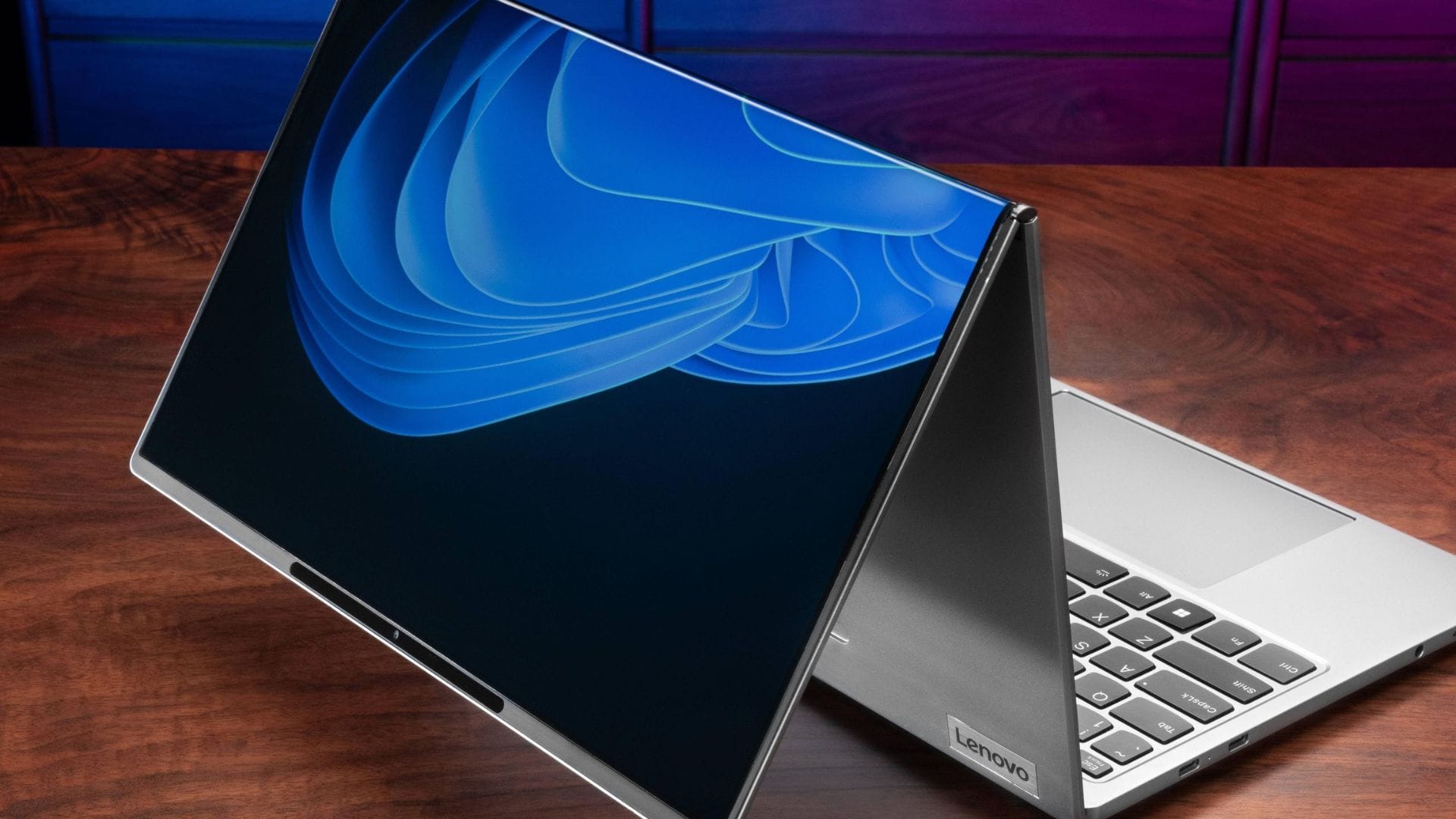
Lenovo appears to be preparing a new ThinkBook laptop with an unusually slim design, according to leaked marketing images. The unannounced machine is reportedly referred to internally as the Aeroblade, a name that suggests the company is placing a strong focus on reducing the laptop’s thickness.
Windows Latest obtained the images and shows a device carrying Lenovo’s ThinkBook branding. While Lenovo has not officially announced the laptop or confirmed the Aeroblade name, the leaked material provides an early look at a machine that could become one of the company’s thinnest ThinkBook models.
ThinkBook laptops are positioned below Lenovo’s premium ThinkPad range and are aimed largely at small and medium-sized businesses. They offer a more affordable alternative while retaining some of the professional styling associated with ThinkPad machines. A substantially thinner design could give the new model a different appeal in an increasingly competitive laptop market.
A noticeably slimmer ThinkBook design
The leaked images show a laptop that follows several familiar ThinkBook design elements. The display has relatively narrow bezels, while the webcam sits inside a raised section above the screen rather than using a notch cut into the display. The palm rest also carries the familiar ThinkBook branding.
However, the keyboard appears to have received more attention than usual. The keys look flatter than those found on many existing ThinkBook and ThinkPad models. That could result in a different typing experience, particularly for users accustomed to Lenovo’s traditionally deeper keyboards.
The most striking feature is the laptop’s side profile. The edge of the chassis appears extremely thin across much of its length, creating a blade-like appearance that may explain the leaked Aeroblade name. In some areas, the body looks so slim that it appears close in thickness to the USB-C ports fitted along the side.
There is also a slightly raised section that accommodates two ports and a microphone opening. The additional height may be necessary to provide enough internal space for components while maintaining the laptop’s overall slim profile. Around the rear, Lenovo appears to continue the design theme with a two-tone finish and a raised, pill-shaped camera housing.
Thin design could come with compromises
Creating an ultra-thin laptop presents several technical challenges. Reducing the chassis size can limit the space available for a large battery, cooling hardware, and other internal components. Previous generations of very thin laptops have sometimes had to make compromises in battery life, sustained performance, or thermal management.
Modern processors could make those compromises less severe. Qualcomm’s Snapdragon X2 family and Intel’s upcoming Panther Lake processors are designed with efficiency in mind, potentially allowing manufacturers to build thinner machines without sacrificing as much performance or battery life as they once had to.
However, the processor planned for the Aeroblade remains unknown. Lenovo has not confirmed the laptop’s specifications, meaning it is too early to determine whether the thin chassis will translate into meaningful advantages for battery life, portability or performance.
The cooling system will also be an important factor. A thinner body generally provides less room for fans, heat pipes and other thermal components. If Lenovo manages to maintain reasonable temperatures while delivering competitive performance, the Aeroblade could demonstrate how far modern laptop hardware has progressed.
Lenovo joins a renewed push towards thinner laptops
The apparent development of the Aeroblade comes as the wider laptop industry once again moves towards thinner and lighter designs. Improvements in processor efficiency have made it easier for manufacturers to reduce the physical size of laptops while maintaining useful performance levels.
Apple is also expected to introduce a new MacBook Ultra this year, with a strong emphasis reportedly being placed on its design and thinness. That suggests the push towards slimmer laptops may extend across both Windows and macOS devices as manufacturers look for ways to make premium computers more portable.
For Lenovo, a particularly thin ThinkBook could help the company distinguish its range from that of competing business laptops. The ThinkBook line already occupies a space between mainstream and premium business machines, and a dramatically slimmer chassis could provide another reason for buyers to consider it.
There is still no official launch date, pricing information or confirmed specifications for the ThinkBook Aeroblade. Until Lenovo provides more details, the leaked images remain the main indication of what the company may be planning. If the final product closely matches the design shown in the leak, it could be an interesting example of how modern processors are enabling manufacturers to revisit ultra-thin laptop designs without necessarily repeating the limitations of earlier models.