


OpenAI is preparing to expand beyond AI software and consumer hardware, with chief executive Sam Altman confirming it plans to build a humanoid robot. While the project remains in its early stages, the company appears to be focusing on the intelligence needed to make a physical machine useful rather than simply creating a human-like robot.
The development reflects a broader push to bring AI systems into the physical world, where machines must interact with objects, navigate unfamiliar environments and carry out practical tasks. Although humanoid robots could eventually assist with work in homes and businesses, making them reliable enough for everyday use remains a significant technical challenge.
OpenAI plans to build a humanoid robot
During an appearance on the Sources podcast, Altman explained why a human-like body makes sense for a robot intended to operate in environments designed for people. Everyday spaces contain doors, keyboards, tools, furniture and other objects built around human proportions and movements. A robot with a similar physical structure could therefore use existing infrastructure without requiring extensive changes to buildings or equipment.
Altman summarised the reasoning by saying that “the world is very much designed for people.” He added that “matching that form factor seems good.” When asked directly whether OpenAI would build a humanoid robot, he responded clearly: “We will.”
However, the company’s chief executive said the physical design isn’t the project’s main priority. Instead, he believes the machine’s intelligence will determine whether it can do useful work. Altman described questions about the robot’s appearance as “less important than really figuring out … the brain that makes the robot work.”
This approach highlights the difference between producing a machine with a human-like appearance and developing one that can reliably complete tasks. A robot might have two arms, two legs and a sophisticated collection of sensors. Still, those components offer limited practical value without software that can understand its surroundings and control its movements.
The project is not expected to result in an immediately available consumer product. In comments to Fortune, Altman said, “I think we’ll have a cool demo in 2027 … I don’t think there will be robots walking the streets for a few years longer.”
The statement suggests that OpenAI could demonstrate an early version of its technology in 2027, although the company has not disclosed what the demonstration will involve. Details about the robot’s appearance, capabilities, development schedule and potential availability to customers also remain undisclosed.
The intelligence behind the robot presents the biggest challenge
Developing the software that controls a humanoid robot involves several interconnected problems. The machine must interpret information from cameras and other sensors, understand spoken or written instructions, determine the appropriate actions and coordinate its movements. It must also respond to unexpected obstacles and correct mistakes as they happen.
Even apparently simple activities require considerable precision. Picking up a mug, for example, involves identifying the object, locating its handle, estimating its position, and calculating the force needed to lift it safely. A robot that applies too much pressure could break the mug, while an inadequate grip could cause it to fall.
These challenges become more complicated when a robot operates in an unpredictable environment. Objects may move, surfaces may be slippery, and obstacles may appear unexpectedly. Unlike a software application operating in a digital environment, a physical machine must contend with gravity, friction, mechanical limitations and the consequences of incorrect movements.
OpenAI’s recruitment activity indicates that the company is working on several aspects of this problem. Its robotics positions cover motion control, state estimation, actuator control, and whole-robot behaviour, along with the machine-learning infrastructure needed to train AI systems for physical tasks.
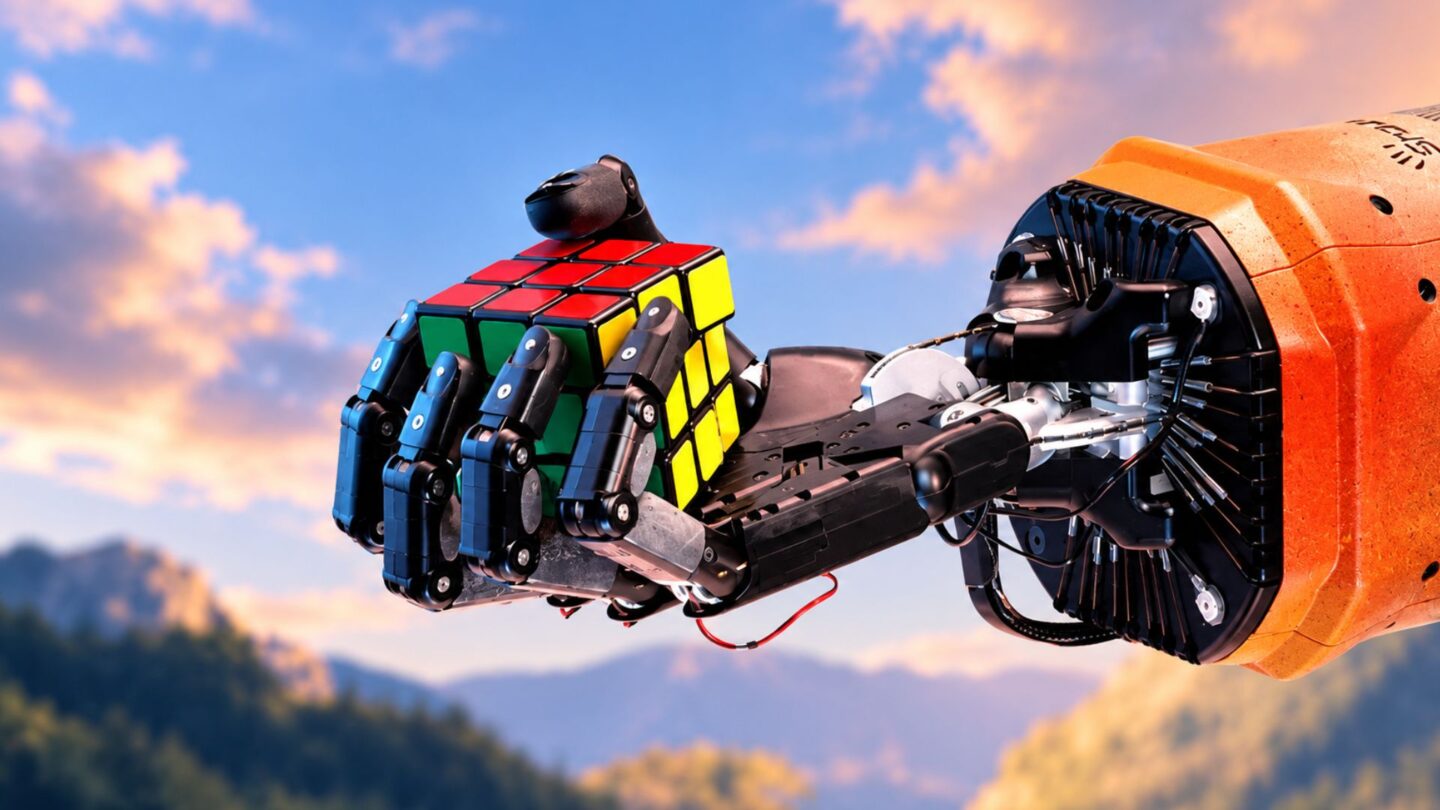
The company also has previous experience in robotic manipulation through its Dactyl research project. That work involved training a robotic hand to manipulate real-world objects using reinforcement learning, with training conducted entirely in simulation. OpenAI later demonstrated the technology by manipulating a Rubik’s Cube.
These projects illustrate a persistent difficulty in robotics development: behaviour that works in a simulated environment does not always translate perfectly to the physical world. Small differences in object positioning, friction, timing or sensor readings can affect the outcome. Robots therefore need systems that can adapt to changing conditions rather than follow predetermined movements.
For OpenAI, the challenge is to combine perception, reasoning, and physical control into a system that can perform a broad range of tasks consistently. Understanding an instruction is only one part of the process; the robot must also translate that understanding into movements that work in the real world.
Hardware development and competition remain important
Although Altman has emphasised the importance of the robot’s intelligence, OpenAI must also develop the physical components required to support it. The company’s robotics job listings point to work on custom electromechanical actuators incorporating motors, transmissions, sensing and thermal systems. Other positions address manufacturing and supply-chain requirements that could become increasingly important if the company eventually produces robots in significant numbers.
Building a humanoid robot involves more than assembling motors and joints. Each component must operate reliably alongside the others, while the overall system needs sufficient strength, balance, precision, and energy efficiency to do useful work. Mechanical failures, excessive heat and high manufacturing costs could all limit a robot’s practical value, even if its AI software performs well.
OpenAI is also entering a field in which several established technology companies are already developing their own machines. Tesla has been working on its Optimus humanoid robot, while Chinese electric-vehicle manufacturer XPENG has shown progress with its IRON humanoid. XPENG recently showed the robot walking autonomously off a production line after assembly, highlighting the engineering required to turn a designed machine into a functioning physical system.
These efforts demonstrate that robotics companies must solve hardware and software problems together. Advanced AI cannot compensate for unreliable actuators, poor balance or inadequate sensing. Similarly, well-engineered hardware will remain limited if the robot cannot understand instructions and adapt its actions to unfamiliar situations.
OpenAI’s stated ambitions also suggest that its initial applications may focus on practical work rather than immediate use in ordinary households. One of the company’s robotics job advertisements identifies a short-term objective of developing general-purpose robots that can help skilled workers build infrastructure. Its longer-term ambition is to create a personal robot that can assist with a much wider range of tasks.
A robot that can support infrastructure projects could help with physically demanding or repetitive activities, although its usefulness would depend on reliability, safety and operating costs. A personal robot would face additional challenges because it would need to operate around people, recognise household objects and respond appropriately to different instructions.
Privacy would also become an important consideration if future robots used cameras and microphones inside people’s homes. OpenAI has not announced a consumer price, subscription model, release date or robot-specific privacy framework. Until the company provides further details, the commercial plans and practical capabilities of its proposed humanoid remain uncertain.
Nevertheless, OpenAI’s careers page lists 27 robotics openings, indicating that the company is actively recruiting for the project. Its next major milestone could be the demonstration Altman expects in 2027, which may offer a clearer picture of how the company’s AI technology could translate into physical tasks.
For now, OpenAI’s humanoid robot remains a work in progress. Its success will depend not simply on creating a human-shaped machine, but on developing the intelligence, mechanical systems, and safety measures needed to make it useful in the real world.