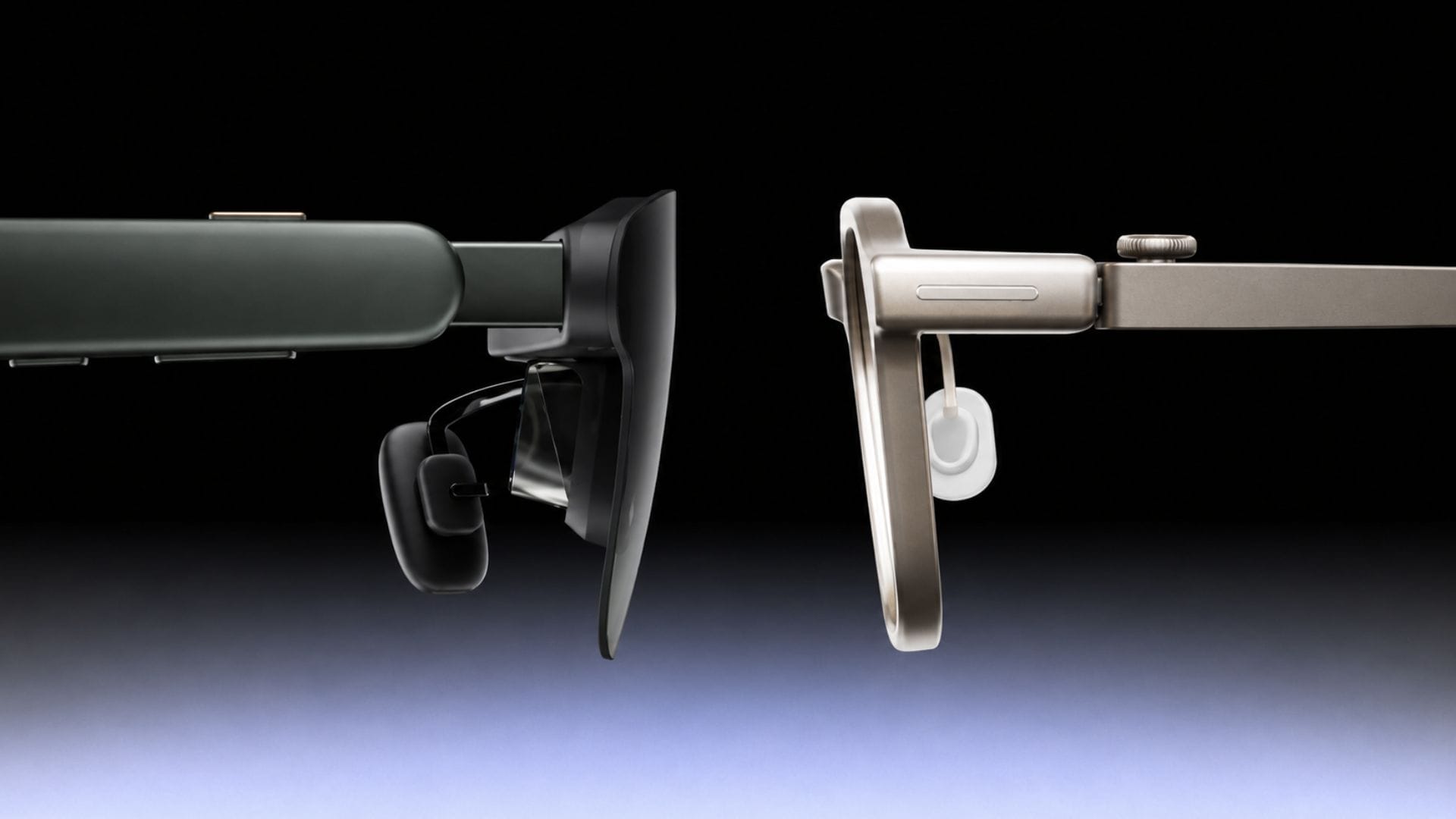
RayNeo is expanding its augmented reality glasses range with two distinct product families aimed at very different uses. The RayNeo iO Smart Glasses are designed to look and feel like conventional eyewear while adding a small display, voice-based features and artificial intelligence tools. Meanwhile, the new GT and GT Max models take a larger approach, offering wide virtual screens designed for entertainment, gaming and productivity.
The iO Smart Glasses are positioned as an everyday wearable, weighing 33 grams and featuring a small monochrome green display with a 23.5-degree field of view. The display is intended to provide limited information without overwhelming the wearer, including real-time translations, text prompts and teleprompter-style content.
The GT range is considerably larger and heavier, reflecting its focus on immersive viewing. The GT weighs 68 grams, while the GT Max weighs 78 grams. Both models are designed to create large virtual screens for watching films, playing games, or working with digital content.
RayNeo iO focuses on discreet everyday features
The iO Smart Glasses are designed to blend into everyday life rather than resemble traditional AR hardware. Their relatively conventional appearance could appeal to people who want smart features without wearing visibly bulky technology. However, that understated design comes with some limitations.
The glasses use a monochrome display rather than a full-colour screen and lack built-in speakers. This means users will not get the same type of audio experience found on many other smart glasses. Instead, RayNeo has focused on voice capture, equipping the iO with a four-microphone array and a bone conduction sensor.
According to RayNeo, the bone conduction system “isolates vocal vibrations for flawless transcription in noisy environments”. The technology is intended to improve voice recognition in challenging surroundings and support functions such as voice commands and live translation.
The glasses also form part of RayNeo’s Ambient AI Productivity Suite. The company says the system can listen to conversations, “extract action items” and suggest calendar updates. These functions could make the glasses useful as a productivity tool, although the idea of wearable technology continuously listening to its surroundings raises privacy concerns.
RayNeo says the iO can translate 55 languages and 109 accents in real time, with approximately one second of latency. Timekettle’s BabelOS 3.0 AI translation software powers the translation features. The company claims the battery can provide up to two days of use, with approximately 18 hours of continuous recording or 6.2 hours of translation.
The glasses do not have cameras, which removes one of the major privacy concerns associated with some competing smart glasses. However, RayNeo says an indicator light switches on when recording or translation is active. The effectiveness of such visual indicators in informing people nearby will remain an important consideration as AI-enabled glasses become more common.
GT models target immersive entertainment
The GT and GT Max take a substantially different approach, with both models designed around large virtual displays rather than discreet everyday assistance. RayNeo says the GT can produce a virtual screen measuring up to 231 inches, with a 46-degree field of view.
The GT Max goes further, offering a virtual screen of up to 307 inches and a 59-degree field of view. A wider field of view lets users see more of the virtual display without moving their heads as much, making the technology better suited to immersive media and gaming.
RayNeo describes the GT as being particularly suited to AR gaming and media consumption, while the GT Max is positioned as a “cinema-grade AR display”. The company is targeting the high-end AR display market with these models, putting them in competition with products such as Xreal’s One Pro.
Both GT models include four speakers co-tuned by Bang & Olufsen. They also feature a 3DoF AR chip, allowing virtual screens to remain anchored in three-dimensional space instead of simply following the wearer’s head movements.
The glasses can also display Dolby Vision HDR content when connected to RayNeo’s Pocket TV Pro, a separate streaming device running Google TV. This setup is intended to turn the glasses into a portable entertainment system that delivers a large-screen viewing experience without requiring a physical television.
The differences between the iO and GT families highlight the current challenges facing the AR glasses market. Smaller devices can be easier to wear for long periods but have less room for large displays, speakers and other hardware. Larger glasses can provide a more immersive experience, but their size and weight make them less suitable for all-day use.
Pricing and availability remain to be confirmed
RayNeo has not yet announced pricing for the iO Smart Glasses, GT or GT Max. The company is expected to reveal more information before the products reach retail on 4 September.
The timing will give potential buyers a clearer idea of how the new models compare with competing AR glasses and displays. Pricing will be particularly important for the GT range, which is entering a market where consumers can already choose from several premium wearable display products.
RayNeo is also expected to demonstrate the new glasses at IFA in early September. The event should give visitors and the technology industry a chance to see the products in operation and assess how the company’s claims about display quality, translation, and spatial viewing hold up in real-world conditions.
For the iO, the biggest question may be whether consumers are willing to accept a monochrome display and no speakers in exchange for a more conventional design and AI-powered features. The glasses’ voice capture and translation capabilities could make them useful for travel and productivity, but privacy will remain an important issue for technology that can listen to conversations.
The GT and GT Max face a different challenge. Their larger virtual screens and integrated audio are designed to deliver a more immersive experience, but their greater weight and size make them less practical as everyday eyewear. The two product families therefore represent two different directions for AR glasses rather than a single device attempting to serve every purpose.
With retail availability approaching on 4 September, RayNeo’s upcoming pricing and demonstrations will help determine whether its new glasses can stand out in an increasingly competitive AR market.