


Salesforce is expanding Headless 360 to enable authorised AI agents to tap into data, workflows and business functions across its suite of cloud products. Alongside this architectural update, the company has introduced Slack Code to provide cross-functional teams with dedicated spaces for managing autonomous programming tasks. This environment allows colleagues to direct coding agents, inspect code changes and preview software developments in real time.
By uncoupling Salesforce capabilities from their native applications, Headless 360 ensures that external systems can execute enterprise functions while strictly preserving the identity, permissions and governance controls established by each organisation. Slack Code complements this by offering team members a transparent view of an agent’s working plan, proposed modifications and live output, alongside comprehensive controls for human intervention.
Headless 360 connects AI agents with Salesforce workflows
Now available in open beta, the Headless 360 MCP Server uses the Model Context Protocol to allow agents running across Agentforce, Claude, ChatGPT, Cursor and other environments to discover and trigger Salesforce capabilities as required. Every action taken by an external model remains strictly bounded by the security, identity and governance settings configured within the customer’s Salesforce deployment. To support autonomous reasoning, the server also provides detailed context on relationships between data, operational workflows and validation rules, allowing agents to understand both the functions at their disposal and the conditions governing their execution.
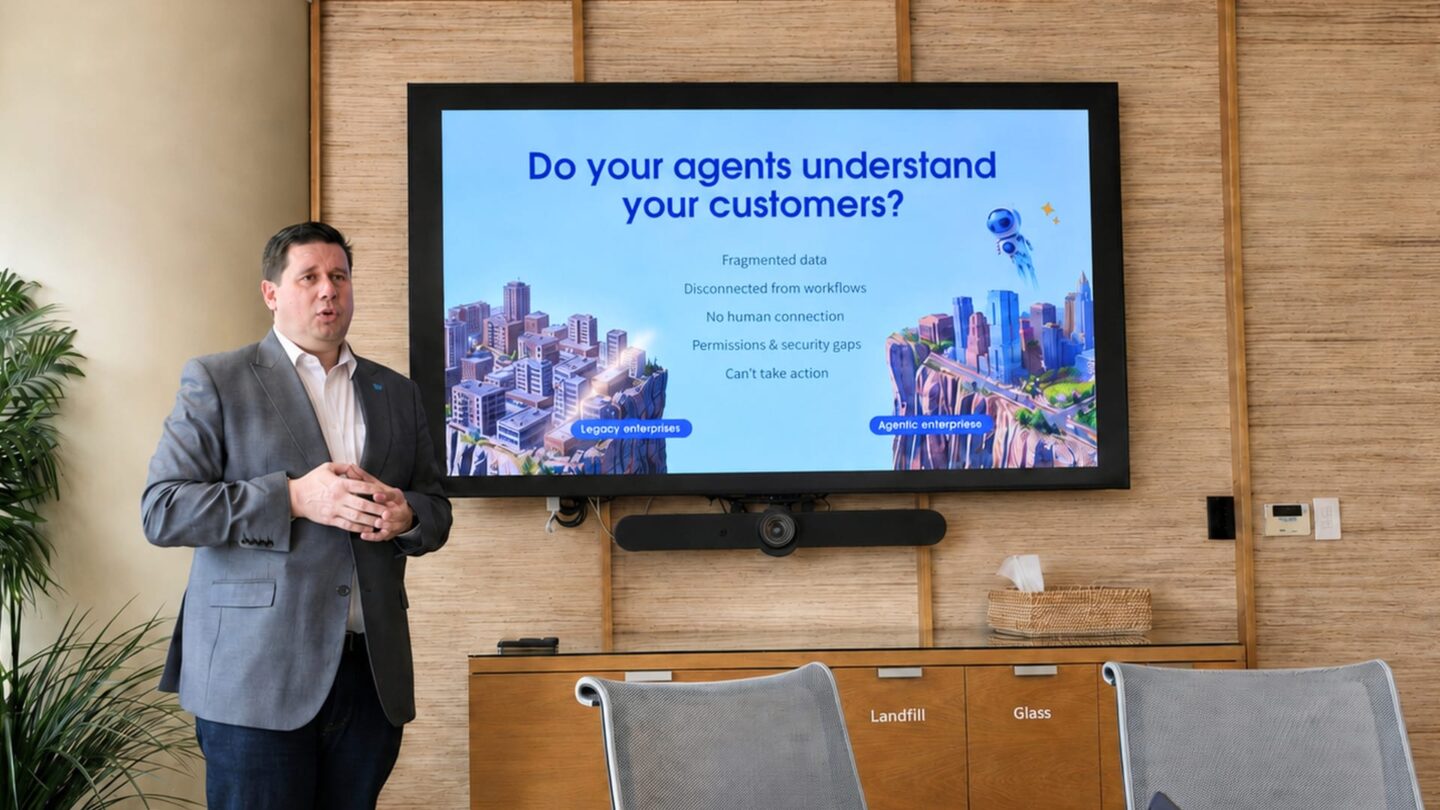
Gavin Barfield, Vice President and CTO, Solutions, Salesforce ASEAN, described how the approach changes agent integrations. “Until now, expanding an agent’s capabilities meant developers manually specifying every object, API, and workflow it needed. With these new updates to Headless 360, agents can discover, understand and invoke those capabilities on their own, in real time, while still inheriting the same identity, permissions, and governance already established across the business. This removes the ceiling agents used to hit, where they reason through a task before stalling at the edge of a single application and waiting for a person to finish the job. For ASEAN organisations operating across multiple markets and navigating diverse languages, platforms and regulators, this is what allows every AI investment to compound.”
Salesforce has separately made its Data 360 MCP Server generally available, providing authorised agents with direct access to nearly 200 Data 360 application programming interfaces. Through natural-language instructions, agents can transform data, generate calculated insights, map fields, inspect identity relationships, create audience segments, activate campaigns and establish new data streams. Prebuilt Agent Skills designed to handle common Data 360 operations, including code extensions, transformations and activation, are scheduled for general availability later in August 2026.
To demonstrate practical deployment, Salesforce pointed to travel technology company Engine as an early adopter of the technology. Engine launched its EVA customer support agent within 12 days of implementation, and the agent now handles half of its customer chat interactions without a human joining the conversation.
Slack provides shared channels for business and coding agents
The Slackbot MCP Client connects Slack directly with Salesforce MCP servers and more than 20 partner applications, including Atlassian, Box, Canva, Docusign, Notion and Zoom. Working within standard conversation threads, employees can update Salesforce opportunities, retrieve contracts and start workflows from Slack, subject to their existing permissions.
Slack Code applies this shared-channel model directly to software development. Tagging a compatible coding agent in a conversation automatically creates a project channel with separate tabs for team discussions, the agent’s proposed plan, line-by-line code changes and a live preview of the running software. Throughout the task, participants can pause, redirect or stop the agent, while human approval remains mandatory before completed changes can be deployed to production.
Once the work is finished, the channel is archived while its conversation and activity history remain searchable. Supported partner agents include Anthropic’s Claude Code, Cognition’s Devin, GitHub Copilot, OpenAI’s ChatGPT and Vercel agents, allowing product managers, designers, marketers and other colleagues to trigger agents, inspect output and provide direction within the channel. Slack Code is available across all Slack plans, although organisations need separate access to each partner agent they connect, with Salesforce also planning future support for custom enterprise agents across functions including legal and marketing.
Salesforce extends its development tools
Headless 360 coverage spans Marketing, Sales, Service, Commerce, MuleSoft, Informatica and Tableau. Salesforce’s repository contains more than 100 Agent Skills that package business rules, validation and workflow coordination for authorised agents.
Salesforce Multi-framework is available for developers building React applications with Salesforce authentication, security and data access, while the Headless Experience Layer is in open beta for web, mobile, embedded and conversational interfaces. The Slackbot MCP Server and Client, Headless Commerce and Marketing Engagement MCP Server are available as well. Other capabilities vary by product and region, while pricing and packaging remain subject to change.