


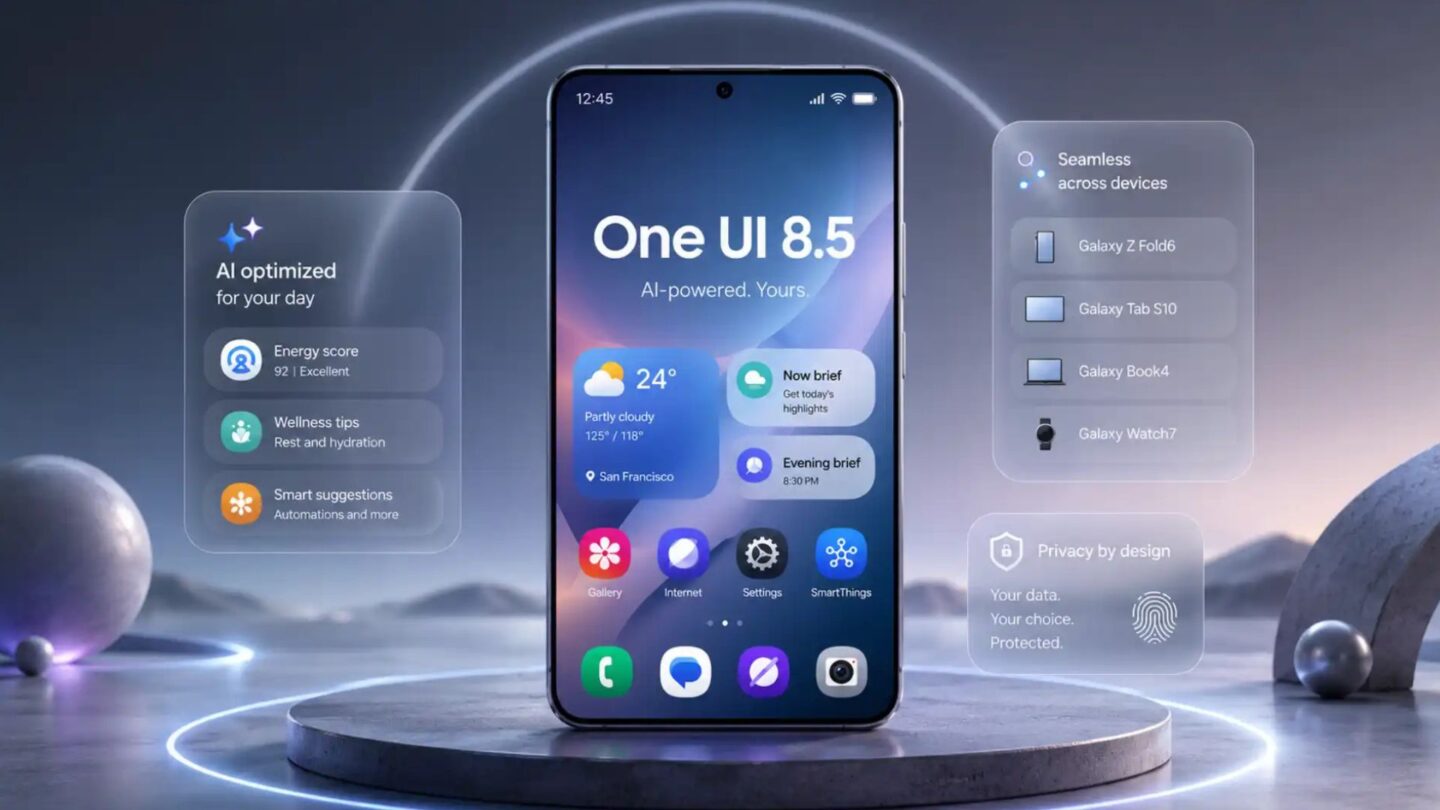
Samsung is unlikely to abandon its One UI branding for a new Galaxy OS name, despite recent rumours of a major shift in the company’s software strategy. Although the next version of its interface could add more artificial intelligence (AI) features and other improvements, little reliable evidence suggests the company will drop the existing name.
One UI has been central to Samsung’s software experience since 2018, providing a consistent interface across its smartphones, tablets, and other compatible devices. Over the years, the software has expanded beyond its original purpose of making Android easier to use, incorporating a broad collection of applications, customisation options and system features. Replacing it would therefore involve more than simply changing the interface’s appearance.
The speculation began circulating in October, after a social media post described Samsung’s next software development as Galaxy OS. The claim drew attention from several tech publications, with some reports suggesting the company was preparing to replace One UI entirely. However, the source later clarified that the reports may have misinterpreted the information.
How the Galaxy OS rumours started
The discussion gained momentum on 11 October, when an account known as phonefuturist posted that Samsung’s next interface would place greater emphasis on artificial intelligence. The post called the software Galaxy OS, a term the account later said came from unnamed sources.
@phonefuturist Upcoming galaxyOS? Is OneUI gonna be revamped completely?
— Dr.Napodium¹⁶ (@Nanartje) October 11, 2026
Several technology publications subsequently reported on the claim, interpreting the name as evidence that Samsung was developing a new software platform to replace One UI. As the story spread, the distinction between a possible internal development name, a branding change and a complete software replacement became less clear.
The rumour initially appeared plausible because Samsung has continued to expand its use of AI across its devices. The company has added intelligent features across its software, and further integration would be a reasonable direction for future versions of One UI. A more substantial update could also change the interface, system apps, and how users interact with their devices.
Samsung has also changed its software branding in the past. Before One UI arrived, the company used TouchWiz and later Samsung Experience for its Android interfaces. These earlier transitions show that a new name is possible, though they do not indicate that another rebranding is currently planned.
However, the source later clarified that One UI was not being replaced, describing the suggestion otherwise as a translation error. This distinction matters because a reference to Galaxy OS does not necessarily mean Samsung plans to introduce an entirely separate operating system or retire its existing interface.
The lack of independently verified information also makes the claim difficult to assess. The initial report relied on unnamed sources, and no supporting announcement or detailed evidence confirmed that Samsung had decided to abandon the One UI name. Reports that repeated the same claim did not necessarily provide independent confirmation.
Another uncertainty was the link between the Galaxy OS speculation and separate rumours about One UI 10. Some reports linked the alleged rebranding to claims that the upcoming interface would introduce significant changes. However, one unverified rumour does not prove another, even when both concern the same software.
Why Samsung is likely to keep the One UI name
One UI has become an established part of Samsung’s identity, making a complete rebranding a major decision. Since its introduction, the interface has helped distinguish Samsung’s Android devices from those of other manufacturers. Its design has also evolved to accommodate larger screens, foldable phones and changing expectations around mobile software.
The interface was originally developed with usability in mind, particularly for people operating larger smartphones with one hand. Samsung placed key controls within easy reach while keeping supporting information and content elsewhere on the screen. Although the design has changed across successive releases, this general approach has remained central to the experience.
One UI has also earned a stronger reputation than some of Samsung’s earlier software offerings. TouchWiz drew criticism from users who found it cluttered or unnecessarily complicated, while One UI has generally been seen as a more polished, feature-rich alternative. Its customisation options and broad selection of built-in tools have appealed to a wide range of users.
The software is far more extensive than the term user interface suggests. Beyond its visual design, One UI includes system-level functions, apps, and tools for everyday tasks, such as managing screenshots, checking the weather, and adjusting device settings. These features form an interconnected software environment that Samsung has developed and refined over several years.
There are still criticisms. Some users consider Samsung’s software suite too large, while others report performance concerns or prefer a simpler Android experience. Nevertheless, these issues do not necessarily justify replacing the entire brand. Samsung can address individual problems through software updates while retaining the name and familiar features that existing customers recognise.
The timing of the rumours also coincided with the reported rollout of One UI 9, which was described as improving support for foldable devices and a wider range of form factors. Such developments suggest that Samsung continues to invest in expanding its existing software platform rather than necessarily preparing to discard it.
A complete replacement would require Samsung to manage a broad transition across its smartphones and tablets. It could affect software updates, product messaging, user expectations, and how the company presents its ecosystem. Unless the existing brand no longer serves its purpose, a major change like this could create unnecessary complications.
What Galaxy OS could mean for Samsung’s future software
Although the available information does not support the claim that One UI is about to disappear, it does not rule out substantial changes to Samsung’s software strategy. The company could continue adding AI-powered tools, redesigning parts of the interface and improving integration between devices without abandoning its established branding.
Galaxy OS could also become a term for a broader software ecosystem rather than a direct replacement for One UI. If Samsung adopted the name in some capacity, it might serve as an umbrella brand for connected devices and services, or as a different way to describe its software platform. However, these possibilities remain speculative and should not be treated as confirmed plans.
Another possibility is that future updates will introduce enough changes to make One UI feel significantly different while preserving the existing name. Technology companies regularly revise their software platforms to support new hardware, introduce features and respond to competition. Such developments do not always require a complete rebranding.
Samsung has not officially confirmed that Galaxy OS will replace One UI. Until the company announces a change or credible reporting establishes that one is planned, the claim should be treated with caution. The original clarification that the rumour may have resulted from a translation error further weakens the argument that a full replacement is imminent.
For users, the most meaningful developments are likely to be the features and improvements delivered through future software updates, rather than the name attached to them. More AI capabilities, better support for foldable devices and continued interface refinements could all shape Samsung’s software direction without requiring a new identity.
For now, One UI remains the established name for Samsung’s software experience, and there is insufficient evidence to conclude that the company intends to replace it with Galaxy OS. While a rebranding could happen in the future, current speculation does not show that Samsung has made such a decision.