



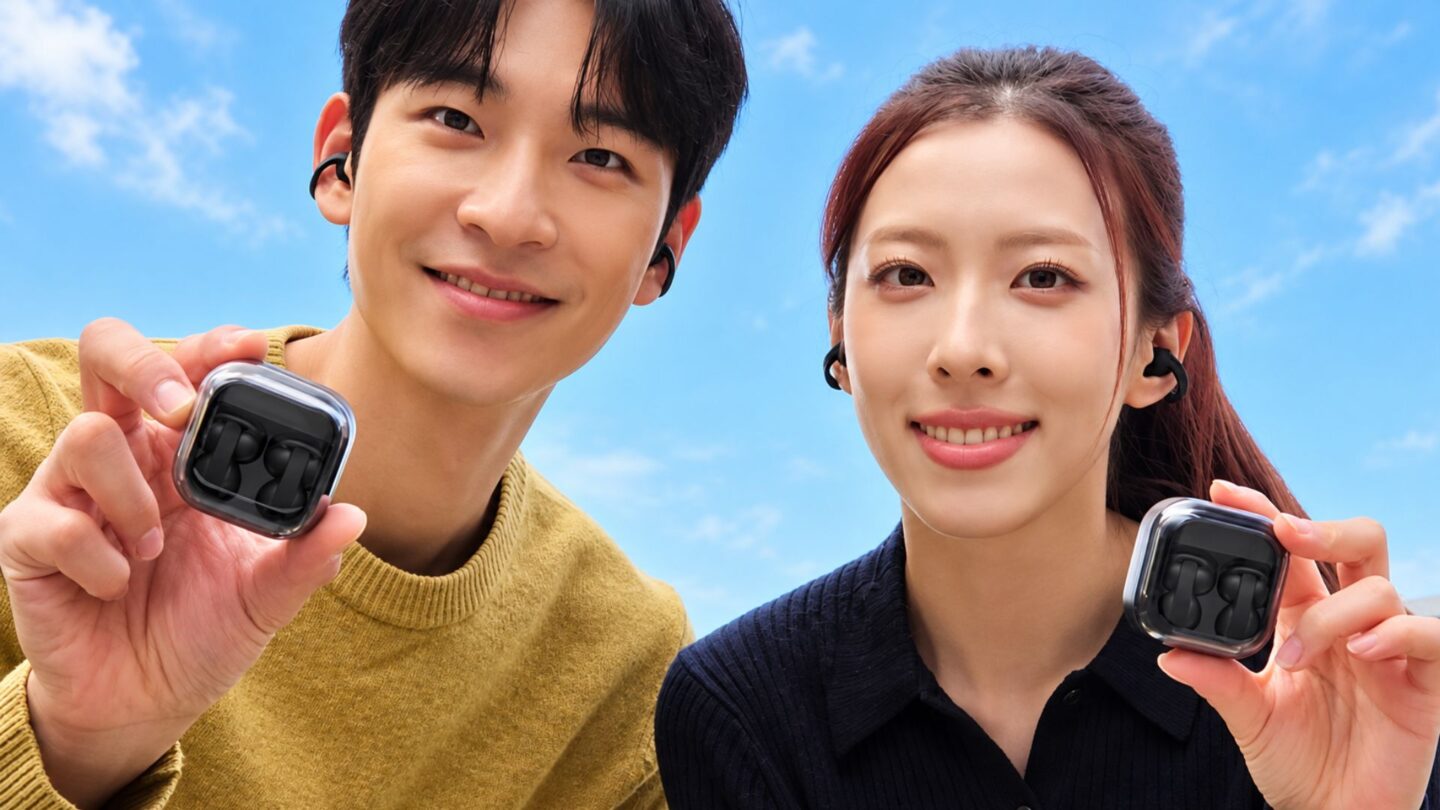
Samsung is expanding its wireless audio range with the Galaxy Buds On, a new pair of open-ear wireless earbuds featuring a clip-on design. Scheduled to launch in early November 2026, the earbuds are designed to provide a secure fit, comfortable listening and improved call quality without sealing the ear canal.
The launch comes as audio manufacturers such as Sony, Bose, and Sennheiser continue developing open-ear headphones for users who want to stay aware of their surroundings while listening to music. Samsung is also returning to the open-ear category after previous attempts, including the Galaxy Buds Live and the more recent Galaxy Buds 4, which features a semi-in-ear design.
The Galaxy Buds On introduce several new features, including Audio Leakage Reduction technology, a high-efficiency amplifier and gesture-based controls. Samsung also highlights the earbuds’ battery life and integration with Galaxy smartphones as key features.
Clip-on design aims to improve comfort and fit
The Galaxy Buds On use a clip-on structure intended to hold each earbud securely in place without relying on a conventional in-ear seal. This approach aims to reduce the pressure and discomfort some users experience with wireless earbuds that fit tightly inside the ear canal.
Samsung says the design draws on data from more than 119 million ear scans to develop a shape that fits a wide range of ear shapes and sizes. The company is positioning the earbuds for people who want a secure fit while keeping a more natural, open listening experience.
The new model also features an IP54 rating for dust and water resistance. This offers protection against limited dust ingress and water splashes, making the earbuds suitable for everyday activities. However, the rating does not mean they are waterproof, so they are not intended for swimming or prolonged water exposure.
Another feature is Audio Leakage Reduction, a technology designed to limit how much sound escapes the earbuds. According to Samsung, the system uses reversed sound waves at the rear of each earbud to counteract sound leakage. This could help users listen with less sound reaching nearby people, although real-world effectiveness will depend on the listening environment and volume level.
Unlike the Galaxy Buds 4 Pro, the Galaxy Buds On do not focus on high-level active noise cancellation. Instead, their open-ear approach prioritises comfort and awareness of the surrounding environment. This distinction places them in a different category from traditional earbuds designed to isolate listeners from outside noise.
Battery life, call quality and gesture controls
Samsung has equipped the Galaxy Buds On with a new high-efficiency Class-D amplifier designed to balance power consumption with sound output. The company aims to deliver strong audio performance while keeping energy use under control, though it has not provided detailed information about the earbuds’ sound profile or audio performance.
Samsung also highlights battery life. The earbuds are rated for up to 9.5 hours of music playback on a single charge. With the charging case, total listening time is expected to reach 38 hours. Actual battery performance may vary depending on volume, connected features and usage conditions.
For calls, each earbud includes three microphones and a voice pickup unit, or VPU, that detects vibrations associated with speech. These components work together to identify the wearer’s voice and reduce unwanted background noise. Samsung says the system uses algorithms trained to recognise different environmental sounds, including construction noise and car horns.
The technology is intended to improve voice clarity during calls in busy outdoor settings and other noisy environments. Its performance will ultimately depend on how effectively the system distinguishes speech from surrounding sounds in everyday use.
The Galaxy Buds On also introduce head-gesture controls, allowing users to nod or shake their heads to accept or reject calls. Users can also use the same controls to dismiss alarms and notification readouts, offering an alternative to tapping the earbuds or reaching for a connected phone.
These features add to the earbuds’ hands-free functionality, particularly when users are walking, exercising or carrying items. However, the extent to which users can customise the gestures has not yet been detailed.
Galaxy smartphone integration and launch details
The Galaxy Buds On are designed to work with Samsung’s Galaxy smartphone ecosystem, with several features intended to make connections and everyday tasks more convenient. The earbuds will automatically connect to compatible Galaxy phones when users open the charging case, reducing the need to connect them manually each time.
Samsung is also adding access to Gemini Live, Google’s conversational AI service. This integration could allow users to interact with the assistant through supported Galaxy devices while wearing the earbuds. Available functions may depend on the connected smartphone, software version, and service availability.
Another supported feature is Quick Voice Memo, which lets users record voice memos. Combined with head-gesture controls and a voice-focused microphone system, the feature adds another way to use the earbuds beyond music playback and phone calls.
The launch also represents Samsung’s continued effort to offer different earbud designs for different listening preferences. The Galaxy Buds Live previously explored an open-style format, while the Galaxy Buds 4 adopted a semi-in-ear shape similar to recent AirPods models. The Galaxy Buds On take a different approach, using a clip-on design that sits around the ear rather than forming a conventional seal in the ear canal.
Samsung plans to release the Galaxy Buds On in early November 2026 for US$229. The company has not provided further details about regional availability or whether the earbuds will launch in all markets at the same time.
With their open-ear design, extended claimed battery life, and Galaxy-specific features, the Galaxy Buds target users looking for an alternative to conventional in-ear wireless headphones. Their reception will depend on how well the clip-on design balances comfort, sound quality, and stability, and how effectively the new technology reduces sound leakage and improves calls.