

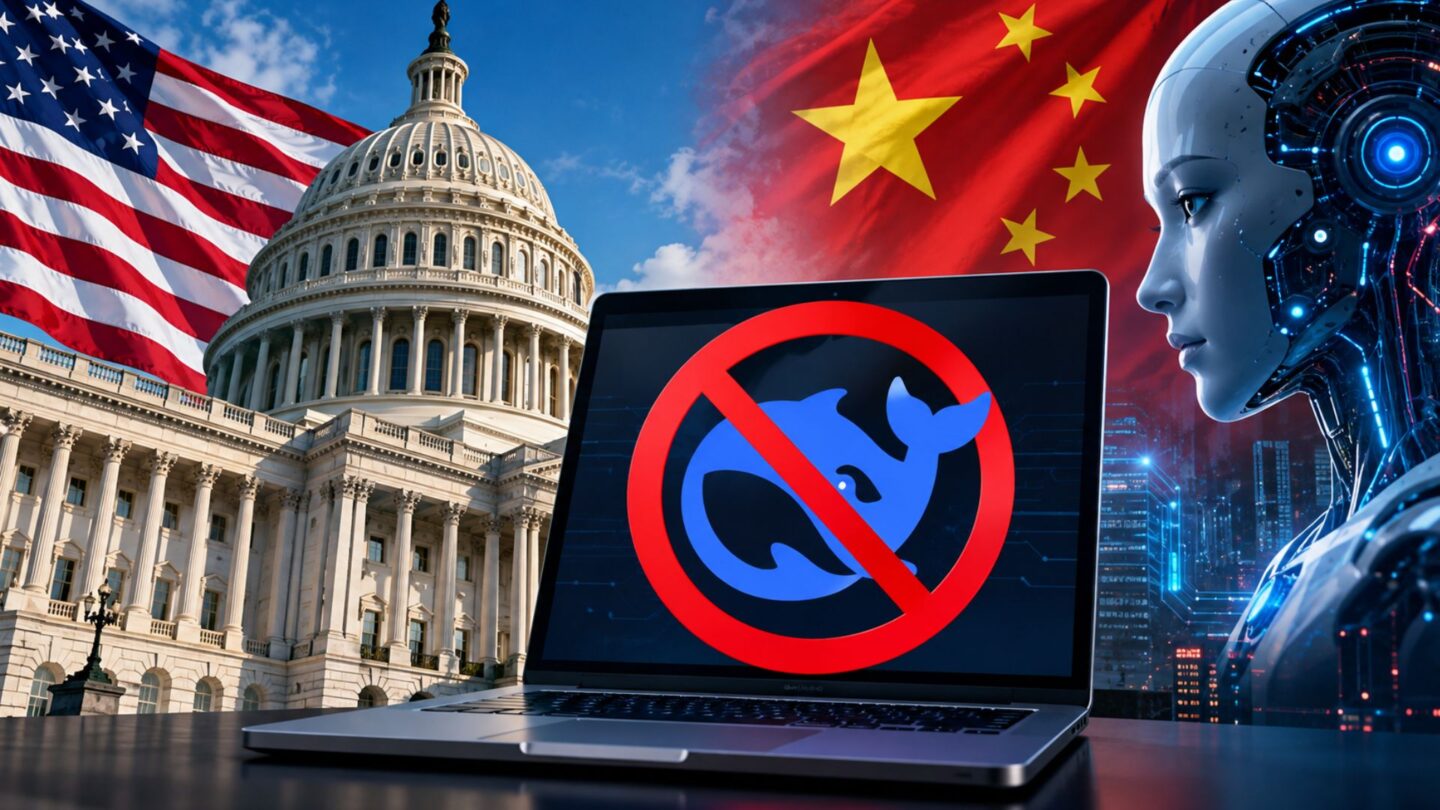
The US Department of Homeland Security (DHS) has ordered federal civilian agencies to remove DeepSeek products from their networks and stop purchasing them, extending the restrictions to third-party software powered by the Chinese artificial intelligence company’s models.
The order, disclosed on 19 October 2026, reflects growing concerns in Washington about the security risks associated with AI technology developed in China. It requires agencies to stop using DeepSeek products and prevent new purchases, while also addressing applications that rely on its underlying models.
The restrictions could affect software providers that supply services to the US government, particularly those that use third-party AI systems without making their underlying technology immediately apparent to customers. Businesses working with federal agencies may need to review their software infrastructure to identify any products or services that depend on DeepSeek.
What the US ban covers and why it matters
The DHS order requires federal civilian agencies to remove DeepSeek products from their networks and stop purchasing them. According to the notice published through the Federal Register, the restrictions also apply to third-party software built using DeepSeek’s AI models.
Including third-party applications broadens the order’s scope beyond DeepSeek’s chatbot and other directly branded products. Software providers can integrate external AI models into their services, meaning government agencies could use DeepSeek technology without interacting directly with the company or its products.
This approach creates additional compliance requirements for companies that supply software to the federal government. Vendors may need to examine their applications, identify the AI models their systems use, and determine whether any restricted technology is part of their services. The requirement could also affect businesses that rely on external AI providers to power features within larger software platforms.
The US government has raised concerns about where DeepSeek processes data and how Chinese laws could affect access to information held by companies operating in the country. DHS has argued that DeepSeek runs on servers in China, where authorities may have legal powers to access company systems. These concerns have raised questions about whether the company’s technology could expose sensitive government information.
However, the order does not apply uniformly across the US government. Federal civilian agencies are covered, while the Department of Defence is exempt. This means the Pentagon is not subject to the same prohibition and may continue using DeepSeek. Other exceptions can be considered through a written request.
The distinction matters because the restrictions target a specific group of government organisations rather than imposing a universal prohibition across the federal system. The policy also comes amid wider tensions between Washington and Beijing over AI development, intellectual property and competition in advanced computing.
China objects to the US restrictions
China responded to the decision on 20 October 2026, with foreign ministry spokesperson Mao Ning criticising the use of national security concerns to restrict technology and trade. Her remarks reflected Beijing’s broader opposition to measures it believes target Chinese technology companies unfairly.
Mao said China opposes overstretching national security and turning technology and trade issues into politics. She also stated that China would defend the lawful rights and interests of Chinese businesses.
The response highlights the ongoing disagreement between the two governments over how to regulate technology companies when their products cross national borders. Washington has increasingly treated certain foreign technologies as potential security risks, while Beijing has argued that such restrictions can become tools for political and economic competition.
The DeepSeek decision adds another point of tension to an already difficult relationship. Artificial intelligence has become a major area of competition between the two countries, with both seeking advantages in AI models, computing infrastructure and commercial applications. Restrictions on using Chinese-developed models in government systems could also shape how technology suppliers assess their products and partnerships.
Despite the dispute, the two governments have maintained communication channels. In September 2026, they agreed to establish a mechanism for discussing AI-related incidents. Such a channel could help address concerns about the technology without relying entirely on public statements or restrictive measures.
The countries’ leaders are also scheduled to meet in Shenzhen in November 2026. The meeting could offer an opportunity to discuss technology-related disagreements, including AI security and how companies operating across both markets are treated. It remains unclear whether the DeepSeek ban will become a formal subject of discussion.
Implications for AI developers and government suppliers
The restrictions could extend beyond DeepSeek, particularly affecting software developers and technology companies that serve US federal agencies. Businesses that incorporate external AI models into their products may need to examine their supply chains more carefully to ensure that their systems comply with government requirements.
This could involve checking model providers, reviewing software documentation and identifying where data is processed. Companies may also need to keep clearer records of the AI technologies used in their applications, especially when they integrate third-party services into products sold to public-sector customers.
The order could encourage federal contractors to favour AI providers whose data-handling practices, infrastructure and legal obligations meet government security expectations. However, replacing an existing AI model may require technical changes, additional testing and new assessments of how an application performs. The practical impact will depend on how widely affected services have incorporated DeepSeek technology.
The restrictions also illustrate a broader challenge for organisations adopting AI. A company may purchase software from one supplier while relying on a separate provider for the underlying AI model. As governments introduce more detailed rules around AI security, organisations may need greater visibility into these relationships to understand which technologies support their systems.
For AI developers, the decision highlights the importance of transparency around model deployment, data storage and third-party integrations when seeking access to government markets. For federal contractors, identifying the technology behind their products could become an increasingly important part of procurement and security reviews.
DeepSeek had not publicly commented on the order in the reports available at the time of publication. The longer-term effects will depend on how agencies implement the restrictions, whether they grant exceptions, and whether further measures emerge from the ongoing US-China technology dispute.