


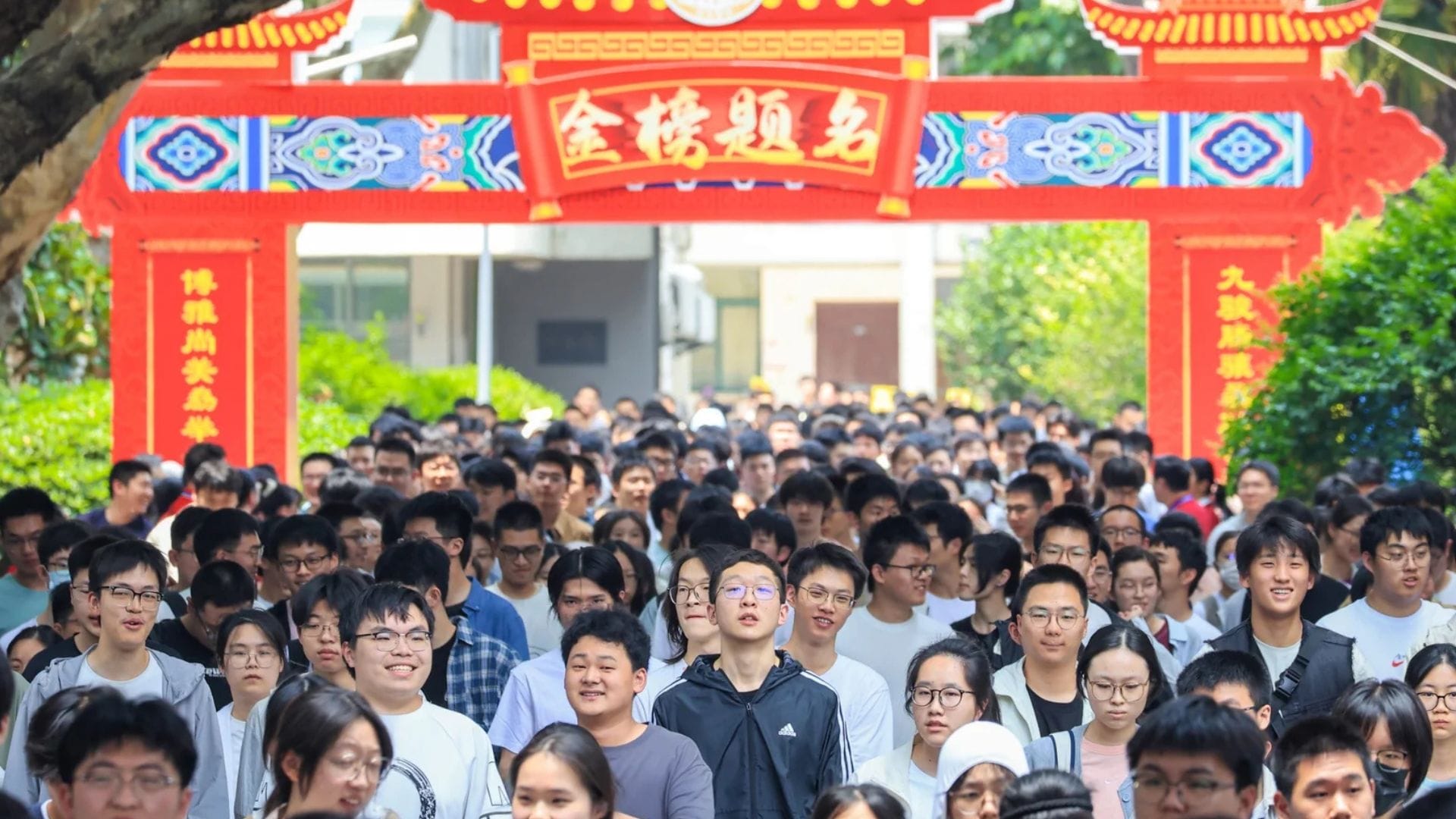
Every summer, around 10 million students across China face one of the most important decisions of their academic lives. After completing the highly competitive Gaokao university entrance examination, they have only a few weeks to choose both a university and a degree programme. The decision often has a lasting impact on future career opportunities, making the selection process particularly significant.
For many years, families relied on costly admissions consultants, printed guidebooks and online education influencers to help navigate the complex university application system. However, the rapid adoption of artificial intelligence is changing that landscape. A growing number of students are now using free AI-powered chatbots to receive personalised university and course recommendations, reducing the demand for traditional college counselling services.
AI tools become a popular choice for university planning
Career guidance has traditionally been limited in many Chinese secondary schools, leaving families to seek external advice when making decisions about higher education. This has created a sizeable market for admissions consultants who offer tailored recommendations based on examination results and career ambitions.
Technology companies have now entered that space with dedicated AI planning tools. Firms including Alibaba, ByteDance, Tencent and Baidu have introduced chatbots designed specifically to assist students during the university selection period.
Students can submit a range of personal information into these systems, including their Gaokao scores, preferred subjects, career interests, personality assessments, desired location and tuition budget. The AI then analyses the information and produces a list of suitable universities and degree programmes. Recommendations are commonly organised into categories such as ambitious choices, suitable matches and safer alternatives, helping students understand the likelihood of securing admission.
The popularity of these services has grown rapidly. According to a report by Rest of World, Alibaba’s Qwen AI platform had generated approximately 23 million recommendation reports by early July. During the same period, Tencent’s Yuanbao chatbot reported answering approximately 200 million questions about university admissions.
The recommendations carry considerable weight because Chinese universities generally offer limited opportunities for students to change their degree programme after enrolment. As a result, selecting the right major from the outset is often viewed as one of the most important educational decisions a student will make.
Traditional consultants adapt to changing demand
The increasing availability of AI-powered admissions guidance is reshaping an industry that has long relied on specialist knowledge and experience. Families who previously paid significant fees for personalised advice now have access to free digital tools capable of analysing large amounts of admissions data within seconds.
Rather than competing directly with AI, some admissions consultants have begun incorporating the technology into their own work. They use chatbots to gather information, compare university requirements and generate preliminary recommendations more efficiently before refining the results through personal consultation.
Human advisers are also shifting their focus towards areas where personal interaction remains valuable. These include helping students manage stress during the admissions process, facilitating discussions between parents and children, and providing longer-term guidance about career development that extends beyond selecting a university course.
This transition reflects a broader trend across professional services, where artificial intelligence is increasingly used to automate research and routine tasks. At the same time, human experts concentrate on advice that requires empathy, judgement and personal understanding.
AI expands access, but questions remain
Although AI chatbots offer greater accessibility, experts caution that the technology should not be viewed as a complete replacement for experienced advisers. Like any AI system, chatbots can misunderstand a student’s priorities, overlook important personal circumstances or generate recommendations based on incomplete or inaccurate information.
For major life decisions such as university selection, these limitations highlight the importance of carefully reviewing AI-generated advice rather than accepting it without question. Many specialists believe artificial intelligence will become an important support tool, but that human oversight will continue to play a significant role in complex decision-making.
There are also concerns about unequal access to AI technology despite the availability of free services. Separate research has found that awareness and regular use of AI tools remain higher among wealthier and more highly educated groups. This suggests that while AI can reduce some financial barriers associated with admissions counselling, it may not eliminate wider inequalities in access to educational guidance.
Even so, the growing use of AI has significantly lowered the cost of obtaining personalised admissions advice. Students who previously could not afford expensive consultancy services can now receive tailored recommendations at no cost, giving many families access to information that was once available mainly to those with greater financial resources.
As AI technology continues to improve, its role in university admissions is expected to expand further. Rather than replacing human advisers altogether, the technology appears likely to become an increasingly important part of the admissions process, combining fast data analysis with professional guidance where individual judgement and personal support remain essential.