

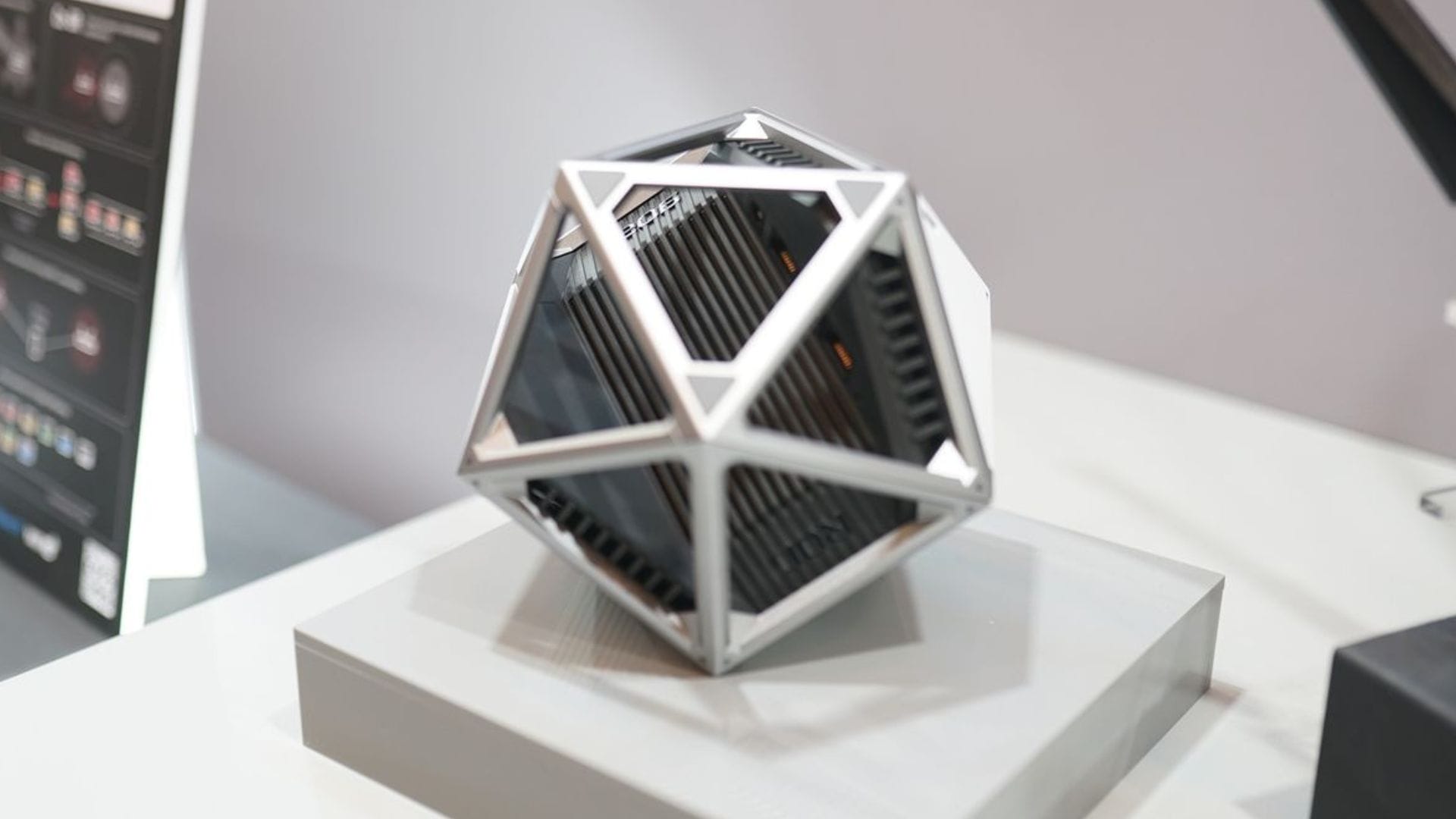
ASUS has once again moved early to showcase its networking ambitions, unveiling a Wi-Fi 8 concept router at CES. The device, called the ROG NeoCore, is being positioned by the company as a glimpse into the future of wireless networking, even though the Wi-Fi 8 standard is still several years away from being finalised.
The announcement may appear premature to many consumers and businesses. Most households are only now adopting Wi-Fi 7, while others are still planning upgrades from older standards. ASUS itself has only recently expanded its Wi-Fi 7 product range, reflecting how new that technology still is on the broader market.
Despite this, ASUS has a history of seeking early leadership in networking technology. The company has frequently highlighted its role as one of the first manufacturers to secure regulatory approvals when new Wi-Fi standards emerge. By introducing a Wi-Fi 8 concept so early, ASUS is clearly aiming to maintain that reputation and reinforce its position at the forefront of wireless innovation.
Why Wi-Fi 8 is not about raw speed
Unlike previous generations, Wi-Fi 8 is not focused on increasing headline speeds. Wi-Fi 7 already set an ambitious target with a theoretical maximum speed of 23Gbps, and Wi-Fi 8 does not attempt to exceed that figure. Instead, the new standard is designed to address a different set of challenges that have become more visible as wireless networks support a growing number of connected devices.
ASUS has said that its “first real-world throughput test” of Wi-Fi 8 demonstrated significant improvements in reliability rather than speed. According to the company, the test showed up to twice the mid-range throughput compared with Wi-Fi 7, double the coverage for Internet of Things devices, and up to six times lower P99 latency. P99 latency refers to performance at the higher end of delay measurements, meaning overall responsiveness remains more consistent even under heavy network load.
These gains are closely linked to the Institute of Electrical and Electronics Engineers’ goals, which oversee the 802 Wi-Fi standards. When work on Wi-Fi 8 began, early research focused on ultra-high reliability technologies. This approach reflects how modern networks are increasingly expected to support real-time applications, smart home systems and industrial devices where stable connections matter more than peak speeds.
For users, this shift could eventually translate into smoother video calls, more reliable smart home devices and better performance in crowded environments. However, these benefits remain largely theoretical for now, as Wi-Fi 8 hardware is still based on early drafts rather than a completed standard.
A long road to consumer availability
Wi-Fi 8 is still in its early stages of development. The IEEE expects the standard to be finalised and formally approved in 2028, which means there is still considerable scope for technical changes before that point. As a result, manufacturers have been cautious about committing to specific timelines for consumer products.
Chipmakers are only just beginning to reveal their plans. Qualcomm has yet to announce when it will release a Wi-Fi 8 chipset, while MediaTek unveiled its Filogic 8000 platform at CES. These announcements indicate growing industry interest, but they also highlight how early the ecosystem remains.
ASUS has chosen a more aggressive path. The company has confirmed that testing of the ROG NeoCore was carried out using draft Wi-Fi 8 specifications. Despite the standard’s unfinished state, ASUS has said it plans to launch its first Wi-Fi 8 routers and mesh systems in 2026. These products are expected to be powered by the company’s AiMesh technology and its AI Network Engine, which are already used across its current networking range.
However, ASUS has not provided pricing details or a more precise launch window. There is also the question of long-term support. Devices built on draft specifications may require updates or additional features to align with the final Wi-Fi 8 standard once it is approved. This could place greater responsibility on ASUS to deliver ongoing firmware and software updates in the years following release.
For now, the ROG NeoCore serves more as a statement than a product ready for everyday use. It underlines ASUS’s intent to shape the future of wireless networking, even if widespread adoption of Wi-Fi 8 remains some distance away.