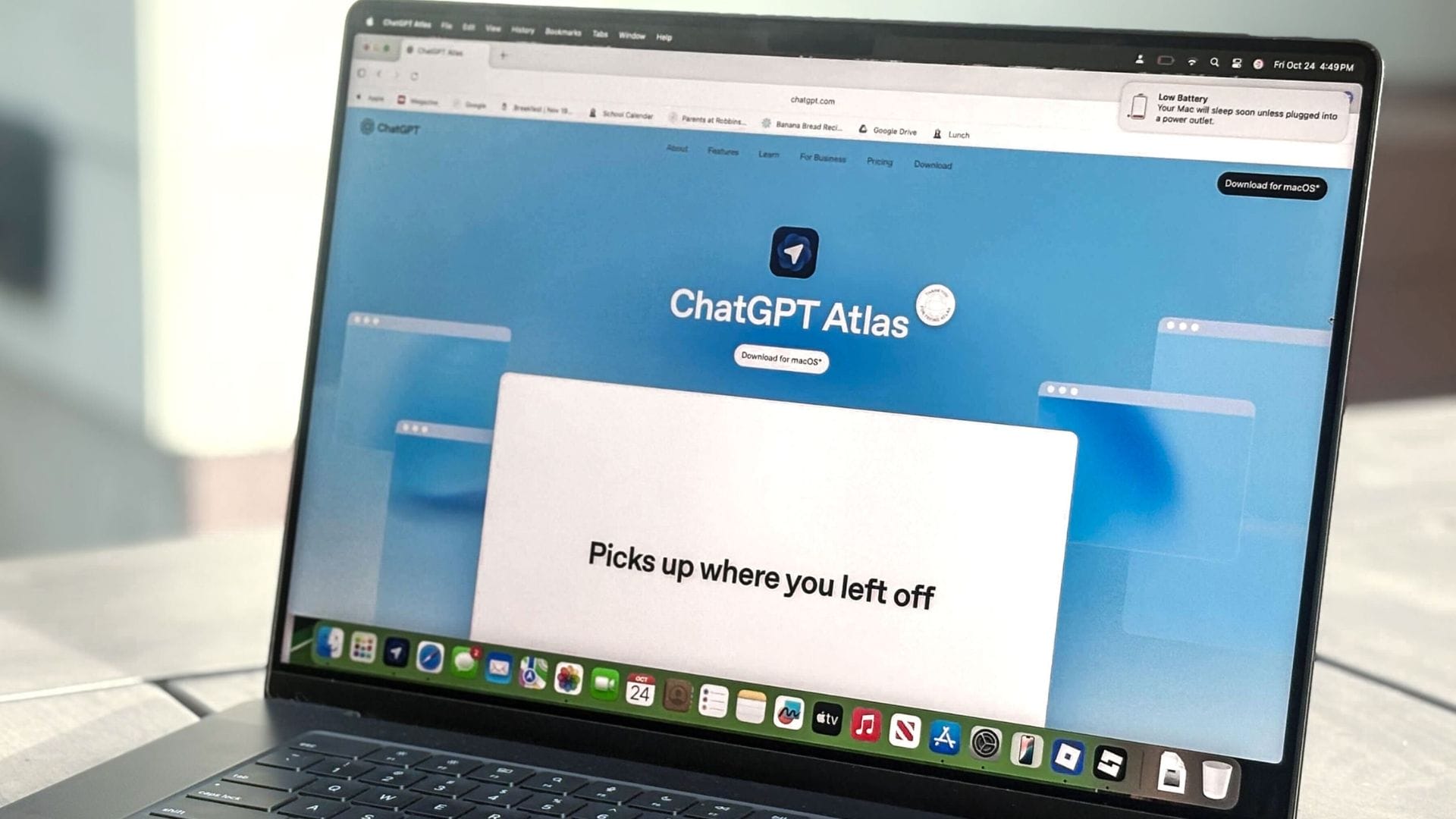
OpenAI has confirmed that its experimental browser, ChatGPT Atlas, will be discontinued on 9 August 2026, marking the end of the standalone application as the company shifts its browser-based tools into ChatGPT and Codex.
Users who still rely on Atlas have only a few days to prepare before support ends. Once the shutdown takes effect, the browser is expected to stop functioning, preventing access to web browsing and its agent-powered workflows. OpenAI has encouraged users to migrate their data before the deadline, as several types of information will not transfer automatically.
Users must export important browser data before the deadline
One of the biggest challenges for existing Atlas users is that browser data will not move automatically to another application. OpenAI has advised users to export their bookmarks as an HTML file before 9 August. The exported file can then be imported into another web browser, including Google Chrome.
Other browsing information will require manual action. Open tabs and browsing history will not be transferred, meaning users should bookmark any important pages they still have open. Alternatively, they can save website addresses in another document or store them elsewhere before Atlas is discontinued.
OpenAI is also offering cookie export options where available. However, the company noted that active login sessions cannot simply be transferred into another browser. Cookie files and session data should be handled carefully because they may provide access to accounts that are already signed in. The company clarified that ChatGPT conversation history is stored separately from Atlas browsing data, so existing conversations will remain available through ChatGPT after Atlas is retired.
OpenAI urges users to complete the migration promptly
The company first announced Atlas would be retired on 9 July, giving users around 30 days to prepare for the change. During this transition period, OpenAI has encouraged users to move their data as soon as possible rather than waiting until the final days before the shutdown.
OpenAI also warned that Atlas will no longer receive the security updates expected from a supported web browser. As a result, continuing to use the application after support ends could expose users to unnecessary security risks. The company recommends completing the migration before the browser reaches its end-of-life date to ensure continued access to browsing tools in supported products.
Although some export features are available, the migration process still requires several manual steps. Users are responsible for ensuring that bookmarks, important web pages and any necessary browser information are saved elsewhere before Atlas becomes unavailable.
Browser features will continue inside ChatGPT and Codex
While Atlas is being discontinued as a standalone browser, OpenAI said the technology developed for the project is being integrated into its broader product ecosystem. The company explained that the experience and feedback gained from Atlas have helped shape a more capable browser experience within the ChatGPT desktop application.
The updated desktop app includes support for multiple tabs, downloads, improved navigation, account logins, and more advanced agent-assisted browsing where available. This means users will continue to access many of Atlas’ capabilities without needing a separate browser.
For users who prefer Google Chrome, OpenAI also offers ChatGPT via a browser extension or sidebar, though availability depends on factors such as region, device, subscription plan, and workspace settings. Meanwhile, browser automation features that require access to logged-in websites and web applications are being incorporated into Codex, allowing those tasks to continue in a different environment.
Rather than disappearing completely, Atlas is being effectively absorbed into OpenAI’s broader range of products. Instead of maintaining a dedicated browser, the company is consolidating its browsing and automation capabilities across ChatGPT and Codex, reflecting its broader strategy of bringing AI-assisted browsing into its core applications.