



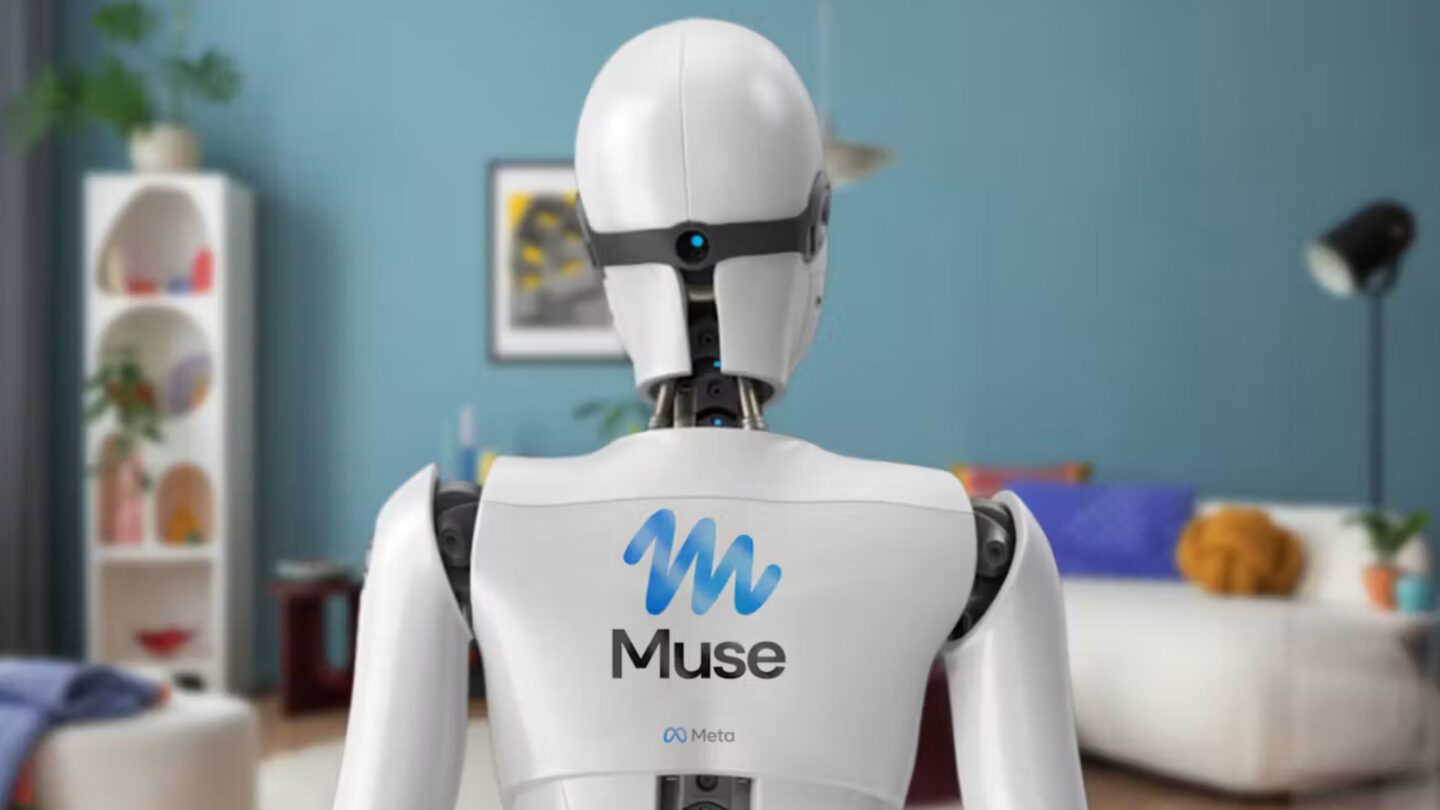
Meta is expanding its ambitions in artificial intelligence and robotics, already developing a second-generation humanoid robot after creating its prototype in partnership with Chinese robotics firm Fourier. The project reflects Meta’s growing interest in bringing artificial intelligence beyond digital platforms and into the physical world.
However, despite the progress, the technology remains in early development. Meta has not confirmed a launch date, and it has not indicated when humanoid robots might become practical household assistants capable of carrying out everyday chores.
According to a report by The Information, citing people familiar with the project, Meta and Fourier developed the prototype, internally named Max, in approximately three months. Weighing around 48kg, the robot is part of a wider research effort to develop machines that could eventually perform tasks in domestic environments.
Meta advances development of its Max 2 humanoid robot
The first Max prototype stands approximately 1.5 metres tall and combines several technologies designed to support basic human-like interactions. Nvidia’s Jetson Thor chip powers it, and it features a display capable of mimicking facial expressions, built-in speakers, and five-fingered hands.
The robot has reportedly demonstrated the ability to pick up small objects, including bottles and toys. Although these capabilities represent an early step toward practical household robotics, they also highlight the technical challenges of developing machines that can interact safely and reliably with everyday surroundings.
The development involved close collaboration between Meta’s robotics team and Fourier in Shanghai, China. According to The Information, Meta’s vice president of product for robotics, Li-Chen Miller, spent nearly two months working at the Chinese company’s factory to support the project.
Meta later presented the prototype to selected employees during an internal robotics summit in August. The demonstration offered a chance to showcase the company’s early progress and assess the potential of its humanoid robotics programme.
Development of the next-generation model, reportedly called Max 2, began in September. The updated robot is expected to feature several hardware improvements intended to make it more capable of performing physical tasks.
Planned changes include a redesigned torso and improved hands that could provide greater precision when handling objects. Max 2 is also expected to include a projector and additional sensors designed to help it navigate more complicated environments, including stairs.
These developments suggest that Meta is looking beyond basic walking and object handling. Instead, the company appears to be exploring how humanoid robots could understand and respond to their surroundings more accurately. Improved sensors and more capable hands could eventually allow such machines to perform a wider range of activities in homes and other everyday settings.
However, the reported specifications remain part of an ongoing development programme. There is no indication that Max 2 has reached the reliability level required for independent household use.
Meta aims to connect humanoid robots with its Muse AI
Meta’s longer-term robotics ambitions are closely connected to its artificial intelligence development, particularly its Muse AI agent. According to The Information, the company views humanoid robots as a potential physical extension of Muse, giving the technology a way to interact with the real world rather than remaining limited to digital conversations and services.
The concept could eventually allow an AI system to understand instructions and carry out physical actions. Instead of simply responding to a request, a humanoid robot could potentially retrieve objects, move items around a room or assist with other household activities.
Such capabilities would significantly expand how artificial intelligence is used. While existing AI assistants primarily provide information, generate content and help users complete digital tasks, humanoid robots could introduce a physical dimension to those interactions.
Meta has also been strengthening its robotics capabilities through investments and acquisitions. In May, the company acquired Assured Robot Intelligence, a startup specialising in artificial intelligence software for robots. The acquisition is expected to support Meta’s efforts to develop AI systems that can understand and perform tasks in physical environments.
Nvidia is another important part of the company’s robotics strategy. Its Jetson Thor chip powers the Max prototype, providing the computing capabilities needed for advanced robotic applications. Nvidia has also agreed to invest US$3 billion in Meta and expand its work on Muse, further strengthening the relationship between the two technology companies.
The combination of advanced AI software, specialised computing hardware and humanoid robotics could eventually help Meta develop machines capable of responding to more complex instructions. However, turning that vision into a commercially viable product will require considerable progress in several areas, including movement, object manipulation, environmental awareness and safety.
Commercial availability remains uncertain as research continues
Despite the progress made with Max, Meta is not preparing to introduce its humanoid robots to consumers in the immediate future. The company has clarified that its collaboration with Fourier is focused on internal research and experimentation rather than developing prototypes for commercial sale.
The Information also reports that Meta has not established a target date for launching a humanoid robot product. This means there is currently no confirmed timeline for when the technology might become available to households or businesses.
The distinction between demonstrating individual capabilities and creating a dependable household assistant remains significant. A robot that can pick up a bottle in a controlled environment still faces numerous challenges before it can safely perform everyday tasks without constant supervision.
Household environments are particularly complicated because objects, furniture and people are constantly moving. A useful domestic robot would need to recognise different objects, understand changing situations, navigate narrow spaces and respond appropriately to unexpected obstacles.
It would also need to perform tasks consistently without damaging property or putting people at risk. These requirements make developing practical humanoid assistants far more demanding than building a prototype capable of completing a limited number of demonstrations.
For Meta, developing Max 2 represents another step toward combining artificial intelligence with physical machines. The company’s investment in robotics suggests that it sees potential in a future where AI systems can do more than process information and respond to questions.
However, that future remains a work in progress. While Max and its successor could help Meta explore what humanoid robots might eventually achieve, consumers should not expect to see these machines performing household chores anytime soon.
Meta is laying the foundations for its robotics ambitions, but turning an experimental prototype into a reliable home assistant will require much more than better hardware and artificial intelligence.