

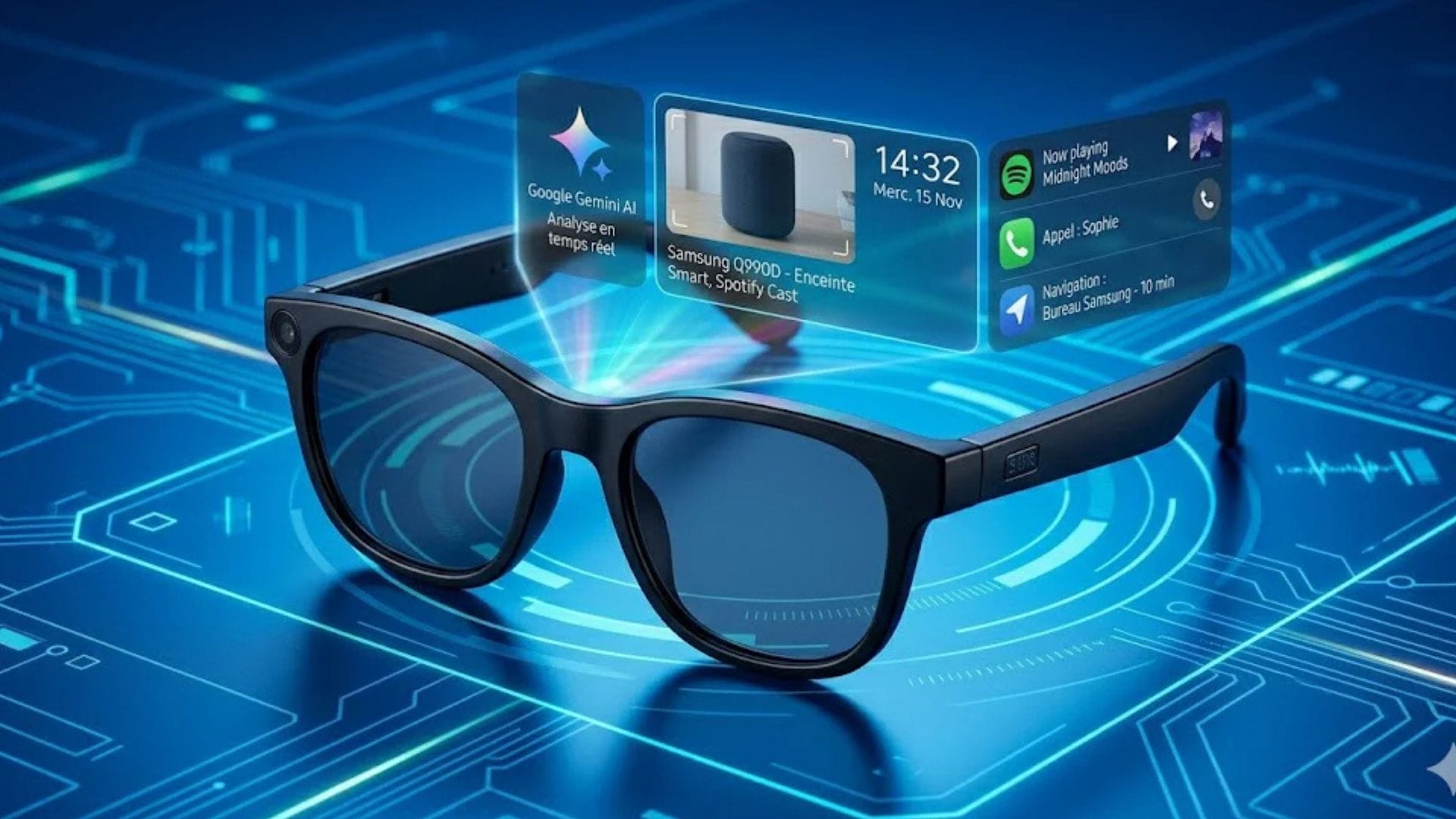
Samsung has shared additional information about its upcoming smart glasses during its Unpacked event, providing a closer look at the hardware, battery performance and privacy features ahead of the product’s launch.
The company had previously teased the wearable device during Google’s I/O event earlier this year. While Samsung has yet to confirm a release date or pricing, it has now revealed several key specifications, including the processor, connectivity options and the approach it is taking to address privacy concerns.
Samsung focuses on battery life and on-device AI
The smart glasses will be powered by Qualcomm’s Snapdragon AR1 Gen 1 platform, which includes the Hexagon Neural Processing Unit (NPU) to support on-device artificial intelligence tasks. Qualcomm said the platform is “optimised for lightweight, battery-efficient” glasses, highlighting its focus on balancing performance with extended battery life.
Samsung said the glasses will provide up to nine hours of use on a single charge. The accompanying charging case is designed to deliver enough power for up to seven additional charges, allowing users to recharge the device multiple times while away from a power source.
The company also confirmed that the smart glasses will support AI-powered features such as visual search and real-time language translation. Samsung said these capabilities are intended to “enable the ultimate personal assistant experience.”
Unlike some other wearable devices, the glasses will not include a built-in display. Instead, they are designed to work alongside a connected smartphone, relying on wireless connectivity rather than presenting information directly in front of the user’s eyes.
Privacy measures aim to address recording concerns
Samsung’s smart glasses will support both Wi-Fi 7 and Bluetooth 5.3, enabling connections with smartphones and other compatible devices for streaming and communication.
The device also features an integrated camera, a key feature that has become increasingly common in smart glasses. However, the inclusion of cameras has also raised privacy concerns, particularly around the possibility of people being recorded without their knowledge or consent.
To help address these concerns, Samsung has introduced a visible LED indicator that lights up whenever the camera is recording. The company has also added software safeguards that automatically disable the camera if the LED is covered or obstructed in any way.
This approach is similar to measures introduced by Meta for its own smart glasses. In the past, some third-party services claimed to modify those devices so recordings could take place without the recording light being visible. In response, Meta introduced software designed to disable the camera if the LED had been tampered with.
It remains to be seen how effective Samsung’s implementation will be once the product reaches consumers. As with other smart glasses on the market, the company may face attempts by some users to bypass the privacy protections.
Launch details remain under wraps
Samsung has not yet announced when the smart glasses will be available to purchase or how much they will cost. The company said further details will be shared later in the autumn.
Although pricing and availability remain unknown, Samsung has confirmed its collaboration with eyewear brands Warby Parker and Gentle Monster to develop the frames for the device. The partnerships suggest the company is placing significant emphasis on combining technology with modern eyewear design.
The move reflects the growing competition in the smart glasses market, where manufacturers are seeking to deliver wearable devices that blend everyday fashion with practical AI features. By offering extended battery life, on-device AI processing and privacy-focused camera controls, Samsung appears to be positioning its upcoming smart glasses as an alternative for users looking for connected wearables without an integrated display.