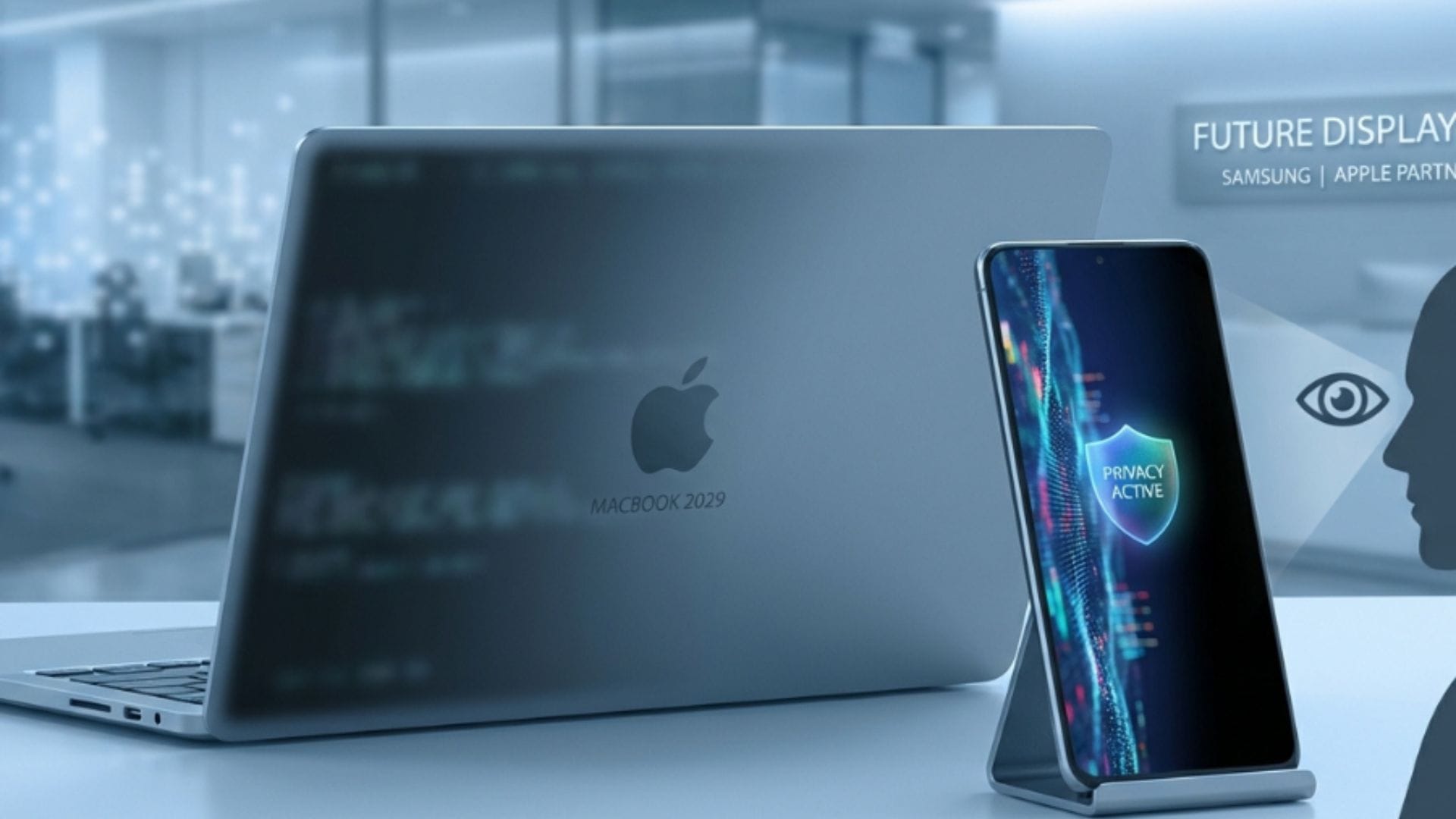
Apple may be considering a new display technology that could make future MacBooks far more private in public settings. A recent leak suggests the company is looking at screens that automatically hide sensitive content from people viewing the display from the side. The information comes from well-known industry leaker Ice Universe, who claims Apple could adopt a privacy display approach similar to Samsung’s technology.
According to reports that reference research firm Omdia, the feature may not appear until around 2029. This would give Apple several years to refine the technology for larger laptop displays, which are more complex than smartphone panels. The long timeline also suggests the company is still in an early research phase, rather than preparing an imminent product launch.
According to a report released by market research firm Omdia on February 16, Samsung Electronics’ latest privacy display technology, introduced in the Galaxy S26 Ultra, is also expected to be applied to Apple MacBook laptops by 2029.
— Ice Universe (@UniverseIce) February 16, 2026
The idea is to build privacy features directly into the screen, rather than relying on accessories. Current privacy filters are typically clip-on panels or adhesive films that reduce viewing angles. While these tools can be effective, they often make screens darker, reduce colour accuracy, and add inconvenience for users who want to switch between private and shared viewing modes.
A built-in solution could avoid many of these drawbacks. By combining hardware design and software control, the display could limit what people can see unless they are sitting directly in front of the laptop. This could help protect emails, messages, passwords, and documents when working in cafés, airports, or shared offices.
A growing need for screen privacy in public spaces
Concerns about screen privacy have increased as remote work and mobile computing have become more common. Many people now use laptops in crowded environments, where others can easily glance at sensitive information. This practice, sometimes called “shoulder surfing”, can lead to accidental data leaks or even targeted theft of confidential details.
Samsung is expected to introduce its own privacy display technology in the upcoming Galaxy S26 smartphones. On phones, the system can selectively hide certain parts of the screen, such as notifications or specific apps. This allows users to protect private information while still using their devices normally. Bringing similar features to laptops could be even more useful, as laptop screens are larger and harder to shield with body positioning.
Third-party privacy filters for MacBooks and other laptops already exist, indicating demand for this type of protection. However, these accessories can be expensive and inconvenient, especially for users who frequently move between private and collaborative work. A built-in feature that can be toggled on or off in software would offer a more seamless experience.
If Apple adopts this technology, it could strengthen its reputation for prioritising user privacy. The company has long marketed privacy as a key selling point across its products and services. A privacy-focused display would align with that message and provide a tangible feature that users can see and understand.
What this could mean for future MacBook users
If the technology becomes a reality, it could change how people use laptops in everyday situations. Working on sensitive documents in public could become less stressful, as nearby observers would see only blurred or distorted content. This could be particularly valuable for professionals handling confidential information, such as journalists, lawyers, and business travellers.
There are still questions about how the feature would work in practice. For example, users may want to share their screen with colleagues or clients, which would require an easy way to turn off the privacy mode. The technology would also need to maintain brightness, colour accuracy, and battery efficiency, which are critical factors for laptop users.
Apple has not confirmed any plans to introduce privacy displays in MacBooks. The reports remain speculative, and timelines could change as the technology develops. However, the concept fits well with broader industry trends towards stronger privacy protections and smarter display technologies.
If the feature does arrive around 2029, it could represent a significant shift in how laptops handle privacy. Built-in privacy screens could become a standard feature in premium devices, eventually filtering down to more affordable models. The leak offers a glimpse of how future laptops might better protect users in an increasingly public digital world.