

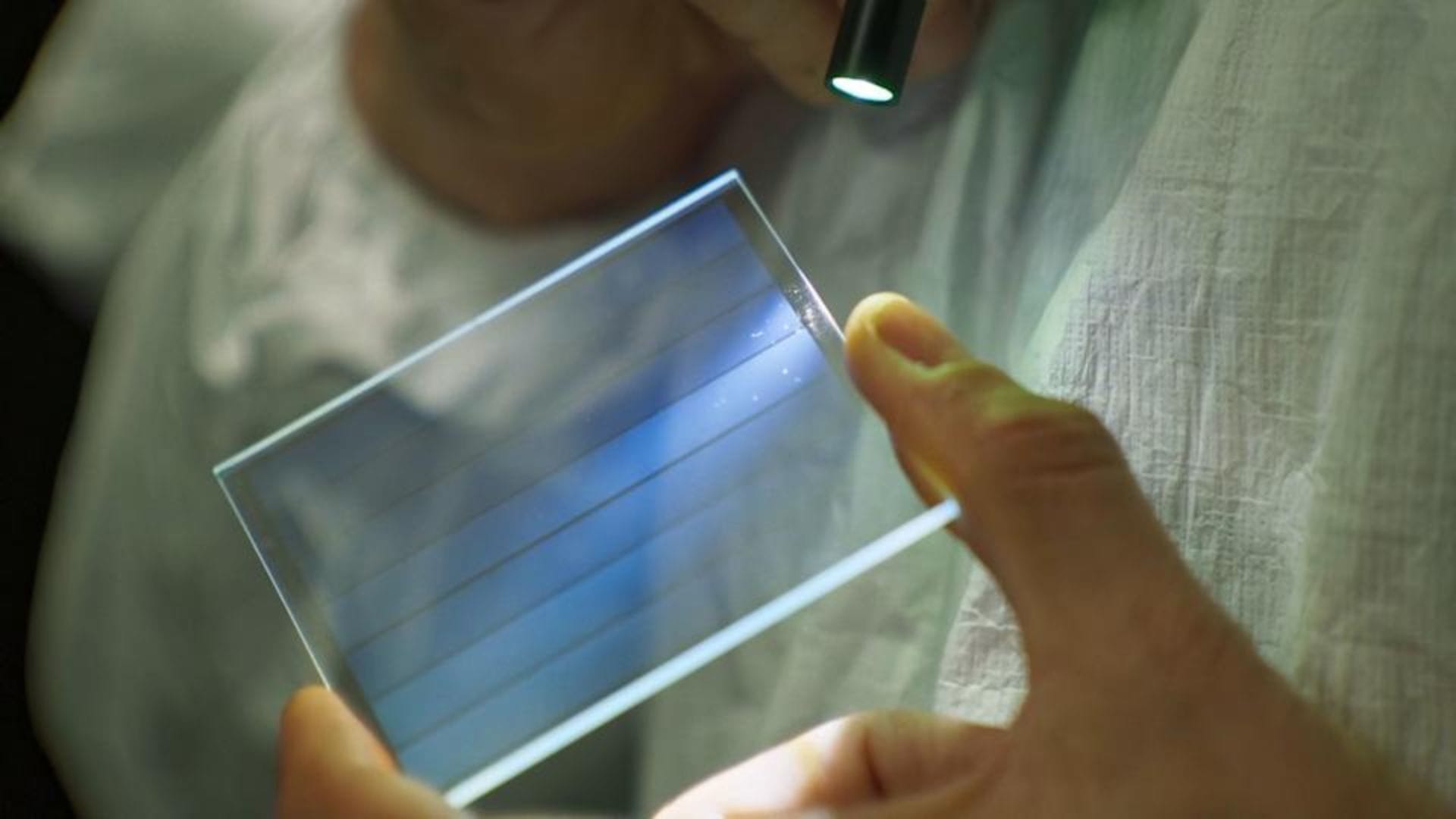
Microsoft has released new research on Project Silica, its experimental effort to store digital information inside glass for extremely long periods. Still, questions remain about whether the technology will ever reach the market.
The project, which has been under development for several years, aims to address the growing challenge of preserving vast amounts of digital data for centuries or even millennia. The company’s latest findings suggest that data could survive for more than 10,000 years when encoded into borosilicate glass, a material similar to that used in household glassware.
Despite the impressive durability claims, the update highlights significant technical and economic hurdles that may prevent the technology from being widely adopted. Analysts and researchers have noted that while glass-based storage is scientifically promising, it may be too slow and costly for practical use beyond niche archival applications.
New research shows potential for millennia-long data preservation
Microsoft’s recent research paper, published in the journal Nature, describes a method for storing information in glass using ultrafast femtosecond lasers. These lasers create microscopic three-dimensional structures, known as voxels, within the glass, effectively encoding data in multiple layers.
Earlier versions of Project Silica relied on fused silica, an expensive and highly pure form of glass, which limited its practicality. The latest work uses borosilicate glass, which is cheaper and more widely available, while still offering long-term durability. In tests, Microsoft reported encoding 258 layers of data, storing around 2.02 TB on a glass plate just 2mm thick.
The company also improved writing speeds compared with earlier experiments. Depending on the number of parallel laser beams, write speeds ranged from 18.4 Mbps to 65.9 Mbps. The highest speed exceeded the 25.6 Mbps achieved in previous fused silica experiments, although the data density of borosilicate glass was less than half that of fused silica.
Durability is the key selling point of glass storage. Conventional media such as hard drives, solid-state drives and magnetic tapes degrade over time, often within decades. Microsoft conducted accelerated ageing tests to simulate the effects of thousands of years, and the borosilicate plates remained structurally intact with no major loss of encoded data.
Practical limitations raise doubts about real-world use
While the concept of storing data for thousands of years is appealing, the technology’s practical limitations remain substantial. Writing data to glass is slower than in modern storage systems. For example, writing a full 4.8TB plate at 25.6Mbps, equivalent to about 3MB per second, would take roughly 18.5 days.
Even at the higher speeds reported in the latest research, the process would still be too slow for most enterprise applications. This makes the technology suitable primarily for deep archival storage, where data is rarely accessed and may never be retrieved once stored.
The cost and complexity of the process are also major barriers. Despite using cheaper borosilicate glass and simplifying some aspects of the encoding process, the system still relies on precision lasers, careful calibration and multiple layers of encoding. Any error during the writing process could ruin a plate that took days to create, adding further risk and expense.
Industry observers note that most companies are unlikely to invest heavily in such a specialised technology, especially when cloud storage and magnetic tape continue to improve in cost efficiency and performance. While glass storage could appeal to institutions that need to preserve cultural, scientific or historical records for centuries, this is a relatively small market.
Microsoft signals a step back from commercial development
Microsoft’s own messaging suggests that the company may not be planning to commercialise Project Silica in the near future. In a recent blog post, the company described the research phase as complete and indicated that it would share its findings with the wider scientific community.
“The research phase is now complete, and we are continuing to consider learnings from Project Silica as we explore the ongoing need for sustainable, long-term preservation of digital information. We have added this paper to our published works so that others can build on them,” the company said.
The statement does not mention any plans for scaling production, commercial deployment or integration into Microsoft’s data centre operations. There is no roadmap for product development and no indication that the company sees a viable market opportunity for glass-based storage at present.
By publishing the research and inviting others to build on it, Microsoft appears to be positioning Project Silica as a scientific contribution rather than a commercial product. This approach benefits researchers exploring new materials and storage methods, but it also suggests that Microsoft may be stepping back from further investment.
Taken together, the technical challenges, slow performance and lack of commercial commitment raise doubts about whether Project Silica will ever move beyond the laboratory. While the idea of storing data for 10,000 years captures the imagination, the technology currently seems better suited to academic research than widespread adoption in the data storage industry.