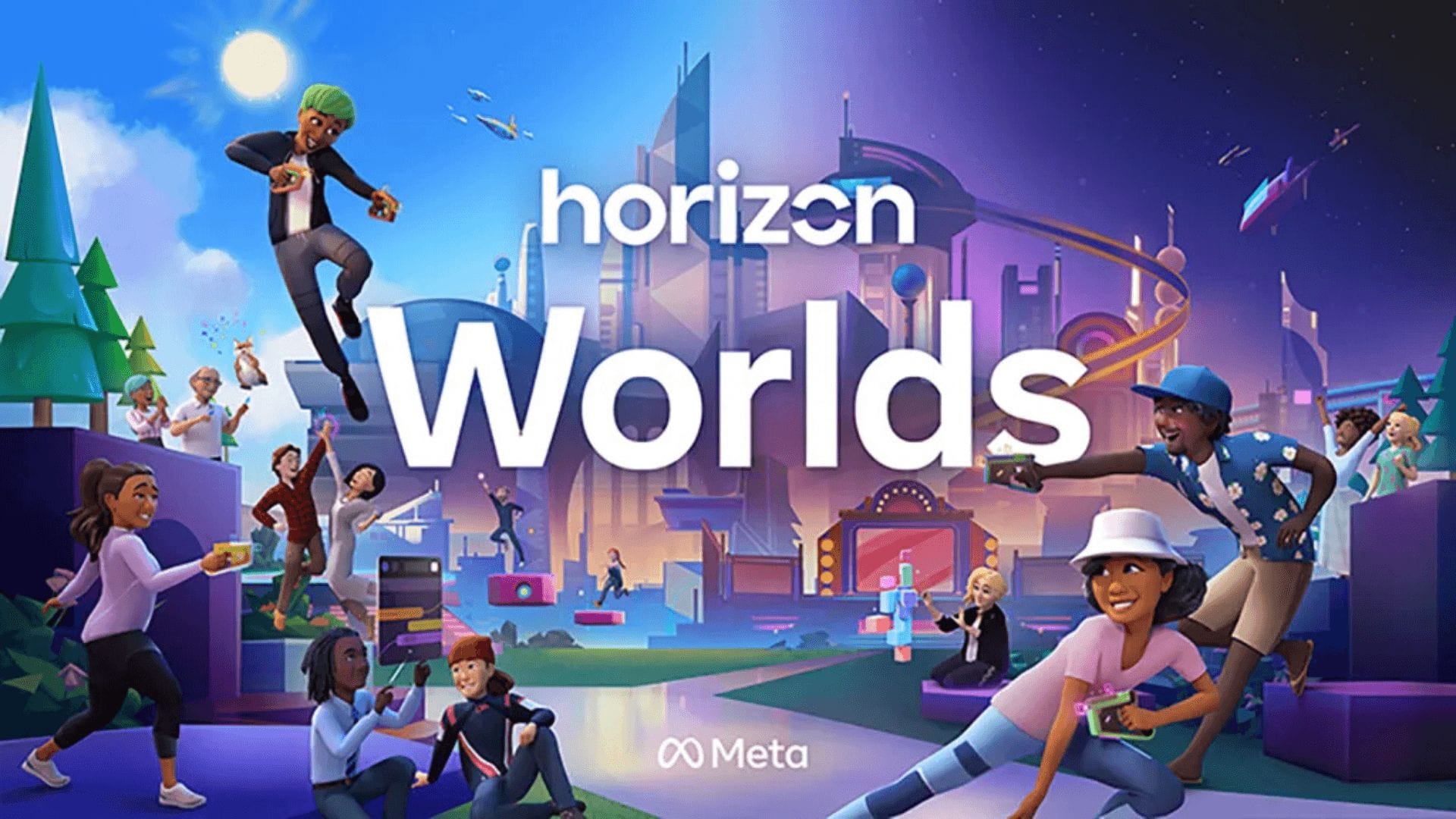
Meta is reorganising its metaverse strategy by separating Horizon Worlds from its Quest virtual reality platform, signalling a stronger push towards mobile and web experiences. The move reflects a broader shift in priorities at the company, which has recently cut spending on its Reality Labs division and signalled a growing focus on artificial intelligence hardware, such as smart glasses.
The change was outlined in a blog post by Samantha Ryan, Meta’s vice-president of Content at Reality Labs. It marks a shift away from the original vision of a single immersive virtual world that would become the central hub for online interaction. Instead, Meta is now positioning Horizon Worlds as a distinct platform with a stronger emphasis on accessibility and scale beyond dedicated VR headsets.
Meta separates Quest and Horizon Worlds to sharpen focus
In her blog post, Ryan explained that Meta is deliberately creating a clearer distinction between its hardware and software platforms. She wrote: “We’re explicitly separating our Quest VR platform from our Worlds platform to create more space for both products to grow.” She added that the company is “doubling down on the VR developer ecosystem while shifting the focus of Worlds to be almost exclusively mobile.”
The separation is intended to allow Meta to concentrate on improving the Quest ecosystem while expanding Horizon Worlds as a standalone service. Ryan said that by breaking the products into two platforms, Meta believes it will be better placed to “clearly focus on each” and develop them independently.
This approach represents a notable change from Meta’s earlier ambitions for the metaverse, which envisioned a tightly integrated ecosystem combining hardware, software and social platforms. By decoupling the two, Meta is effectively acknowledging that virtual reality alone may not deliver the mass adoption it once expected, and that mobile devices offer a more immediate route to large audiences.
Mobile-first Horizon Worlds aims to compete with mainstream platforms
Meta has been developing mobile and web versions of Horizon Worlds alongside its VR application since at least 2023. Shifting the platform to a mobile-first strategy is likely to disappoint some virtual reality enthusiasts, who had hoped the metaverse would be built primarily around immersive headset experiences.
However, the move positions Horizon Worlds as a closer competitor to established platforms such as Roblox and Fortnite, which offer user-generated worlds and games that can be monetised. These platforms have already demonstrated the potential of social and interactive experiences accessible across a wide range of devices, including smartphones and tablets.
Meta appears to believe that accessibility will be key to scaling its ambitions for virtual worlds. By focusing on mobile, the company can connect Horizon Worlds to its existing social networks and potentially reach billions of users. This approach also aligns with Meta’s recent efforts to control costs and concentrate on products that can grow quickly and generate sustainable revenue.
Continued support for developers and Quest gaming plans
Despite closing several of its own VR game studios earlier this year, Meta says it remains committed to supporting third-party developers. The company is introducing new monetisation tools, improving discoverability and adding features such as a “Deals” tab to help developers reach customers. Meta also plans to provide more ways for creators to communicate directly with their audiences.
Maintaining the Quest gaming library is expected to remain a priority, even as Horizon Worlds shifts towards mobile. Business Insider reported on 18 December 2025 that Meta was working on a gaming-focused Quest headset. Meta chief technology officer Andrew Bosworth confirmed on 2 February that the company still has multiple Quest devices on its product roadmap, suggesting that virtual reality hardware will continue to play a role in its long-term strategy.
The reorganisation highlights the tension between Meta’s original metaverse vision and the realities of consumer adoption and financial pressure. By repositioning Horizon Worlds as a mobile-first platform while continuing to invest in VR hardware and developers, Meta is attempting to balance ambition with practicality and keep its options open in a rapidly evolving technology landscape.