


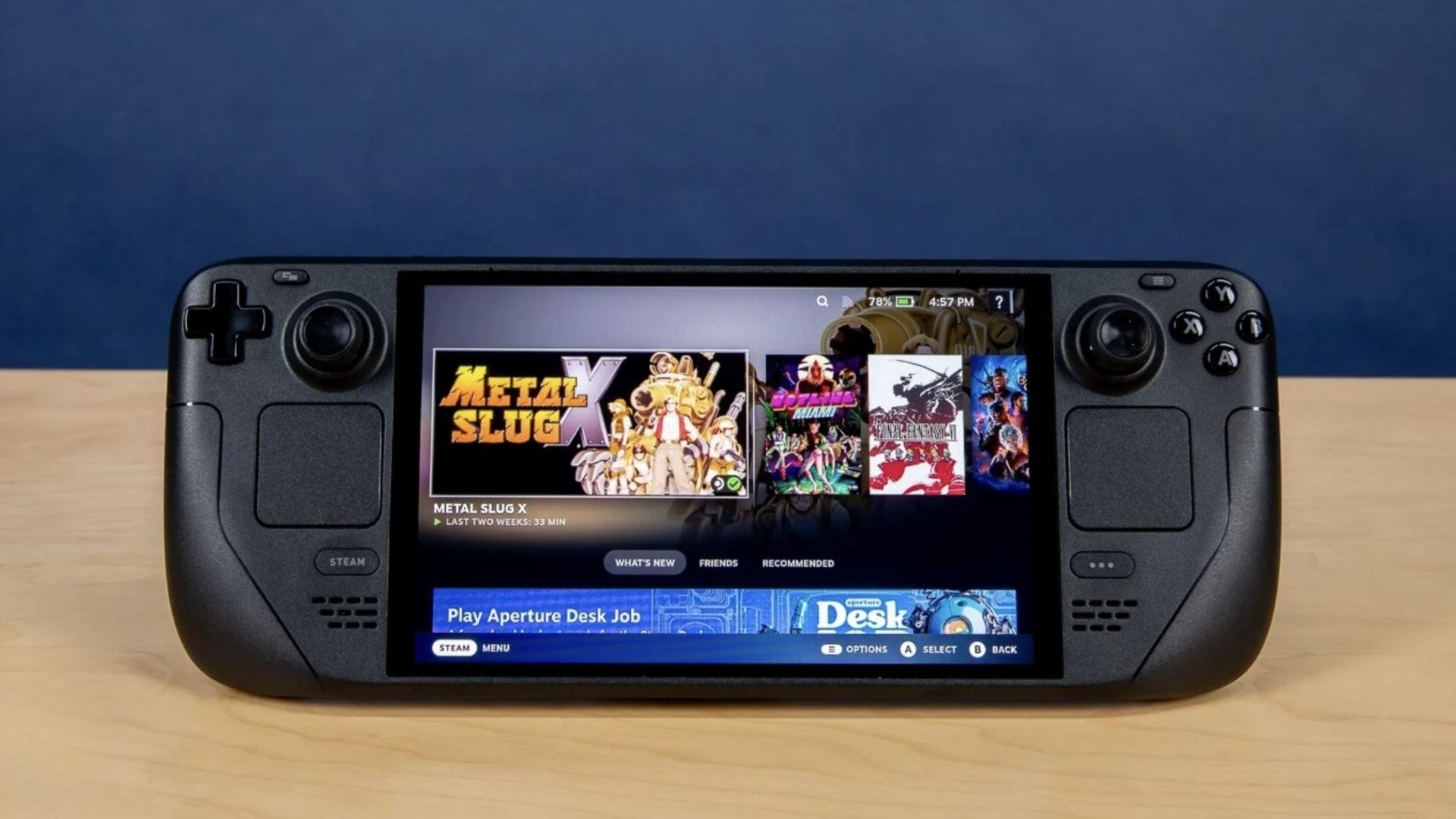
Valve’s Steam Deck handheld console has sold out across several models, raising fresh questions about whether the ongoing global shortage of computer memory is affecting the company’s gaming hardware plans. The sell-out comes days after Valve acknowledged that limited access to memory components was disrupting its broader product roadmap and could influence pricing.
The timing has prompted speculation among industry watchers that the shortage, driven largely by soaring demand from artificial intelligence firms and data centres, may now be affecting consumer gaming devices. While the Steam Deck has previously gone in and out of stock, the current situation stands out because multiple models are unavailable at once.
Steam Deck availability raises questions
The 256GB Steam Deck LCD model, along with the 512GB and 1TB Steam Deck OLED versions, is currently listed as sold out on Valve’s Steam platform. Valve had already announced in December 2025 that it would discontinue the LCD version and sell through remaining inventory, meaning the lack of the 256GB LCD model is not unexpected.
However, the absence of both OLED models is less typical. These versions are considered the company’s flagship handheld offerings, and their simultaneous unavailability has fuelled speculation about supply constraints beyond normal demand fluctuations. Observers have noted that the Steam Deck has usually returned to stock relatively quickly in the past, making the current situation appear unusual.
Valve has not publicly confirmed whether the memory shortage is directly affecting Steam Deck production. Media outlets have contacted the company for comment on availability, but no official explanation has been provided so far. Without clarification, analysts and consumers are left to infer whether the sell-out reflects strong demand, supply chain disruptions, or both.
Broader impact of the memory shortage
The current shortage of RAM and other memory components has been widely described as one of the most significant supply challenges facing the tech industry in recent years. Demand from artificial intelligence companies, cloud providers, and enterprise customers has surged, putting pressure on manufacturers and pushing prices higher across the market.
Valve recently acknowledged that the shortage had complicated its plans for new hardware, including previously announced products such as the Steam Machine, the Steam Controller, and the Steam Frame. At the time, the company avoided discussing pricing and availability, suggesting that tariffs and memory constraints were making it difficult to commit to details. The company later confirmed that limited memory supplies had delayed its plans and would likely affect prices.
Other PC makers have already felt the impact. Framework, a modular PC manufacturer, announced in January that it would raise the price of its Framework Desktop by up to US$460 due to higher component costs. Industry analysts warn that the memory shortage could lead to broader price increases across the PC sector, potentially slowing consumer demand and contributing to a broader economic slowdown.
What this means for the future of the Steam Deck
So far, Valve has not indicated that it plans to make major changes to the Steam Deck line, and the current stock situation may be temporary. Supply disruptions are common in consumer electronics, and the company has previously navigated periods of high demand and constrained manufacturing without resorting to drastic measures.
However, continued shortages could force adjustments. Analysts suggest that prolonged memory constraints could lead to price increases, changes in storage configurations, or delays in future hardware revisions. Valve’s recent comments about its broader hardware strategy suggest that the company is already weighing such trade-offs as it navigates the volatile component market.
For consumers, the uncertainty means that availability and pricing could fluctuate in the coming months. If the memory shortage persists, handheld gaming devices, laptops, and desktops may all become more expensive, reflecting the rising cost of key components. While the Steam Deck sell-out may reflect strong demand, it also highlights how deeply the global memory market is influencing even niche gaming hardware.