

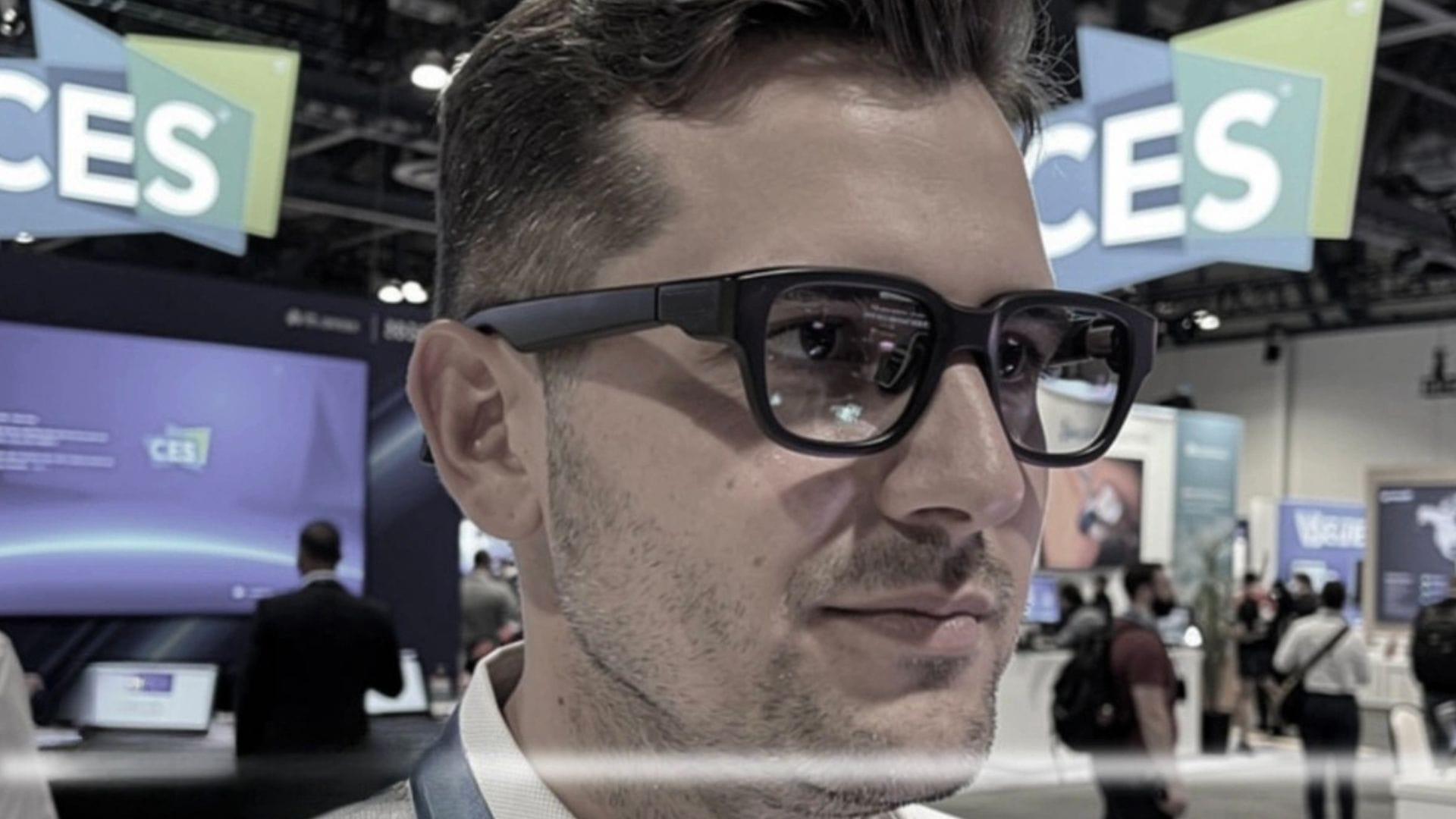
Lenovo has introduced a new AI-powered smartglasses concept at CES 2026, presenting what it sees as the next step in wearable technology. The Lenovo AI Glasses Concept is designed to work as an intelligent companion device that blends digital assistance with everyday surroundings. Lenovo says the device aims to change “how users interact with their surroundings and unifies their workflow,” positioning the wearable as both a productivity tool and lifestyle accessory.
The glasses resemble standard eyewear rather than a bulky tech gadget, signalling Lenovo’s attempt to make augmented computing more natural and socially acceptable. With a lightweight build of 45 grams and an expected battery life of up to eight hours, the company appears focused on making the glasses feasible for daily use rather than an occasional novelty. While still a concept, the device shows where Lenovo believes wearable computing is heading in the next generation of consumer and professional technology.
Design, comfort and connectivity
Lenovo’s approach appears to prioritise subtlety and comfort, with the AI Glasses Concept styled like a regular pair of spectacles. This makes them comparable to devices such as Meta’s Ray-Ban Display glasses, which also seek to deliver technology in a familiar form factor. By keeping the design understated, Lenovo is clearly trying to avoid the bulky, experimental look that has limited the wider acceptance of previous smartglasses.
Battery life is another core part of the design vision. Lenovo states the glasses can operate for up to eight hours, which covers a typical working day. This places the device in a practical bracket rather than something that needs constant charging. The glasses connect wirelessly to a smartphone or compatible smart device, which handles most of the processing. This offloading strategy keeps the glasses light while still offering advanced capabilities.
AI features aimed at productivity and real-time assistance
One of the standout elements of the concept is Lenovo and Motorola’s proprietary AI platform, Qira. The company says this platform enables “sub-millisecond live translation and intelligent image recognition,” highlighting its ambition to make real-time assistance central to the experience. Features like instant translation could be useful in travel, business, or multicultural work settings, while image recognition may support tasks ranging from education to workplace training and field operations.
Another notable function is a tool Lenovo calls Catch Me Up. This feature generates AI-powered summaries of notifications and updates across multiple devices, helping users stay informed without constantly checking screens. Lenovo is pitching this as a way to reduce digital overload by condensing information into meaningful highlights delivered directly through the glasses. The combination of assistance features suggests Lenovo envisions the glasses as a hub for streamlined daily interaction.
Interaction, media and potential use cases
The Lenovo AI Glasses Concept supports both voice and touch input, offering users different ways to interact depending on their environment. This dual-mode control approach is designed to make the glasses more flexible in real-world settings, whether someone is speaking commands in a quiet space or using touch when voice control would be intrusive. A built-in teleprompter feature is also included, which could appeal to presenters, content creators and professionals who speak publicly.
Lenovo has also integrated speakers into the glasses to enable audio playback. This addition widens their potential use from productivity alone to entertainment and leisure. The company highlights music listening as one of the supported functions, indicating that Lenovo wants the glasses to feel like a daily wearable rather than a niche tech tool. While this is still a concept device with no confirmed release timeline, it reflects Lenovo’s interest in blending computing with everyday environments through AI.
As with any early-stage concept, many details remain unknown, including pricing, market availability and whether this exact design will reach consumers. However, the Lenovo AI Glasses Concept demonstrates a clear direction: wearable AI that supports communication, productivity, and digital interaction in a lightweight, familiar form. If developed further, the device could play a role in shaping how augmented and AI-driven eyewear evolves over the coming years.