

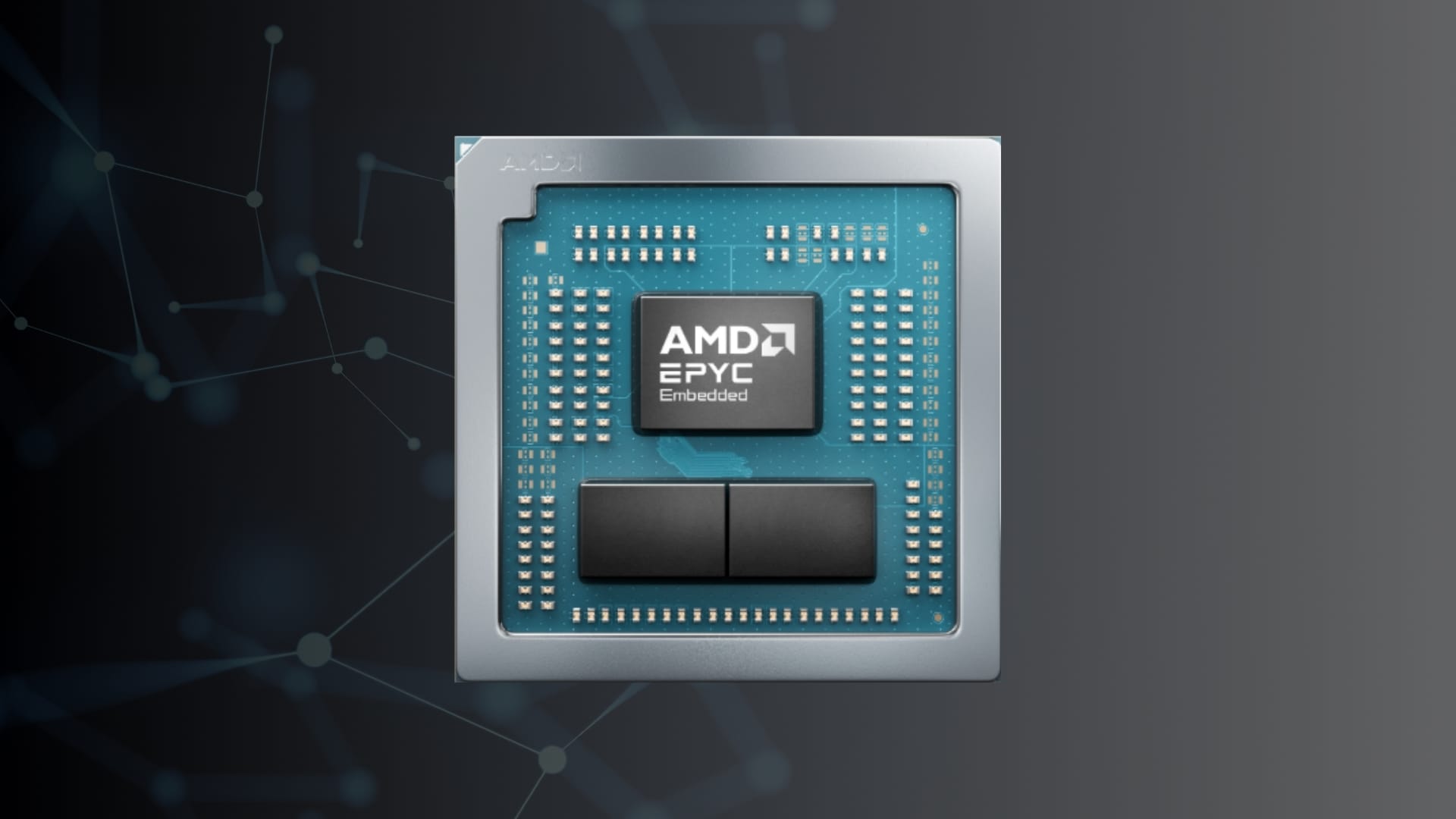
AMD has introduced the EPYC Embedded 2005 Series, a new line of processors built to deliver higher compute density, improved energy efficiency and long-term reliability for embedded systems with strict power, thermal and space limitations. The processors target networking equipment, storage appliances and industrial platforms that must support demanding, AI-driven workloads and operate continuously in constrained environments.
The series is designed around a compact 40mm by 40mm ball grid array package, which AMD says is 2.4 times smaller than comparable Intel Xeon 6500P-B solutions. The smaller form factor allows system designers to achieve higher input and output density, shorten electrical paths to improve signal integrity and take advantage of better thermal management while keeping system costs down.
AMD positions the EPYC Embedded 2005 range as a response to growing requirements in areas such as switches, routers, cold cloud storage, aerospace systems and robotic platforms. These deployments need more processing capability and improved efficiency without increasing overall power draw or system footprint.
Performance and efficiency upgrades
The EPYC Embedded 2005 processors are powered by AMD’s Zen 5 architecture and offer up to 16 x86 cores and 64MB of shared L3 cache. Thermal design power ranges between 45W and 75W, enabling system integrators to tune performance for a variety of power profiles.
AMD claims the new series offers up to 28 percent higher boost clock speeds and 35 percent higher base clock speeds than the comparable Intel Xeon 6503P-B, while using half the TDP. This efficiency is intended to help organisations reduce system cost and improve performance density in edge devices, storage platforms and industrial control systems.
The processors are built for continuous operation and are rated for up to 10 years of field use. AMD is also committing up to 10 years of component availability and technical support, along with 15 years of software maintenance, to give manufacturers long-term stability for high-volume deployments. The company positions these lifecycle guarantees as a way to increase design longevity and improve return on investment for system builders.
Security and reliability features form a core part of the platform. The processors incorporate an extensive set of Reliability, Availability and Serviceability functions to detect and correct errors proactively. Support for features such as Baseboard Management Controller integration, PCIe Hot Plug and multi-SPI ROM provide additional flexibility for system architects. AMD Infinity Guard, which includes AMD Secure Processor, Platform Secure Boot and Memory Guard, adds hardware-level protection for sensitive workloads.
Connectivity and software support
The series supports 28 lanes of PCIe Gen5, allowing engineers to consolidate high-speed components such as Ethernet network interface cards, FPGAs and networking ASICs. Up to 16 PCIe lanes can be aggregated to support faster data paths for advanced networking or acceleration workloads. DDR5 support provides improved memory bandwidth and a clear migration route as DDR4 nears end-of-life across the industry.
AMD says developers will also benefit from a broad open-source software ecosystem, including upstream support for the Yocto Project, kernel drivers and EDK II. These tools are intended to ease system integration and shorten development cycles for embedded designs.
The company expects adoption across next-generation embedded infrastructure where stronger performance per watt, scalable I/O and long-term reliability are essential. AMD says the EPYC Embedded 2005 Series aims to meet the needs of AI-driven and connected systems that must maintain consistent operation in demanding environments.