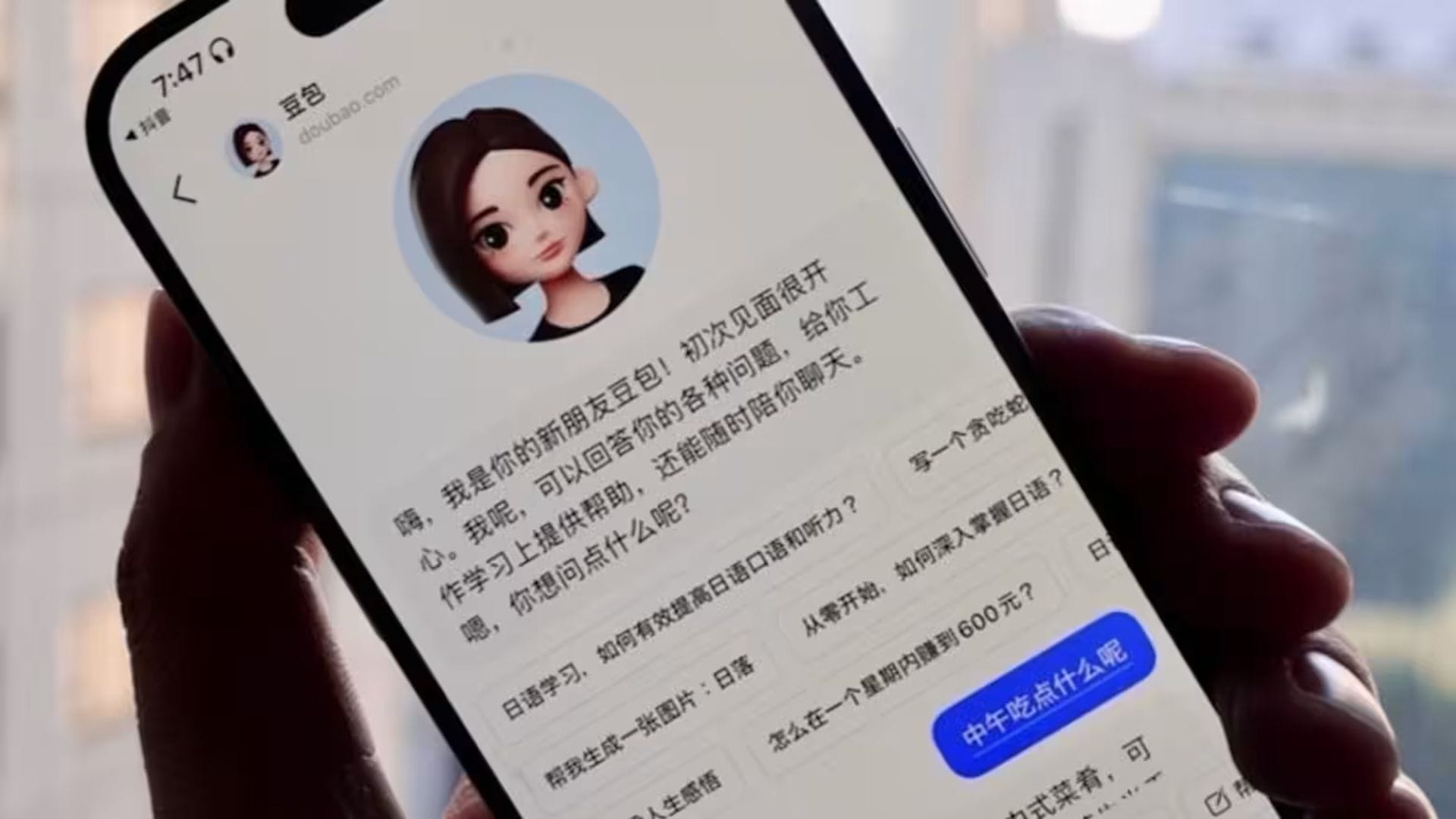
ByteDance has begun limiting the functions of its agentic artificial intelligence smartphone after several major Chinese apps imposed restrictions on how the device’s voice-operated assistant can interact with their platforms. The company confirmed that it has scaled back the capabilities of Doubao, the AI system embedded within the handset, following concerns raised by developers of payment services, e-commerce platforms, and social media apps.
The smartphone at the centre of the backlash is the Nubia M153, an experimental device co-developed by ByteDance and ZTE. Released as a “technology preview version”, the phone has drawn strong interest among tech-savvy early adopters because it allows users to operate most functions through spoken commands rather than by touching the screen. This has made the device an intriguing showcase of ByteDance’s ambitions in agentic AI, a model designed to carry out complex tasks across apps without constant human input.
Restrictions imposed by major platforms
In a statement issued on 6 December, ByteDance said it would prevent the Nubia M153 from claiming rewards and promotional incentives intended for human users. These features, typically offered by various apps to encourage daily activity, had come under scrutiny as Doubao’s automated operations risked granting the device an unfair advantage over real people.
ByteDance also announced that interactions between Doubao and financial applications would be suspended. This includes banking tools and payment platforms, many of which had already begun limiting the AI’s access. Alipay, the widely used payments service owned by Ant Group, was one of the earliest platforms to impose restrictions. Food-ordering service Ele.me and e-commerce giants Pinduoduo and Taobao also limited how Doubao could operate within their apps.
Some restrictions were triggered after users reported that their accounts became locked or temporarily suspended when Doubao attempted to perform actions such as payments, online purchases or login authentication. These platforms have taken a cautious stance on security, automation, and potential policy violations associated with advanced AI assistants.
ByteDance confirmed that it was also disabling Doubao’s capabilities in competitive gaming apps, saying the decision was intended to maintain fair play. The company emphasised that developers across China were still establishing clearer guidelines for how app-integrated AI assistants should behave, particularly when accessing sensitive or regulated services.
User concerns about privacy and app stability
For many early adopters, the Nubia M153’s promise lies in its hands-free convenience. Users can ask Doubao to publish posts on social media, navigate the interface, complete forms or carry out multi-step tasks. However, these capabilities have raised concerns among app providers and consumers alike.
Chen Tang, a 21-year-old freelancer and one of the device’s early buyers, said a growing number of major apps were now inaccessible through Doubao. He noted that although he could still log in manually, his accounts would be limited or flagged once the AI assistant attempted to control them. “It has a global memory, so it basically knows everything about you,” Tang said, referring to the system’s device-wide memory that helps it track ongoing tasks. He added that, despite his interest in AI-driven devices, he was not yet ready to replace his iPhone Pro Max with the new phone.
Other users reported issues when using Doubao with WeChat, China’s dominant messaging and lifestyle platform. According to posts on social media, AI-assisted operations sometimes caused the app to crash, block logins or place temporary restrictions on accounts. ByteDance responded by removing Doubao’s ability to control WeChat entirely, stating that it was working with developers to find solutions that would avoid indiscriminate prohibitions while protecting user experience and security.
Despite the restrictions, some services continue to work smoothly with Doubao. Meituan’s food delivery platform and Douyin, ByteDance’s own short-video app, remain compatible with the AI assistant, indicating that limitations vary widely between companies depending on how they interpret the risks of agentic automation.
Privacy remains a major concern among users. ByteDance has stressed that the phone does not upload screen content or operational data to its servers, and that none of the information processed on the device is used to train its AI models. Yet comments from users such as Tang suggest that uncertainties around data handling continue to affect trust. The presence of a device-wide AI memory system, while central to Doubao’s usefulness, has led some to question how much of their personal information is stored locally and how the assistant chooses to act on it.
Experimental device faces regulatory and industry challenges
The Nubia M153 is priced at 3,499 yuan (US$494) and sold directly through ZTE’s website. The purchasing page emphasises that the phone is aimed at industry professionals and early testers, and warns that many of its features are still under development. Even so, the device has become a focal point in China’s emerging market for agentic AI, where companies are racing to build assistants capable of automating daily tasks, navigating multiple platforms, and making independent decisions.
That ambition is now colliding with the complex reality of China’s digital ecosystem, where apps operate under strict security requirements and user-protection rules. The introduction of AI assistants capable of mimicking human behaviour has raised questions about accountability, login verification, in-app transactions and platform-specific policies.
ByteDance has stated that it is working closely with app developers to establish consistent guidelines that will allow AI assistants like Doubao to operate safely and predictably. The company said it hopes to avoid blanket bans that disrupt legitimate usage while still respecting the terms and security frameworks set by other platforms.
For now, the limitations imposed by major Chinese apps suggest that the path towards mainstream, agentic AI smartphones remains complex. The Nubia M153 may continue to attract interest for its blend of experimental features and voice-driven convenience. Still, its success will depend on whether app providers and regulators can align with ByteDance’s vision of seamless, AI-powered interaction.