

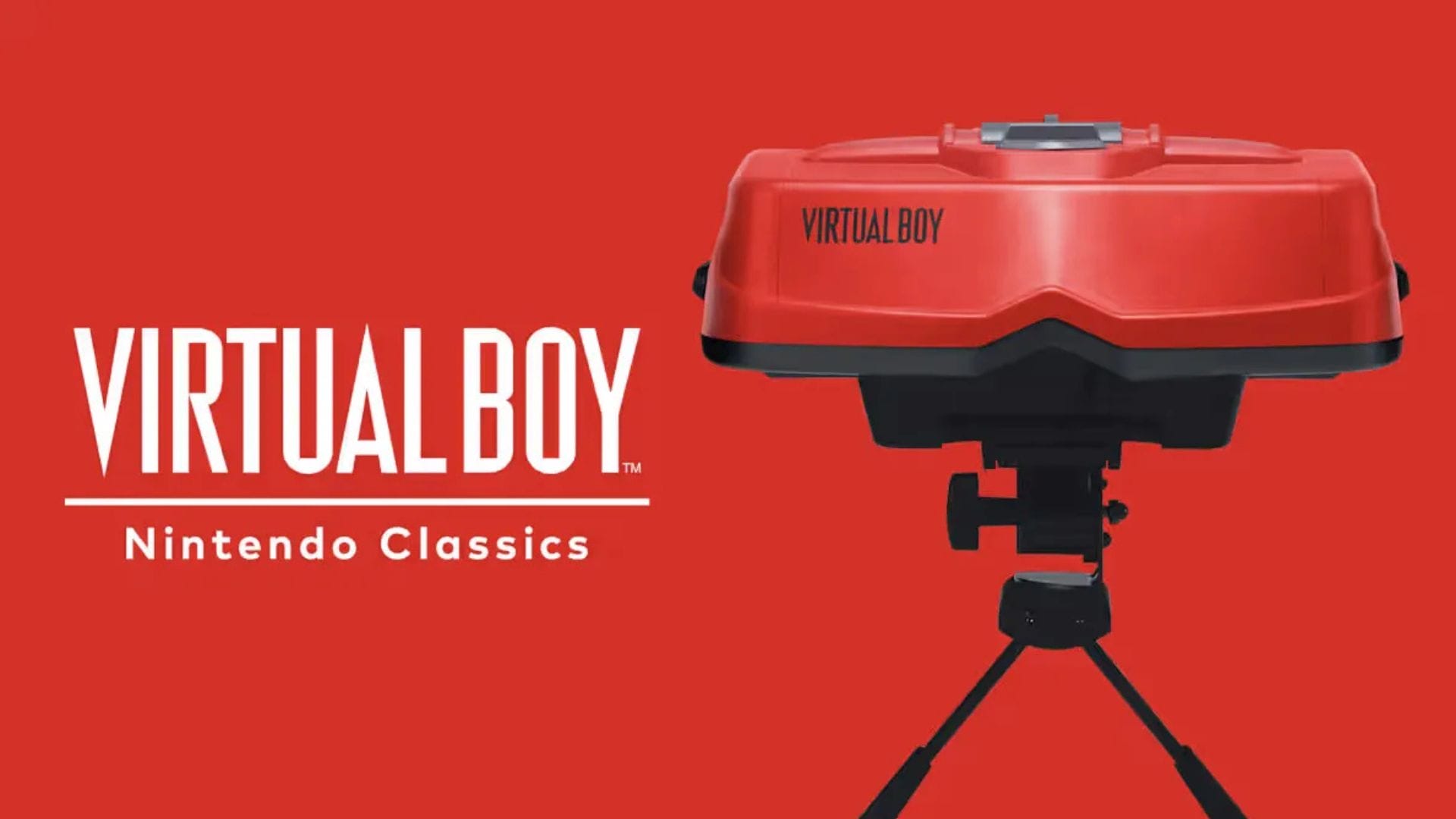
Nintendo is bringing back one of its most unusual consoles, reimagined as an add-on for the upcoming Switch 2. The Virtual Boy, first released in 1995 and discontinued within a year, has long been remembered as both a commercial failure and a cult curiosity. More than 30 years later, the company is reviving the idea as a detachable accessory that aims to celebrate, rather than correct, the odd design choices that defined the original device.
The new Virtual Boy add-on is positioned as both a nostalgic tribute and a working piece of modern hardware. Nintendo has confirmed that it will launch later this month, giving players a chance to experience a vision of virtual reality that predates today’s headsets by decades. While virtual reality remains a niche part of the games industry even now, Nintendo appears comfortable leaning into the strangeness of its earlier experiment rather than modernising it beyond recognition.
Early demonstrations suggest that the add-on is deliberately faithful to the original concept. The familiar red-and-black colour scheme is intact, and the device still sits on a stand rather than being worn on the head. For long-time Nintendo fans, this approach reinforces the sense that the Virtual Boy is less about cutting-edge technology and more about revisiting an unusual chapter in the company’s history.
Familiar design with practical updates
Although the new Virtual Boy closely resembles its predecessor, Nintendo has made several significant changes to ensure it works smoothly with modern hardware. Instead of containing its own display and processing components, the unit includes a slot for the Switch 2 tablet. Users insert the console with the Joy-Con controllers removed, turning the Switch 2 into both the screen and the system’s computing core.
This modular approach offers several advantages. Because the Switch 2 has its own battery, the Virtual Boy no longer requires external power cables, removing one of the practical inconveniences of older hardware. Games are also delivered digitally, allowing players to download titles directly from Nintendo’s online store rather than relying on dedicated cartridges. Visual quality is significantly sharper than on the 1990s version, thanks to the Switch 2’s higher-resolution display.
Nintendo has also avoided reviving the original Virtual Boy controller, which was widely criticised for its awkward layout. Instead, the add-on supports the existing range of Switch controllers, offering a more familiar and flexible control scheme. Together, these updates result in a product that preserves the look and feel of the original while sidestepping many of the technical limitations of 1990s gaming hardware.
An unfiltered look at early virtual reality
Despite these improvements, the Virtual Boy’s experience remains intentionally unconventional. Unlike modern virtual reality headsets, the device is not strapped to the user’s head. Players must adjust the stand so that the viewing mask lines up with their face, then lean forward to engage with the display. The visual output is still presented entirely in red, reinforcing the sense of stepping back in time.
Nintendo has included interpupillary distance adjustments, allowing users to fine-tune the visuals for clarity. Even so, the overall interaction feels markedly different from contemporary VR systems. This appears to be a deliberate choice, offering an authentic recreation of how virtual reality was imagined in the mid-1990s rather than an attempt to compete with today’s immersive technologies.
The software library further underlines this approach. At launch, the Virtual Boy add-on includes seven games, many of which reflect early and often experimental ideas about three-dimensional gameplay. Titles such as Galactic Pinball and Red Alarm demonstrate slow pacing and unusual perspectives that can feel awkward by modern standards. 3D Tetris presents a constantly shifting playfield that may be disorientating for some players. Virtual Boy Wario Land stands out as the most polished of the group and is widely regarded as the strongest title from the original platform.
Nintendo has confirmed plans to expand the library over the coming months. Nine additional games are scheduled to arrive throughout the year, including Mario’s Tennis and previously unreleased projects such as Zero Racers and D-Hopper. These additions are intended to deepen the sense of the Virtual Boy as a historical showcase rather than a mainstream gaming platform.
The Virtual Boy add-on for the Switch 2 will go on sale on 17 February for US$100. Access requires an active Nintendo Switch Online + Expansion Pack membership. While it is unlikely to appeal to a broad audience, the device offers a distinctive glimpse into how the future of gaming was once imagined, preserved in a form that embraces its own eccentricity.