


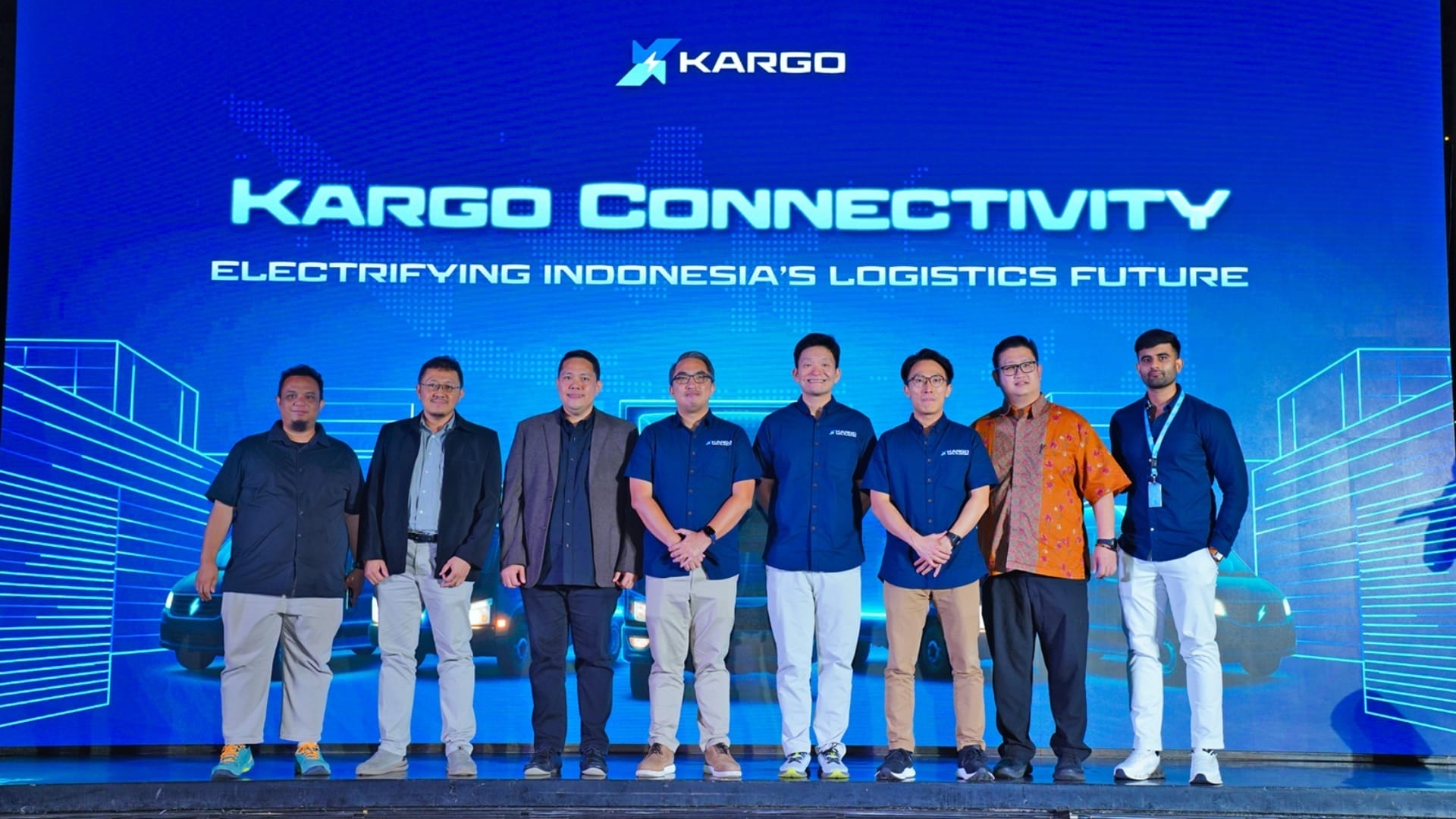
Kargo Technologies has set out an ambitious plan to transition its entire logistics fleet to electric vehicles by 2035. The Indonesia-based logistics technology company said the shift will include more than 40,000 vehicles over the next decade and will form the backbone of what it calls Asia’s “Electrified Silk Road”, an AI-driven trade network that links Southeast Asia, China, and the Gulf.
The company introduced the initiative at an event in Jakarta, where it also revealed a refreshed visual identity. More than 150 policymakers, industry leaders, EV manufacturers, and financiers attended the launch, reflecting the growing interest in accelerating Indonesia’s energy transition. Kargo said the move aligns with the country’s national direction for low-emission mobility, as outlined in Permen ESDM No. 10/2025 and Perpres No. 112/2022.
Kargo plans to deploy more than 500 EVs in 2025 and increase that number to 2,500 by 2026. These vehicles will serve as the early foundation for a larger electric fleet that supports domestic and cross-border logistics routes. The initiative is positioned as a model for cleaner and more efficient operations that reduce emissions and improve cost performance across the supply chain.
CEO and founder Tiger Fang said the shift enables the company to redesign the logistics experience through improved data and system-level optimisation. “Electric vehicles allow us to see logistics not merely as transportation, but as an integrated system that can be analysed, measured, and continuously improved,” he said.
Building the Electrified Silk Road
The company said its long-term ambition is to help create a connected logistics corridor powered by EVs and AI. This Electrified Silk Road aims to provide cleaner and more transparent trade routes using an asset-light model. Kargo expects the combination of electrified fleets and digital intelligence to raise reliability and visibility for shippers and transporters across the region.
Several corporate customers, including SPX, Astro, Teleport, and Modena, have already begun integrating EV routes within their networks as part of Kargo’s 2035 roadmap. Their early involvement is intended to support commercial growth while meeting decarbonisation targets. The company added that the expansion of EV routes will improve overall operational performance and support the shift to low-emission logistics.
During the event, industry leaders highlighted the private sector’s role in speeding up adoption. KADIN Indonesia chairman Anindya Bakrie said companies need to turn policy into action through real projects. “The government has laid out a clear direction for energy transition, but it is the private sector that must turn policy into real projects, real fleets, and real jobs,” he said. He added that the growing EV logistics ecosystem shows the potential for green logistics to generate employment across manufacturing, financing, and operations.
Djauhari Oratmangun, Indonesia’s ambassador to China, noted the rising level of Chinese investment in EV manufacturing, batteries, and digital logistics. He said these partnerships support the country’s energy transition and strengthen its role in shaping cleaner trade routes between China and Southeast Asia.
New identity and partnership strategy
Kargo also introduced a new logo, featuring two diagonal arrows converging into a lightning bolt. The company said the arrows represent operational links with partners and customers while the lightning bolt reflects its commitment to electric mobility. The updated identity reinforces its transition toward fully electric operations and a more integrated logistics model.
The company has begun a pilot phase with selected customers to evaluate energy efficiency, route readiness, infrastructure needs, and user feedback. This phase supports the broader rollout and provides real-world data to refine operational planning.
Kargo’s EV fleet partnership programme offers shippers and corporate clients greater visibility through data integration with the Kargo Nexus platform. The system combines EV telemetry with shipment data to provide real-time insights. The company said this helps logistics teams address longstanding challenges such as route optimisation, predictability, and operational transparency. It also enables corporate partners to track progress toward environmental goals with measurable outcomes.
To secure long-term EV supply, the company has signed memorandums of understanding with several commercial EV manufacturers, including Foton, JAC, Wuling, and VKTR. These brands have localised their production in Indonesia, which Kargo said will support job creation and strengthen the country’s position as a regional hub for EV manufacturing and green logistics.
In financing, global banks such as HSBC and partners including Indomobil Finance and Chailease are providing structured support to expand EV fleet deployment. Kargo is offering flexible rental, procurement, and financing models to help transporters and fleet partners make the transition more gradually. Partners that join the programme will also gain access to exclusive projects requiring EV deployment, placing them at the forefront of Indonesia’s shift toward electric-based logistics.