

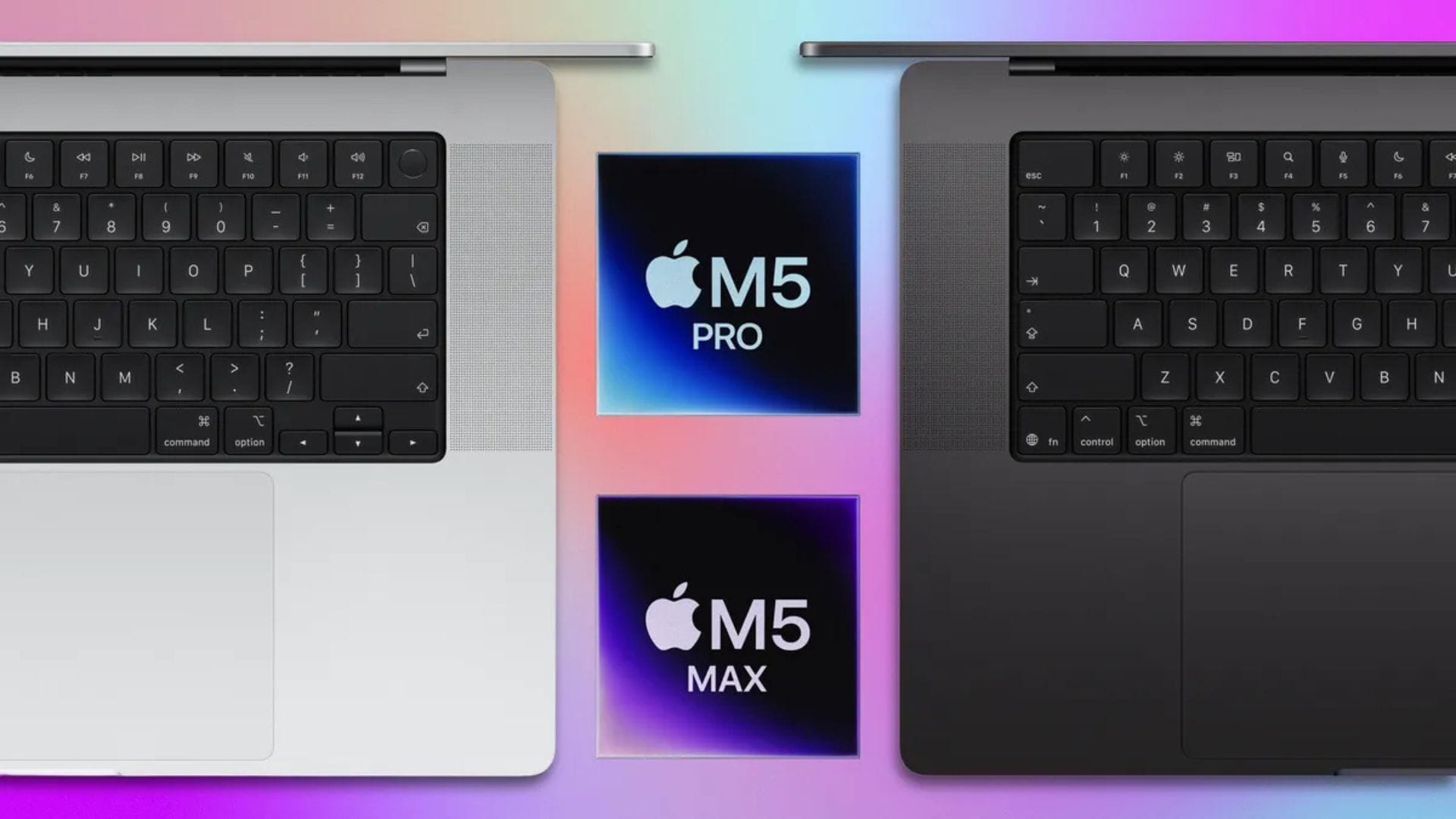
Apple has unveiled a new generation of MacBook Pro laptops powered by its latest M5 Pro and M5 Max chips, bringing higher performance and increased base storage to its professional line-up.
The updated machines will be available in both 14-inch and 16-inch versions. Pre-orders open on 4 March, with shipping expected to begin on 11 March. However, customers will need to budget more than before, as prices have risen across the entire range compared with the previous generation.
The launch comes several months after Apple first introduced its standard M5 chip last autumn. While that initial announcement was followed by a quieter refresh of the entry-level MacBook Pro, the more powerful Pro and Max variants have arrived later than many industry observers anticipated.
New chip configurations and performance upgrades
The 14-inch MacBook Pro can now be configured with either the M5 Pro or the M5 Max chip. The M5 Pro version offers a central processing unit with either 15 or 18 cores, paired with 16 or 20 graphics processing unit cores. For users seeking greater graphical performance, the M5 Max option includes 18 CPU cores and a choice of 32 or 40 GPU cores.
In its base configuration with the M5 Pro, the 14-inch model comes with either 24GB or 48GB of unified memory. Apple has also increased the starting storage to 1TB, doubling the previous base level of 512GB. The company says this move is intended to provide more headroom for professional workflows involving large files and demanding applications.
The 16-inch MacBook Pro begins with the M5 Pro chip featuring 18 CPU cores and 20 GPU cores as standard. Buyers can also select the same M5 Max configurations available on the smaller model, offering identical high-end processing and graphics capabilities in a larger chassis.
Apple states that storage performance has also improved significantly. According to the company, the solid-state drive in the new models is up to twice as fast as in the previous generation. This means users are not only receiving more storage capacity as standard, but also quicker read and write speeds, which can reduce loading times and improve responsiveness in professional software.
Higher prices across the line-up
Alongside the hardware upgrades, Apple has increased pricing throughout the MacBook Pro range. The 14-inch model previously started at US$1,599. The new entry point is US$1,699. While the increase may concern some buyers, the base model now includes 1TB of storage as standard, effectively doubling its predecessor’s capacity.
The price adjustments are even more noticeable in the higher tiers. The 14-inch MacBook Pro with the M5 Pro chip now starts at US$2,199, up from US$1,999. The 16-inch version begins at US$2,699, compared with US$2,499 previously.
The 16-inch M5 Pro configuration includes 24GB of memory and 1TB of storage as standard. As with the smaller model, this represents a doubling of the base storage offered in the earlier generation. For those opting for the M5 Max, pricing starts at US$3,599 for the 14-inch model and US$3,899 for the 16-inch version. These variants include 36GB of memory and 2TB of storage at the entry level.
The price increases reflect both the enhanced specifications and the company’s continued focus on positioning the MacBook Pro as a premium device for creative professionals, developers, and other power users.
Connectivity, battery life and display remain key features
Beyond processing power and storage, Apple has introduced updated connectivity features. The new MacBook Pro models include the company’s in-house N1 chip, which supports Wi-Fi 7 and Bluetooth 6. This is designed to provide faster wireless speeds and improved reliability, particularly in high-density network environments.
Battery life remains a central selling point. Apple says the MacBook Pro is rated for up to 24 hours of battery life, depending on usage. This claim, if realised in real-world conditions, would keep the device among the longest-lasting laptops in its category.
The display technology remains unchanged. Both models continue to feature the Liquid Retina XDR display introduced in earlier generations, offering high brightness levels, strong contrast and accurate colour reproduction. The laptops are also equipped with a 12-megapixel front-facing camera with Centre Stage, which automatically adjusts the frame to keep users centred during video calls.
The timing of the announcement is notable. Apple introduced its M5 chip last autumn in line with its usual release cycle. Still, the more powerful Pro and Max versions have taken several additional months to appear in new hardware. The initial M5 MacBook Pro refresh announced in October attracted relatively little attention, making this more substantial upgrade the first major spotlight moment for the M5 Pro and M5 Max.
With increased performance, faster storage and higher prices, the new MacBook Pro models signal Apple’s continued push into the high-performance laptop market.