

At CES 2026 in Las Vegas on 6 January, Lenovo unveiled a new approach to artificial intelligence with the introduction of Lenovo Qira and Motorola Qira, a single personal ambient intelligence designed to operate seamlessly across multiple devices. Rather than positioning Qira as a standalone assistant or application, Lenovo framed it as a built-in intelligence that sits at the system level and remains continuously available across supported products.
According to Lenovo, Qira is designed to understand context, follow users across screens and environments, and support everyday tasks without requiring explicit commands or app switching. The company described this as a move away from app-based AI towards ambient intelligence that is present in the background and surfaces assistance when appropriate, subject to user permission and control.
Dan Dery, Vice President of AI Ecosystem at Lenovo’s Intelligent Devices Group, said Lenovo Qira represents a fundamental change in how intelligence is delivered on devices. “Lenovo Qira is not another assistant, it’s a new way intelligence shows up across your devices,” he said. “Our goal is to make AI feel less like a tool you use and more like an intelligence that works with you, continuously and naturally.”
One intelligence that moves with the user
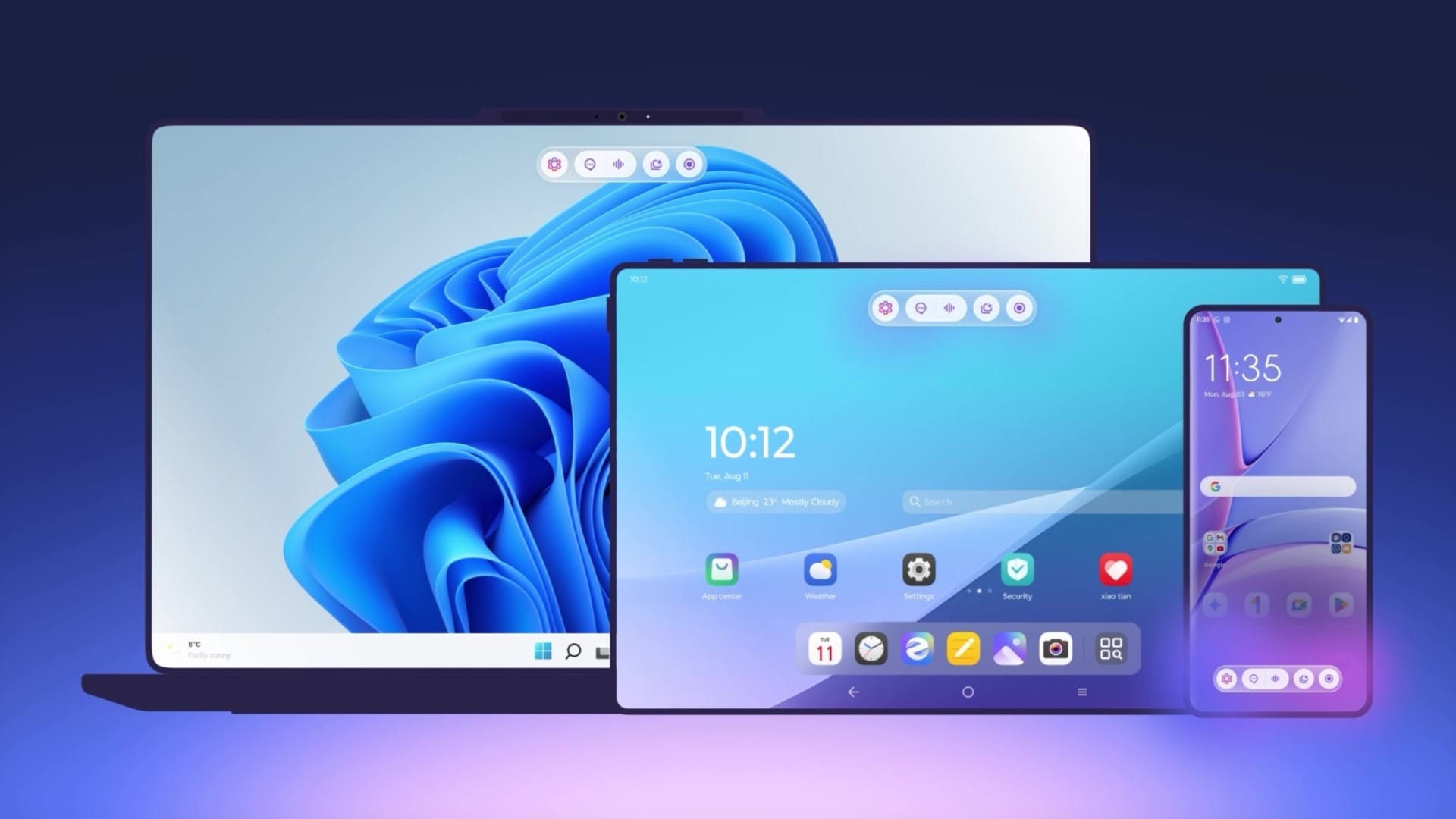
Lenovo Qira is designed as a single intelligence shared across Lenovo and Motorola products, maintaining continuity as users move between PCs, tablets, smartphones, wearables, and other form factors. Embedded directly into the operating system, it is intended to preserve context across tasks and devices, reducing friction when switching screens or workflows.
The system is built around three core attributes: presence, actions, and perception. Presence refers to Qira’s system-level integration, which allows it to be accessed through multiple natural entry points while maintaining a consistent experience. It can offer proactive suggestions, respond immediately when invoked, or remain unobtrusive in the background, adapting to individual engagement preferences. Users can activate it through voice commands, a dedicated key, or a persistent on-screen interface.
The actions capability enables Qira to carry out tasks on behalf of the user by coordinating device functions, applications, and AI agents. Lenovo emphasised that this includes support for on-device processing and offline scenarios, allowing tasks to continue even without a cloud connection. By orchestrating steps across apps and devices, Qira is intended to reduce the need for manual task management.
Perception focuses on building a fused knowledge base that combines user-selected interactions, documents, and memories across devices. Lenovo stated that this model develops over time, using cross-device sensing to understand context, continuity, and personal patterns, while keeping privacy and consent central to how data is handled.
Experiences built around everyday moments
Lenovo outlined several core experiences designed to support common real-world scenarios. One of these, called Next Move, provides proactive and contextual suggestions based on what the user is doing at a given moment, with continuity improving over time as the system learns preferences and patterns. The aim is to help users progress through tasks without unnecessary steps.
Another experience, Write For Me, is designed to assist with drafting emails, documents, messages, and notes directly within the user’s existing workspace. Lenovo said Qira can adapt to tone and intent, helping users shape ideas into clear writing without starting from a blank page or switching between applications.
Live Interaction enables real-time, multimodal engagement while sharing a screen or camera, allowing Qira to respond to both spoken input and visual context. This is intended to make collaboration with AI feel more conversational during meetings or creative sessions. Catch Me Up addresses interruptions by summarising activity that occurred while a user was away, highlighting key points and enabling a smoother return to work or conversations.
For meetings and discussions, Pay Attention offers real-time transcription and translation when enabled, alongside summaries and captured key points that can be revisited later. Lenovo also highlighted more focused creative environments such as Creator Zone, which are designed to support tasks like visual creation and photo editing with fewer distractions and greater control.
Privacy and ecosystem integration were positioned as central to Qira’s design. Lenovo stated that its hybrid AI architecture prioritises on-device processing to keep personal data local, while secure cloud services extend functionality where needed. The company described the system as secure, ethical, and accountable by design, with user control over data and interactions.
Qira is supported by a growing partner ecosystem that adds specialised capabilities while maintaining a consistent user experience. These include Microsoft’s AI stack through Windows Foundry and Microsoft Azure for local-to-cloud coordination, Stability AI for on-device text-to-image creation in Creator Zone, Notion for secure access to workspace content, Perplexity for deeper topic exploration, and Expedia Group brands Expedia and Vrbo for surfacing relevant travel options and streamlining trip planning.
Lenovo said the experience will appear as Lenovo Qira on Lenovo devices and Motorola Qira on Motorola devices, delivering a single personal AI across product lines. The rollout will begin on select Lenovo devices in Q1 2026, followed by expansion to supported Motorola smartphones. Existing Lenovo AI Now users will receive seamless over-the-air upgrades, with broader availability planned over time.