

Lenovo has used CES 2026 in Las Vegas to unveil a broad update to its gaming portfolio, spanning high-end concept hardware, new Legion laptops, a SteamOS-powered handheld, and refreshed LOQ devices. The announcements reflect Lenovo’s continued focus on serving different gaming audiences, from professional esports athletes and students to mobile gamers seeking portable performance.
At the centre of the showcase is a new Legion laptop proof of concept featuring a rollable display designed to replicate tournament-grade training environments in a compact form factor. Alongside this, Lenovo introduced updates across its Legion and LOQ ranges, including a new Legion Go handheld running SteamOS and several AI-enabled gaming laptops powered by the latest processors and graphics.
Speaking at the launch, Ouyang Jun, Senior Vice President of the Consumer Segment at Lenovo Intelligent Devices Group, said the company’s Legion range is designed to support gamers wherever they play, whether at a desk, on the road, or at the highest levels of competition. He added that the latest devices aim to meet users in different contexts without compromising performance or flexibility.
Rollable display concept targets elite esports training
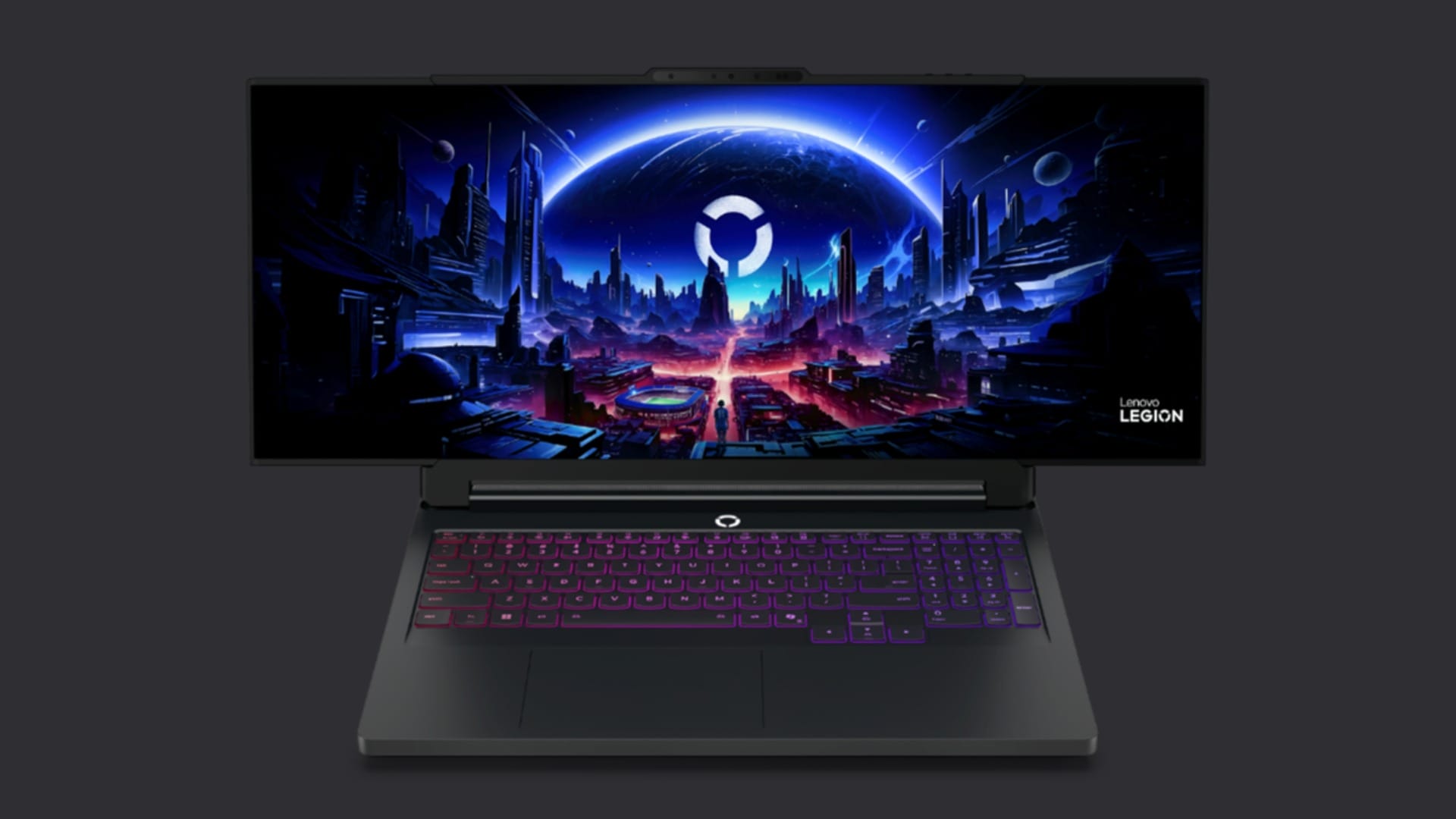
The Legion Pro Rollable Concept is a 16-inch gaming laptop that can expand horizontally to 21.5 inches and then to a full 24 inches, matching the display sizes commonly used in professional esports tournaments. Lenovo positioned the concept as a response to the challenges faced by elite players who travel frequently but need consistent training conditions.
The rollable Lenovo PureSight OLED Gaming display uses a dual-motor, tension-based mechanism that allows the panel to extend and retract smoothly with minimal vibration and noise. A dedicated tensioning system maintains uniform tautness across the OLED surface, while low-friction materials are used to protect the panel from abrasion during repeated rolling cycles.
In its default 16-inch Focus Mode, the display is intended for precision training and reflex improvement. Expanding to 21.5 inches enables Tactical Mode, designed for practising peripheral awareness, rotations, and team coordination. At its maximum 24-inch Arena Mode, the laptop mirrors the screen size used in competitive events, allowing travelling athletes to train under conditions closer to tournament play.
The proof of concept is based on the Legion Pro 7i platform and is equipped with top-tier Intel Core Ultra processors and an NVIDIA GeForce RTX 5090 Laptop GPU. Built on NVIDIA’s Blackwell architecture, the GeForce RTX 50 Series introduces increased AI performance, enhanced graphics fidelity, and support for technologies such as DLSS 4 and NVIDIA Studio for gaming and creative workloads.
Lenovo has also integrated Lenovo AI Engine+, powered by the Lenovo LA Core, which uses real-time scenario detection to optimise CPU and GPU resources. Features such as Smart FPS dynamically adjust settings to maintain smooth gameplay, while AI-driven tuning is designed to push frame rates higher during demanding competitive scenarios.
AI-driven displays and a SteamOS-powered handheld
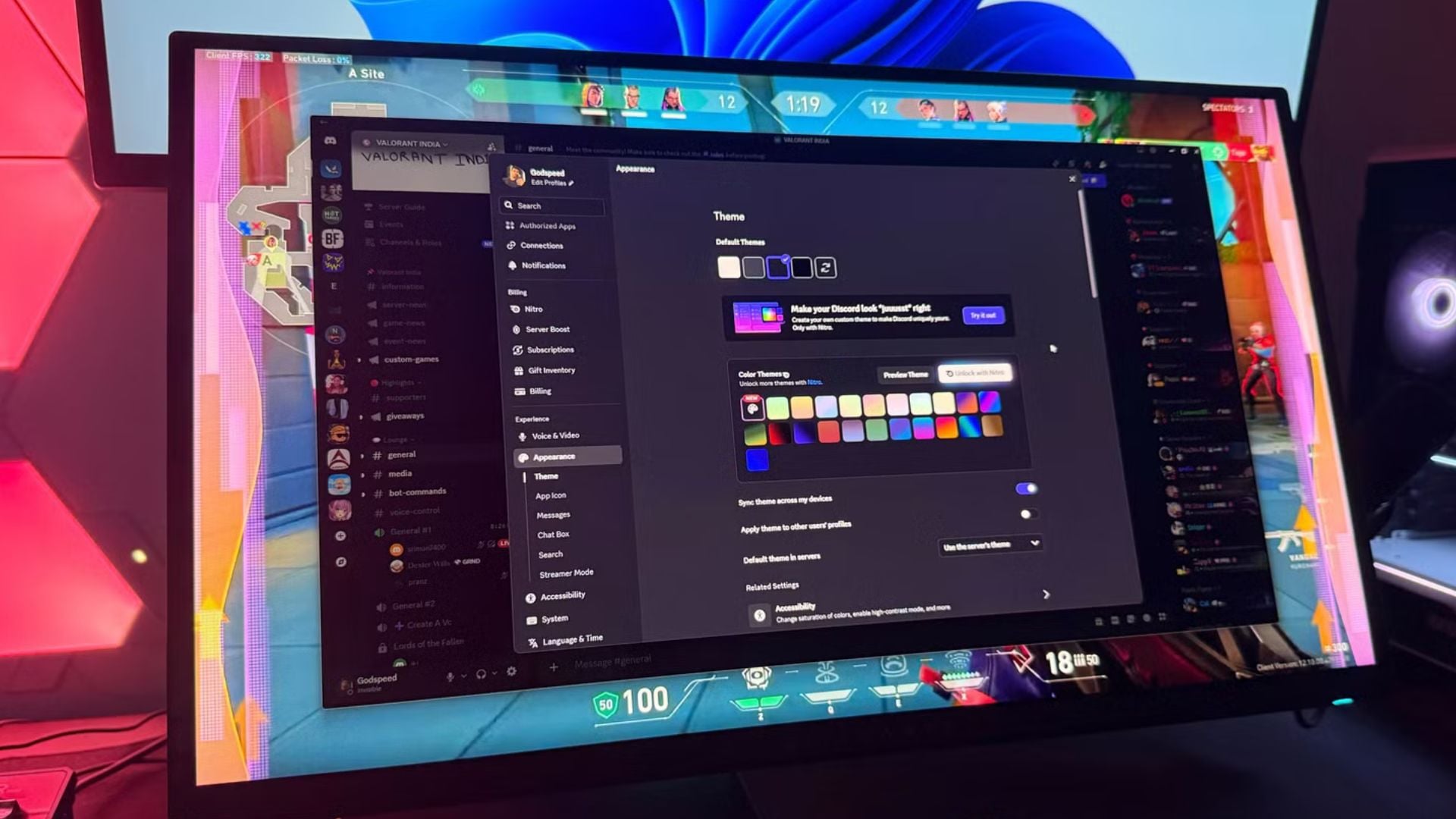
In addition to the rollable laptop, Lenovo presented an AI Frame Gaming Display proof of concept focused on enhancing situational awareness and in-game decision-making. The display incorporates AI scene detection to identify the type of game being played and automatically highlight key visual elements, such as maps or critical areas, in a secondary on-screen window.
Cursor tracking allows the display to zoom into the area around the player’s cursor, while AI game assistance can recognise bosses or difficult mission segments and provide real-time guidance in a separate window without fully obscuring gameplay. Adaptive AI lighting further extends immersion by adjusting ambient lighting based on in-game events, such as colour changes when the player takes damage.
On the handheld front, Lenovo introduced the Legion Go powered by SteamOS, marking its most powerful handheld device to ship natively with Valve’s operating system. The device combines the existing Legion Go hardware with a console-style SteamOS experience designed around controller-based navigation and quick access to games.
The handheld features an 8.8-inch PureSight OLED display and can be configured with up to an AMD Ryzen Z2 Extreme processor, up to 32GB of LPDDR5X memory, and up to 2TB of PCIe SSD storage, with additional expansion via microSD. SteamOS provides access to a user’s full Steam library, along with cloud saves, integrated chat, notifications, and built-in game recording.
New Legion and LOQ laptops broaden the lineup
Lenovo also expanded its Legion laptop range with the Legion 7a, a 16-inch Windows 11 Copilot+ PC positioned as a versatile machine for gaming, streaming, and technical workloads. The device is 10 percent lighter and up to 5 percent thinner than its predecessor, and is powered by AMD Ryzen AI 400 Series processors paired with NVIDIA GeForce RTX 50 Series Laptop GPUs delivering up to 125W total TDP.
Lenovo AI Engine+ works alongside the Legion Space software to dynamically manage power, thermals, and efficiency, enabling the system to shift between extended gaming sessions and demanding tasks such as coding, simulations, and 3D modelling. Legion Coldfront Hyper cooling is used to manage heat under sustained loads, while the PureSight OLED display delivers high contrast, accurate colour, and low latency.
Further down the range, Lenovo refreshed the Legion 5 series with the Legion 5i and Legion 5a, both 15-inch laptops designed to balance gaming, content creation, and everyday productivity. The Legion 5a is available with either AMD Ryzen AI 400 Series or Ryzen 200 Series processors, while the Legion 5i uses Intel Core Ultra Series processors. Both models feature NVIDIA GeForce RTX 50 Series Laptop GPUs and Lenovo AI Engine+.
For entry-level gamers and students, Lenovo introduced the LOQ 15AHP11 and LOQ 15IPH11. These laptops are available with either AMD Ryzen 200 Series or Intel Core Ultra processors and are paired with NVIDIA GeForce RTX 50 Series Laptop GPUs. Hyperchamber Cooling technology is designed to improve airflow, reduce fan noise, and keep key components cool during gaming and coursework. Both models feature up to a 15.3-inch WQXGA display and are finished in Luna Grey.
Pricing and availability vary across the lineup. The Legion Go powered by SteamOS is expected to start at US$1,199, with availability from June 2026. The Legion 7a is expected to start at US$1,999 from April 2026. The Legion 5i is priced from US$1,549, while the Legion 5a starts at US$1,499 with Ryzen AI 400 processors and US$1,299 with Ryzen 200 processors, all expected from April 2026. The LOQ 15AHP11 is expected to start at US$1,149 from April 2026, while the LOQ 15IPH11 will be available only in select markets.