

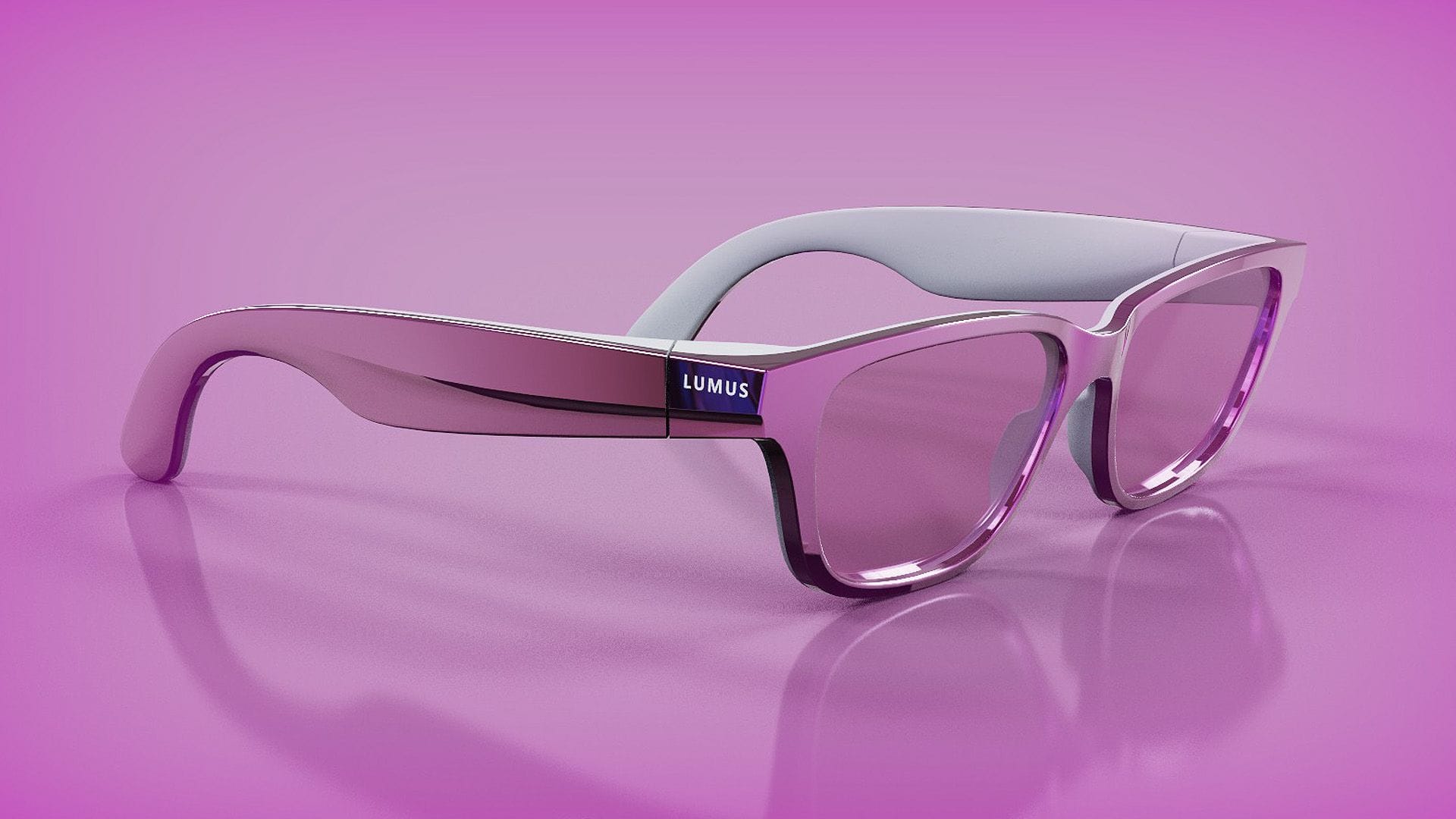
Lumus used CES 2026 to showcase a new generation of waveguides that could significantly improve the viewing experience of future smart glasses. The Israeli optics company, which already supplies technology to high-profile partners, showed components that promise a much wider field of view, higher brightness and improved efficiency.
The company gained broader attention after one of its waveguides was chosen for the Meta Ray-Ban Display glasses. Those glasses helped bring full-colour in-lens displays closer to the mainstream. However, the technology Lumus demonstrated at CES suggests the industry is moving well beyond those early designs.
The demonstrations pointed to a clear shift in what high-end smartglasses may soon offer. Larger virtual images, lighter optics and better power efficiency could address some of the key limits that have so far held the category back.
Wider field of view points to next-generation displays
One of the show’s main highlights was Lumus’ updated Z-30 waveguide. This model increases the field of view to 30 degrees, up from the roughly 20 degrees seen in many current smartglasses. While that change may sound modest on paper, the visual impact is substantial when viewed through the lens.
The Z-30 waveguide is also designed to be more practical for everyday wear. Lumus says it is 30 per cent lighter and 40 per cent thinner than earlier versions. These changes are important for smartglasses, which must balance advanced optics with comfort if they are to be worn for long periods.
Despite a 720 x 720 resolution, the display appeared sharp and vivid during demonstrations. Colours were described as rich and well-balanced, including whites, which are often difficult to render accurately in see-through displays. The wider field of view made on-screen content feel more immersive, extending well beyond what earlier consumer models have offered.
A dramatic leap with ultra-wide optics
Beyond the Z-30, Lumus also demonstrated a waveguide with a 70-degree field of view. This prototype covered almost the entire central area of the lens, leaving only small unused sections around the edges. The result was one of the largest virtual images ever seen in smart glasses.
The expanded field of view allowed videos and test images to fill a much larger portion of the wearer’s field of view. While some distortion was visible along the edges, this was described as an issue that can be corrected in the final products. Even with this limitation, the optics stood out for their clarity and brightness.
These ultra-wide waveguides raised questions about how far the field of view needs to increase before the benefits begin to level off. For now, Lumus appears confident that there is still room to grow. The company’s approach suggests that future smartglasses could move closer to delivering truly immersive augmented reality experiences without sacrificing visual quality.
Efficiency, manufacturing and industry momentum
Lumus’ waveguides are based on geometric reflective technology rather than refractive designs used by many rivals. According to the company, this approach offers higher overall efficiency and supports brighter images with lower power use. The waveguides are said to reach more than 8,000 nits per watt, a key advantage given the small batteries used in smartglasses.
Another benefit is the ability to bond the display directly to the lens. This allows smartglasses makers to use transition lenses that adapt to changing light conditions, rather than relying on clip-on sunglasses. Lumus also claims its designs simplify manufacturing, enabling waveguides as thin as 0.8 mm and improving production yields.
The company is now increasing production capacity with partners including Quanta and SCHOTT. As interest in smartglasses continues to build around what many see as the next “big” thing in consumer tech, Lumus is positioning itself as a key supplier. If the technology shown at CES makes its way into commercial products, the next wave of smart glasses could offer a far more compelling visual experience than today’s models.