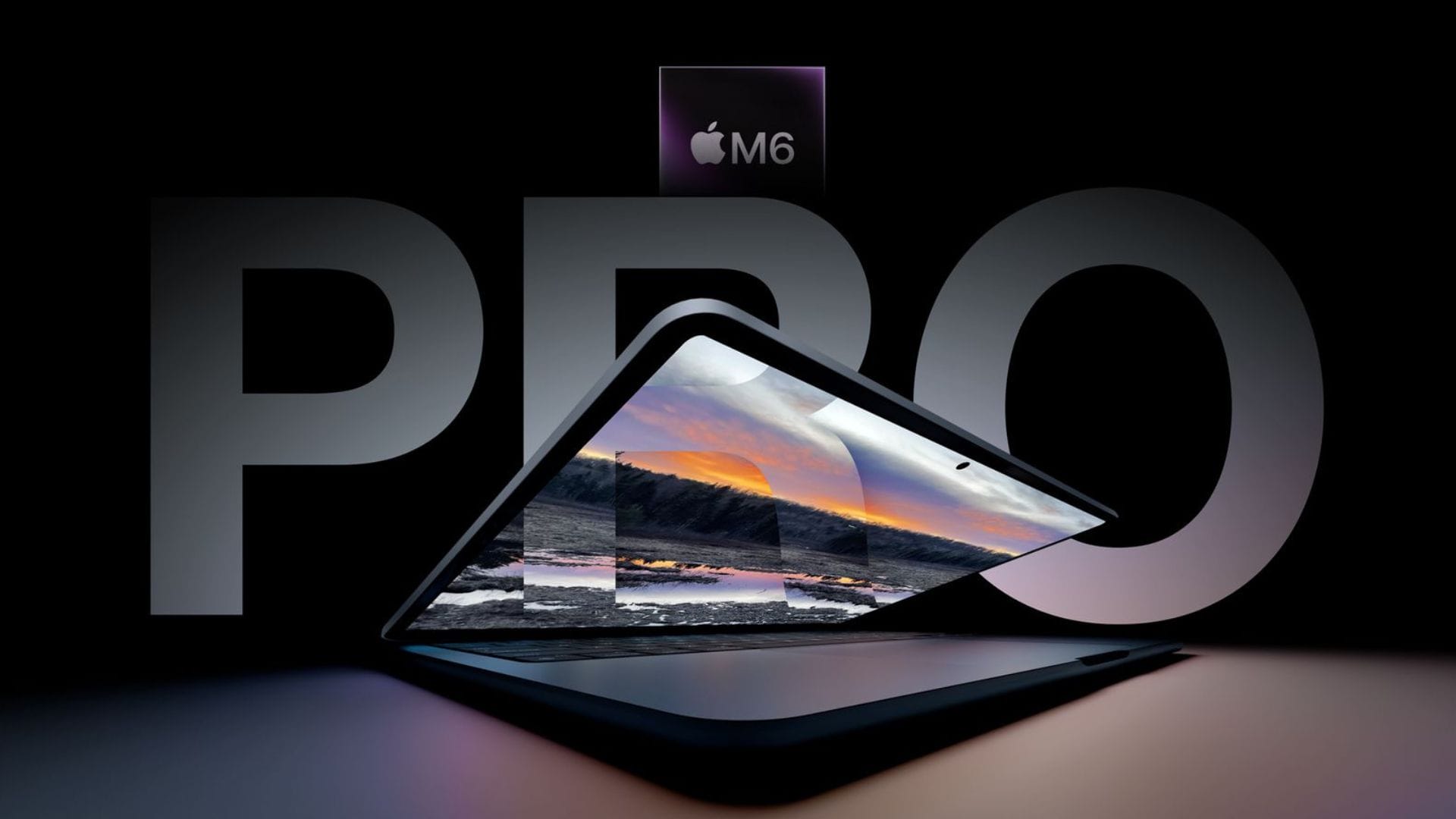
Apple’s long-rumoured OLED MacBook Pro appears to have moved closer to reality, following reports that display production has already begun. According to a post on a Korean technology blog, Samsung has already started manufacturing OLED panels for future MacBook Pro models, signalling progress well ahead of Apple’s expected launch window.
The report suggests that the display programme is running faster than originally planned, with production said to have begun earlier than the second quarter schedule previously discussed within the supply chain. This indicates that Apple has already settled key decisions on display size, technology, and performance, laying the groundwork for a MacBook Pro refresh widely tipped for 2026.
Early production signals growing confidence in OLED MacBooks
The Korean report states that Samsung Display has begun “mass production of the 8.6th-generation OLED panels” at its advanced manufacturing facility in Asan, South Korea. This production line is designed to handle larger glass substrates than those used for smartphone displays, making it suitable for laptop-sized screens.
By using larger substrates, Samsung can cut multiple notebook panels from a single glass sheet. This approach improves manufacturing efficiency and increases yield, both of which are critical when producing large OLED panels at scale. Lower production costs are also an important factor, particularly for devices such as MacBook Pros that are expected to maintain premium pricing.
The move into mass production suggests greater confidence in OLED laptop demand than in previous years. While OLED has become common in smartphones and tablets, adoption in laptops has been slower due to cost, power consumption and longevity concerns. Apple’s expected entry into the OLED laptop market could act as a catalyst for wider industry adoption.
The report adds that production appears to be ahead of schedule, suggesting Apple may be pushing suppliers to accelerate timelines. Apple typically finalises hardware specifications well in advance of launch, and early display production would fit with its long-term planning approach, even if the final product is still some distance from release.
Tandem OLED technology builds on iPad Pro experience
The panels reportedly being produced are described as tandem OLED displays, a technology Apple already uses in its latest-generation iPad Pro. Tandem OLED screens stack two OLED layers on top of each other, delivering higher peak brightness while consuming less power than traditional single-layer OLED panels.
This design also helps address one of OLED’s long-standing weaknesses: screen longevity. By spreading workload across two layers rather than one, tandem OLED panels can reduce wear over time, which is particularly important for laptops that may be used for many hours each day.
The report notes that the new production line will support touch-enabled OLED laptop panels. This has fuelled further speculation that Apple may introduce touch functionality to the MacBook Pro alongside the OLED transition. While Apple has historically resisted adding touchscreens to MacBooks, the use of touch-enabled panels suggests the company may at least be keeping its options open.
Industry observers have long viewed OLED as a natural next step for MacBook displays, following Apple’s move to mini-LED in recent generations. OLED offers deeper blacks, higher contrast, and more precise lighting control, all of which would benefit professional users working in video, photography, and design.
Apple reportedly first in line for Samsung’s new panels
According to the same source, “the first delivery in this line will be for the new Apple MacBook Pro,” indicating that Apple has secured early access to Samsung’s latest OLED laptop panels. This would not be unusual, as Apple often negotiates priority supply agreements to ensure volume availability at launch.
The report also suggests that while Apple may be the first customer, the same panels could later appear in laptops from other manufacturers once initial commitments have been fulfilled. This would allow Samsung to amortise its investment across a broader customer base over time.
There remains some uncertainty around timing. While production activity suggests strong momentum, most industry analysts still expect an OLED MacBook Pro launch in 2026 rather than sooner. Apple is also rumoured to be preparing M5 Pro and M5 Max MacBook Pro models, which are expected to retain existing display technology.
As a result, the first OLED-equipped MacBook Pro is widely expected to debut alongside a future M-series chip, possibly an M6-generation processor. Until Apple confirms its plans, reports of production milestones should be viewed as indicators of progress rather than confirmation of an imminent product release.