



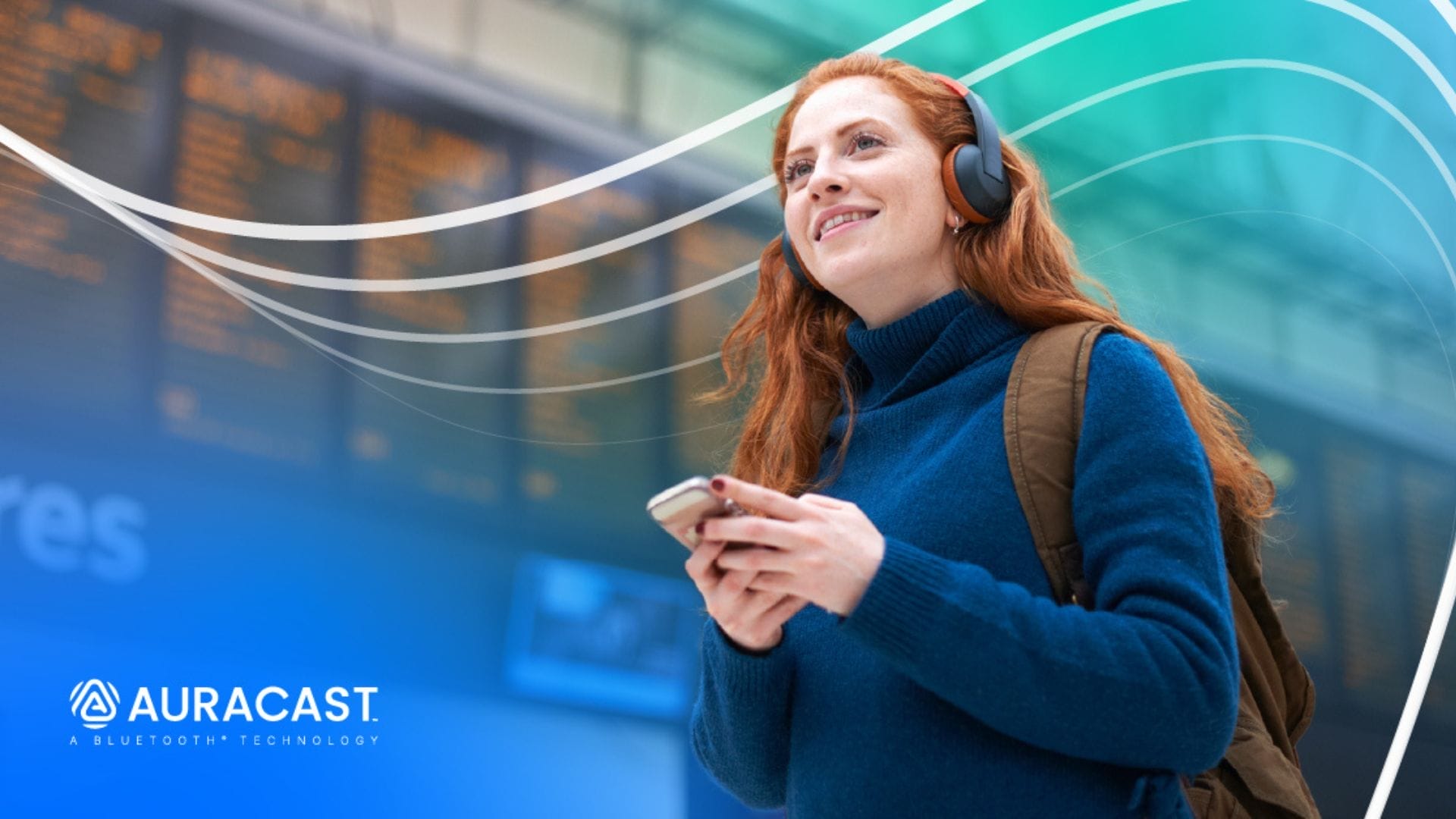
Auracast, a broadcast-style audio feature introduced by the Bluetooth Special Interest Group (Bluetooth SIG), has been available for several years. Yet, it remains one of the most under-discussed advances in wireless audio. The technology allows earbuds, headphones, speakers, and hearing aids to tune in to audio broadcasts without pairing, much like tuning in to a radio station. Despite its potential to improve everyday listening and accessibility, widespread awareness and industry support remain limited.
Growing interest but limited visibility
Auracast enables a device to pick up a single audio broadcast directly, which could be anything from airport gate announcements and university lectures to gym televisions. By allowing listeners to connect without pairing, the system can help people who are hard of hearing and those who want to pick out specific sounds in noisy spaces.
Although Auracast has been demonstrated at private CES sessions every year since 2023, public attention has been slow to follow. Recent support from companies such as Sony, Google, Samsung, and OnePlus marks progress, but announcements are often overshadowed by other product news.
JBL has become one of the few consumer brands actively promoting Auracast. Some customers have even mistaken the feature as a JBL-exclusive technology due to the company’s consistent marketing. Devices such as the Charge 6, Clip 5, PartyBox Stage 320 speakers, and Tour One M3 headphones support Auracast. The headphones even ship with a dedicated transmitter.
However, early adoption has not been without challenges. Sharon Peng, JBL’s senior vice-president of global engineering, said: “Integrating Auracast into our products presented several technological challenges, particularly because we committed to supporting it across multiple platforms during its early development phase.” She added that early adopters needed to work through areas that were not yet fully defined by the Bluetooth framework and that testing has since become more structured.
One result of this early ambiguity is the issue faced by some JBL PartyBox users on Reddit, who have reported that the speakers only receive Auracast broadcasts from other JBL devices. Peng said that the company is correcting the problem through firmware updates. “In short,” she said, “JBL’s Auracast architecture is designed for compatibility, and we’re committed to expanding support across our product lineup to ensure users can enjoy seamless connectivity—whether they’re using JBL gear or third-party devices.”
Henry Wong, director of market development at Bluetooth SIG, confirmed that the organisation is working closely with JBL. “We’ve been in communication with JBL, and they are actively working to align their products with the full Auracast requirements to ensure broader compatibility and clarity for consumers,” he said.
Support grows quietly across major brands
While JBL talks openly about its implementation, others treat Auracast more discreetly. Samsung has offered the feature on its flagship 8K televisions since 2023, and LG has rolled it out in 2025 OLED and quantum-dot LED models. Neither company highlights Auracast on its product pages, and LG first confirmed its support only through a hearing-aid manufacturer’s press release rather than its own.
LG said Auracast is included in product specifications, although it is not a major focus of its TV marketing. The company suggested that Auracast’s value for TV buyers is still emerging, even though LG already promotes the feature more actively in its xboom speakers and earbuds.
JBL’s Peng believes this hesitation is typical. “There was also a degree of industry hesitancy, which is typical with emerging technologies. Manufacturers often weigh the risks of investing in features that may not yet be widely adopted or standardised,” she said.
Yet Auracast is already available on a wide range of devices, not just premium models. Budget-friendly EarFun earbuds below US$100 include the feature. According to EarFun’s marketing manager, Helen Shaw, the company spent months troubleshooting compatibility issues with Qualcomm’s assistance. This reflects how smaller manufacturers can successfully adopt Auracast without large R&D teams.
The bigger challenge lies in public spaces. To become truly useful, Auracast requires infrastructure such as transmitters and knowledgeable staff. Adoption is slowly increasing, with venues such as the Sydney Opera House, universities, and churches introducing Auracast broadcasts. Broader use will depend on mainstream awareness and the number of compatible headphones, earbuds, and hearing aids in circulation.
Missed opportunities and the future of wireless audio
The slow pace of marketing is a major barrier. Many households already own Auracast-ready headphones or televisions without realising it. Affordable transmitters costing under US$100 can add Auracast capability to existing equipment, but consumers first need to understand what the technology is and why it matters.
Brand ecosystems may be another obstacle. Auracast is designed to be open and brand-agnostic, but companies often prefer closed systems to keep customers within their product family. TCL’s Z100 Dolby Flex Connect speaker, for example, requires a 2025 TCL QM-series television to set up, even though the underlying Dolby technology does not impose this limitation. Apple, long known for its tight ecosystem, has not announced any plans to support Auracast. Many in the industry believe adoption would accelerate rapidly if Apple added Auracast to its AirPods range, but the company has so far remained silent.
Despite the uneven rollout, companies interviewed remain optimistic. Wong of Bluetooth SIG said: “Auracast broadcast audio is gaining strong momentum across the industry. We’re seeing increasing adoption from device manufacturers, growing deployments in public venues around the globe, and enthusiastic support from advocacy groups and influencers.”
If Auracast becomes widely supported, it could transform everyday audio experiences. Families watching television together can adjust the sound to their individual needs. Travellers could hear clearer airport or train updates. Students could follow the lectures more easily. Music and podcasts could be shared effortlessly among friends.
But first, consumers need to know that Auracast exists. Until manufacturers actively promote the feature, its benefits will remain hidden in devices people already use every day.


