


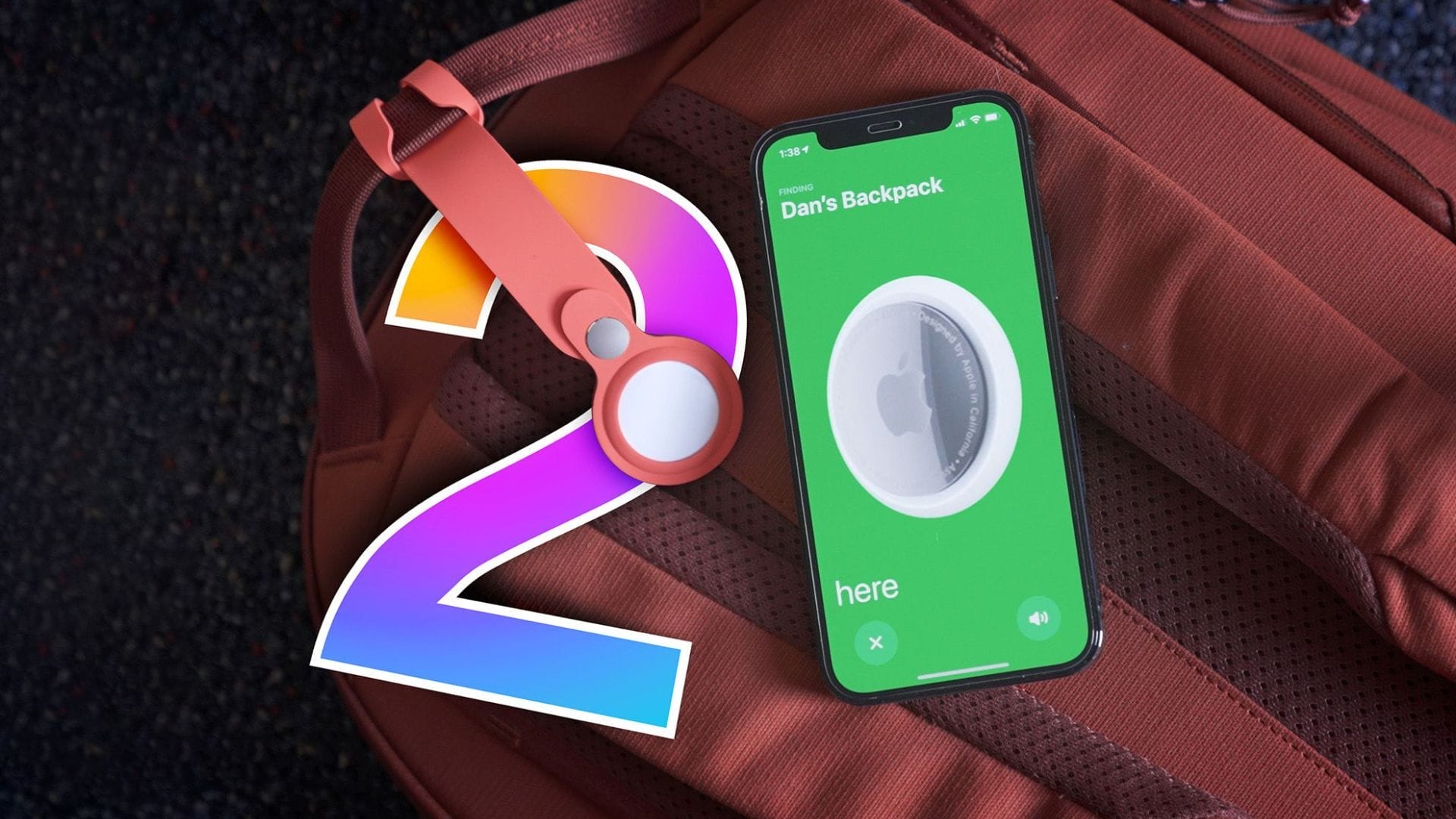
Apple is expected to update its AirTag tracker with a range of new features focused on pairing, tracking accuracy and battery monitoring, according to details found in a leaked internal build of iOS 26. The information was first reported by Macworld, which said the features are present in system code but are not yet final, suggesting the product remains under active development.
The reported changes point to a second-generation AirTag that builds on the existing model rather than reinventing it. Apple is refining areas that affect everyday use, particularly how easily an AirTag connects to an iPhone, how precisely it can be located, and how clearly users can monitor battery life. While Apple has not officially announced a new AirTag, the reported features align with earlier industry expectations that an update is in progress.
As with many features discovered in pre-release software, the descriptions found in iOS 26 are broad and sometimes vague. This indicates that Apple may still be testing different approaches before settling on a final set of functions. Even so, the leaks provide a useful glimpse into what users might expect when the next AirTag eventually launches.
A more seamless pairing and improved tracking accuracy
One of the expected changes involves the initial pairing process. The next AirTag is believed to offer a smoother setup experience, although the leaked information does not clearly explain how Apple plans to achieve this. The current AirTag already pairs quickly when brought close to an iPhone, so any improvement is likely to focus on reliability, speed, or clearer on-screen guidance during setup.
Tracking accuracy is also being improved. The leaked build suggests enhanced Precision Finding, Apple’s feature that uses visual, audio and haptic feedback to guide users towards a nearby AirTag. With the update, Precision Finding may become more accurate and responsive, particularly when narrowing down the exact position of an item.
Another change mentioned in the report is more detailed battery-level reporting. At present, AirTag users only receive a low-battery alert when power is nearly depleted. The new system is expected to provide clearer information about battery status, allowing users to see battery levels earlier and plan replacements with less urgency.
One feature highlighted more prominently than others is described as “Improved Moving”. According to the report, this upgrade is designed to make it easier to track an item while the AirTag itself is in motion. This could be particularly useful for objects such as luggage, backpacks, or bicycles, where the tracker is not stationary, and location updates need to be adjusted more dynamically.
In addition to movement tracking, Apple is reportedly working on more accurate location performance in crowded environments. These are places where radio signals can interfere with one another, such as airports, shopping centres or busy urban areas. Improving accuracy in these conditions could address one of the most common frustrations with the current AirTag.
Hardware changes could triple the tracking range
The software improvements described in iOS 26 appear to match earlier reporting from Bloomberg, which suggested that Apple plans to introduce a new ultra-wideband chip in the next AirTag. Ultra-wideband technology is a key part of Precision Finding, allowing devices to measure distance and direction with high accuracy.
According to previous reports, the updated chip could significantly extend the AirTag’s effective tracking range. The current model is limited to around 30 metres for Precision Finding, but the new hardware could increase this to 90 metres. If accurate, this would make it far easier to locate items in large spaces such as multi-storey car parks, warehouses or outdoor areas.
A broader range would also complement the reported improvements in tracking while in motion. Together, these changes could make the AirTag more reliable in real-world situations where items are constantly moving or temporarily out of sight.
Apple has a history of gradually expanding the use of ultra-wideband across its product line, including iPhones and Apple Watches. Adding a more advanced chip to the AirTag would be consistent with this approach and could help future-proof the device for additional features introduced through software updates.
Why these updates matter for everyday use
While none of the reported features radically change what an AirTag is designed to do, they address several practical limitations of the current model. Battery monitoring is a clear example. With only a low-battery warning available today, users often have little notice before the CR2032 battery needs replacing. More detailed battery information could reduce the risk of an AirTag going offline unexpectedly.
Improved tracking while an AirTag is moving could also have a noticeable impact on usability. The existing AirTag can struggle in environments where objects move unpredictably, such as airport baggage systems. In these situations, location updates may appear inconsistent, making it harder to tell whether an item is nearby or still in transit. A more responsive system could help users understand what is happening in real time.
The timing of these potential upgrades is also notable given the growing acceptance of AirTags beyond Apple’s own ecosystem. Since Apple introduced the Share Item Location feature last year, users have been able to generate temporary links that allow others to view an AirTag’s location. This has led to increased adoption by airlines, many of which now accept shared AirTag links as part of their customer service processes for locating delayed or lost luggage.
As more organisations integrate AirTag data into their workflows, accuracy and reliability become increasingly important. Improvements to tracking in crowded environments and over longer distances could make shared location links more useful to airline staff and other third parties.
Taken together, the leaked features suggest Apple is focused on refining the AirTag into a more dependable everyday tool rather than adding headline-grabbing features. If the reports are accurate, the next AirTag could offer meaningful quality-of-life improvements for users who rely on it to keep track of valuable or frequently misplaced items.
Apple has not commented on the leaks or confirmed any plans for a new AirTag. As with all pre-release software discoveries, the final product may differ from what is currently visible in iOS 26. However, the consistency between multiple reports indicates that an updated AirTag is likely on the way.