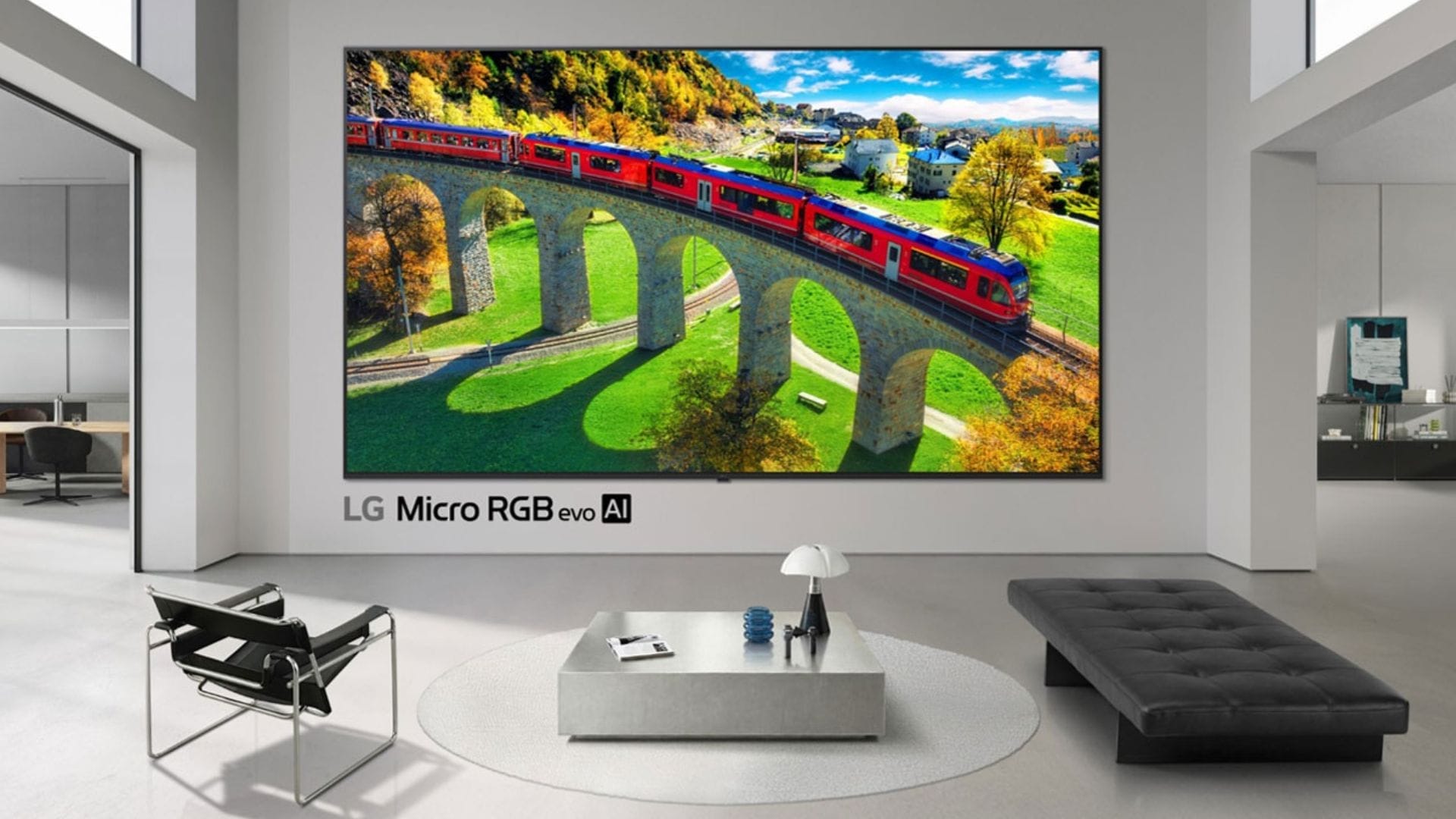
LG has unveiled plans to debut its first-ever Micro RGB television at CES 2026, positioning the new model as a major step forward for LCD display technology. The TV, known as the LG Micro RGB evo, is being presented as a premium option designed to push colour performance, brightness, and backlight precision closer to levels traditionally associated with OLED screens.
The announcement places LG firmly in the growing Micro RGB TV space, an area that has already attracted attention from rivals such as Samsung and Hisense. With CES 2026 expected to showcase a wide range of next-generation display technologies, LG is making it clear that it sees Micro RGB as a key part of its high-end TV strategy moving forward.
A new approach to LCD backlighting
At the heart of the Micro RGB evo is a fundamental change to how LCD TVs are lit. Instead of relying on the white or blue LEDs commonly used in traditional LED and Mini-LED backlights, LG’s new model uses ultra-small red, green, and blue LEDs as its light source. This allows the TV to control colour and brightness at a more granular level than conventional LCD designs.
According to LG, this RGB-based backlight is controlled by its new α11 AI Processor Gen 3, developed specifically for the 2026 TV lineup. The processor is responsible for handling light distribution, colour control, and real-time image processing. By pairing RGB LEDs with advanced processing, LG aims to improve contrast, reduce unwanted light bleed, and deliver more accurate colour reproduction across a wide range of content.
This approach is designed to narrow the gap between LCD and OLED displays. While OLED panels can completely switch off individual pixels to produce perfect blacks, LCD TVs rely on local dimming zones to control light. LG says the Micro RGB evo features more than 1,000 local dimming zones, managed by a system it calls Micro Dimming Ultra. Although this does not offer pixel-level control, it is intended to provide deeper blacks and better shadow detail than most existing LCD TVs.
The focus, LG suggests, is on balancing high peak brightness with precision-level control. This combination is crucial for high dynamic range content, where bright highlights and dark scenes often appear in the same frame. If the system performs as promised, it could offer a more immersive viewing experience while avoiding some of the limitations of older LCD technologies.
Colour coverage and image processing claims
Colour performance is a central part of LG’s messaging around the Micro RGB evo. The company says the TV has been certified by Intertek for 100% colour gamut coverage across BT.2020, DCI-P3, and Adobe RGB standards. These certifications relate to the range of colours the display can display, rather than how accurately those colours are reproduced straight out of the box.
Achieving full coverage of all three colour spaces is unusual for LCD televisions and, if reflected in real-world performance, could make the Micro RGB evo one of the most capable colour displays in its class. LG has not yet shared details about factory calibration or professional calibration options, both of which will play an important role in determining how closely the TV’s output matches reference standards.
The α11 AI Processor Gen 3 also introduces new image-processing features to improve everyday viewing. One of the key additions is the ability to run two AI upscaling processes simultaneously. Upscaling has long been a standard feature on smart TVs, but LG claims its updated system can increase sharpness while preserving natural textures and avoiding artificial-looking edges.
Like other recent LG televisions, the Micro RGB evo will run on webOS. The platform provides access to major streaming services. It includes a range of AI-driven tools, such as a built-in chatbot, Voice ID for recognising different users, and automatic picture quality adjustments. These features are designed to simplify navigation and tailor the viewing experience based on who is watching and what content is being played.
Micro RGB enters a competitive market
LG is not the first manufacturer to explore RGB backlighting for TVs, but its entry into the category signals growing confidence in the technology. Samsung and Hisense have already demonstrated and sold RGB-based models. Early impressions from hands-on demonstrations suggest that the technology can deliver more vivid and controlled colour than many Mini-LED TVs.
What makes LG’s approach noteworthy is its emphasis on combining a wide colour gamut with refined backlight control. If the Micro RGB evo can maintain strong contrast performance while delivering consistent colour across large screen sizes, it could appeal to viewers who want high brightness without some of the long-term concerns associated with OLED panels.
Screen size is another area where LCD technology continues to hold an advantage. LG has confirmed that the Micro RGB evo, model MRGB95, will be available in 75-inch, 86-inch, and 100-inch versions when it launches later in 2026. These sizes reflect growing demand for large-format TVs, particularly in home cinema setups where brightness and screen impact are priorities.
Pricing has not yet been announced, and this remains a key unknown. Competing RGB televisions are positioned firmly in the premium segment, and cost is likely to influence how widely the technology is adopted. LG has also not detailed regional availability or exact launch dates beyond confirming a 2026 release window.
CES 2026 is expected to be a significant event for television technology, with manufacturers showcasing refined Mini-LED designs, Micro RGB displays, and alternative backlighting solutions. LG’s Micro RGB evo is unlikely to be the only headline-grabbing product on the show floor, but it stands out as a clear statement of intent from the company.
As hands-on demonstrations become available, attention will turn to how well LG’s claims hold up in practice. Performance in real viewing conditions, calibration quality, and pricing will all determine whether the Micro RGB evo becomes a standout product or remains a niche option. For now, LG has made it clear that it sees Micro RGB as a serious contender in the race to deliver the next generation of high-end TV displays.