


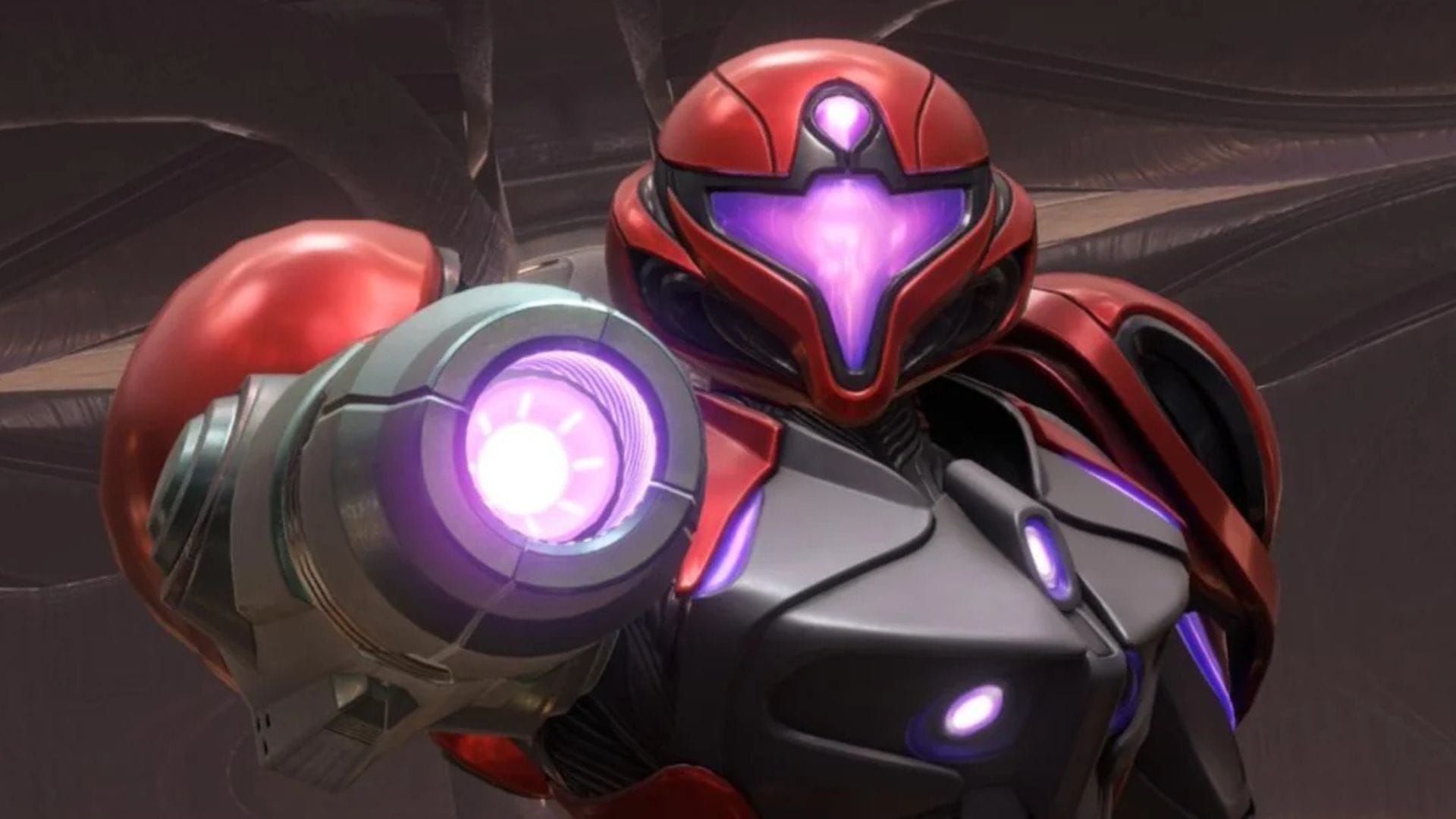
Metroid Prime 4: Beyond has only been on sale for a short time, yet signs already suggest it is struggling to maintain momentum. After an 18-year gap since the last mainline entry in the series, expectations were high for Samus Aran’s return to full 3D exploration. However, the game has slipped from sales charts within weeks and has failed to generate the lasting buzz many had hoped for. For some long-time fans, this has prompted reflection not only on what the game delivered, but also on the design decisions that shaped the final experience.
One of the most contentious choices in Metroid Prime 4 has been its approach to non-player characters. The series has traditionally been defined by solitude, atmosphere, and environmental storytelling, with Samus often left alone to piece together events through ruins, scans, and silent observation. In contrast, the fourth entry introduced a notable amount of spoken dialogue from supporting characters. While intended to add context and colour, this constant chatter quickly became a point of frustration for players who valued the franchise’s quiet intensity.
Recent discoveries suggest that players may have been spared an even more intrusive version of this design choice. According to findings shared online and first reported by VGC, a substantial amount of dialogue was removed before release. The cut material reveals that the game once included over half an hour of additional NPC conversations, far more than players encounter in the final version.
A clash with the series’ solitary roots
The presence of talkative NPCs in Metroid Prime 4 has been widely criticised as one of the game’s weakest elements. Throughout the adventure, Samus is accompanied by characters who comment frequently on events, locations, and each other. These conversations play out while the player explores, scans environments, and engages in combat, often breaking immersion rather than enhancing it.
What makes this design choice particularly jarring is how sharply it contrasts with the rest of the Metroid franchise. Samus Aran has long been portrayed as a lone bounty hunter, navigating hostile worlds in near silence. Her characterisation relies heavily on restraint, with minimal spoken words and an emphasis on player interpretation. Even within Metroid Prime 4 itself, the setting reinforces this expectation. Much of the game takes place amid the remains of a fallen colony, an environment that naturally suggests emptiness and decay rather than lively conversation.
Against this backdrop, the constant verbal presence of NPCs feels out of place. Samus, who remains silent throughout these exchanges, responds only through action. For some players, her refusal to engage verbally comes across as unintentional passive resistance, highlighting how unnatural the situation feels within the series’ context. The contrast between her silence and the surrounding chatter only draws more attention to the tonal mismatch.
Given this reaction, it is surprising to learn that the released game already represents a restrained version of what was originally planned. The newly uncovered dialogue makes clear that developers initially intended NPCs to speak far more frequently, extending their presence well beyond what players ultimately experienced.
Thirty minutes of dialogue were left on the cutting room floor
The existence of this cut content came to light through a video uploaded by YouTuber Bearborg, who shared recordings of all the base camp conversations found within the game’s files. In the retail version of Metroid Prime 4, these exchanges amount to roughly seven and a half minutes of spoken dialogue. This already felt excessive to some players, but the unused material adds a further 33 minutes of conversation that never made it into the final release.
The additional dialogue consists largely of casual exchanges between NPCs, designed to create a sense of familiarity and interaction within the base camp. Much of it revolves around light remarks, situational comments, and attempts at humour, described within the files as “banter.” None of the removed dialogue appears to be essential to the main story, character arcs, or progression systems.
From a technical standpoint, the recordings vary in polish. While competent voice actors deliver most lines, there are occasional moments when an older-style text-to-speech voice can be heard. This suggests that some lines were placeholders or had not yet reached final production quality when they were recorded or archived.
Crucially, the content’s nature reinforces the idea that it was always intended as background flavour rather than narrative substance. In another genre, such as a role-playing game or an open-world title, this kind of optional chatter might have been welcomed. Players could choose to linger, listen, or walk away at will, engaging with the dialogue on their own terms.
Metroid Prime 4 does not offer that flexibility. Conversations trigger automatically and play out while the player is present in specific areas. This enforced delivery is what makes the inclusion of even seven minutes of dialogue feel intrusive, and it is why the prospect of an additional half hour is so striking in hindsight.
A late but necessary design decision
The removal of this dialogue suggests that, at some point in development, someone recognised the mismatch between the game’s tone and its volume of speech. Cutting more than 30 minutes of recorded dialogue is not a small decision, particularly after time and resources have already been invested in writing, recording, and implementing it. Yet the choice to do so likely prevented even greater backlash from fans who already felt the final game talked too much.
The episode highlights a broader tension in modern game development between cinematic storytelling and atmospheric restraint. As production values increase, there is often pressure to fill worlds with voices, explanations, and character interactions. For franchises like Metroid, however, silence has always been one of the most powerful tools at the developer’s disposal. The quiet moments allow players to project their own thoughts onto the environment and to feel isolated in ways that spoken dialogue can undermine.
Metroid Prime 4 ultimately sits awkwardly between these two approaches. While it retains much of the exploration and environmental design that fans expect, its use of NPC dialogue feels like a concession to trends that do not fully align with the series’ identity. Learning that the game narrowly avoided being even more talkative only reinforces how close it came to straying further from its roots.
As the title continues its post-launch life, discussions around its design choices are likely to persist, especially given its muted commercial performance so soon after release. Whether Metroid Prime will continue as a 3D series remains uncertain, but the discovery of this cut dialogue serves as a reminder of how small creative decisions can have an outsized impact on player experience. In this case, less talking may well have been one of the game’s most important, if understated, improvements.