


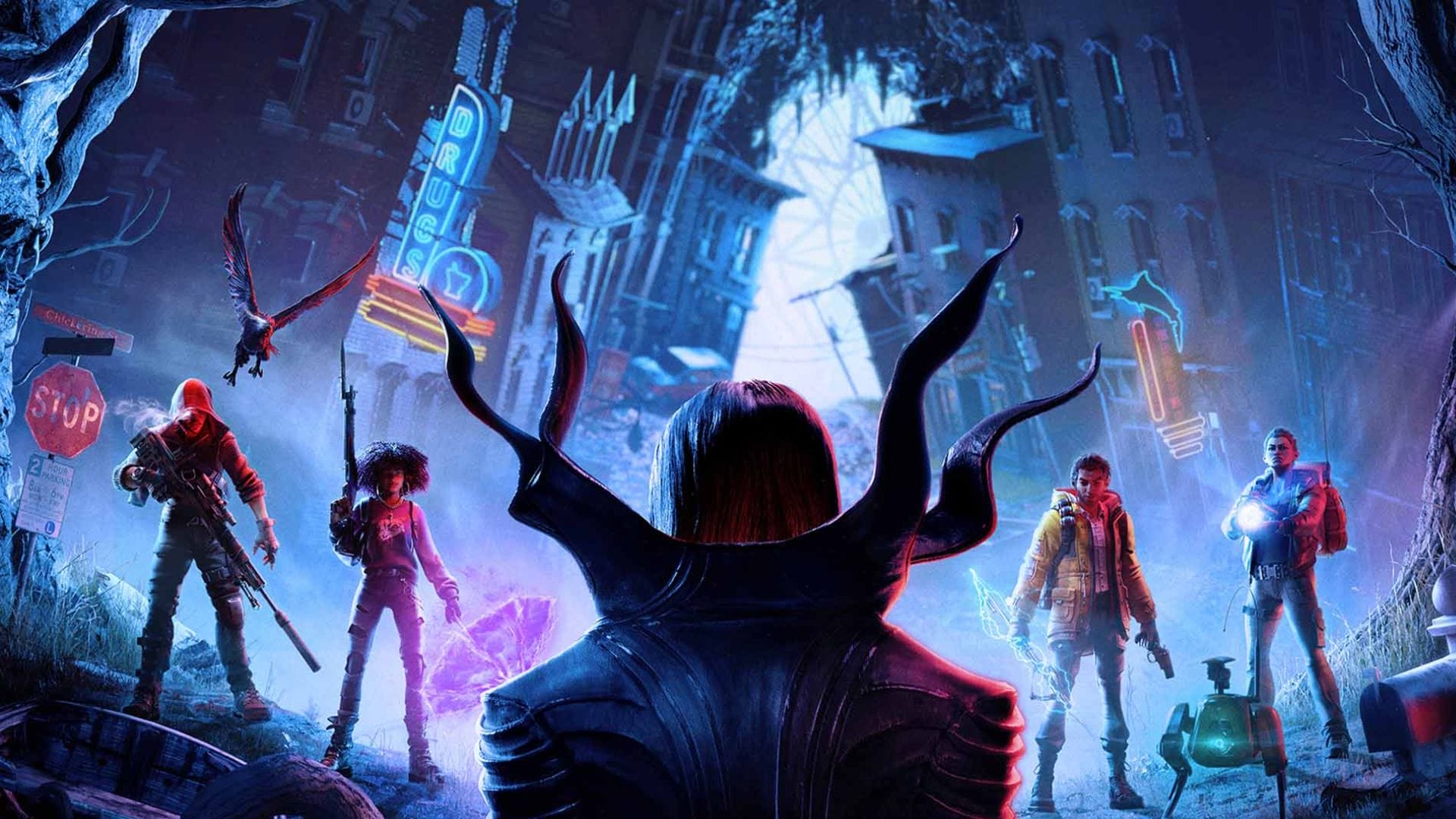
More than a year has passed since Arkane Austin, the Texas-based studio behind Prey and Redfall, was closed as part of Microsoft’s wider push to focus on what it described as “high-impact” games. The decision marked the end of a studio with a strong creative legacy and came as a surprise to many within the industry. Harvey Smith, who was leading the team at the time and is best known for his work on influential titles such as Deus Ex and Dishonored, has now spoken in detail about the experience and its impact.
Smith shared his reflections during a recent appearance on the podcast My Perfect Console, hosted by journalist Simon Parkin. While the episode spans two hours and covers Smith’s three-decade career in game development, the discussion opens with the closure of Arkane Austin, which Smith described as one of the most difficult moments of his professional life.
The night before the closure
Smith recalled receiving a phone call on the evening before the studio was shut down in May 2024. The call informed him that Arkane Austin would be closed the following day. He described the hours that followed as deeply stressful, not only because of the suddenness of the news, but because of concern for his colleagues.
According to Smith, many members of the Arkane Austin team were relatively early in their careers. Some had joined the studio after working on only one or two projects, while others had entered the industry during a period already marked by uncertainty and disruption. Smith said he spent the night worrying about what the decision would mean for them and how it might affect their futures in an increasingly unstable job market.
He also admitted that the decision itself came as a shock. From his perspective, Arkane Austin had a strong track record and had delivered high-quality work over many years. The studio had contributed to Dishonored alongside Arkane Lyon, then gone on to produce Prey, a title that received critical praise for its design and ambition. Smith said he did not expect the studio’s journey to end in this way.
“Every company makes the decisions they make for the reason they make them,” Smith said. “I don’t agree with them often, but the main shock there was this studio made Dishonored, along with the Lyon studio, and then they made Prey. Then we were working on Redfall during the pandemic and everything else. The industry was exploring games-as-a-service games. It is what it is. Creative efforts are unpredictable.”
Smith’s comments highlight the wider context in which Arkane Austin was operating. Redfall was developed during the COVID-19 pandemic, a period that forced teams to adapt to remote working and disrupted production across the industry. At the same time, many publishers were investing heavily in live-service projects, hoping to replicate the long-term success seen by a small number of major titles.
Responsibility, privilege and perspective
Smith did not shy away from acknowledging his own role in Redfall’s outcome. As studio director, he said he takes responsibility for the decisions and compromises that shaped the project and the challenges it ultimately faced. At the same time, he stressed that his personal circumstances gave him a level of perspective that many of his colleagues did not yet have.
Having spent decades in the industry, Smith described himself as “privileged” to look back on a career that included both major successes and serious setbacks. That long view, he suggested, makes it easier to process a low point such as the closure of a studio. For younger developers, the experience can feel far more devastating.
“I’m that rare person who has no complaints, but that’s a little bit of survivorship bias because things have worked out for me,” Smith said. “Even when they haven’t, I can look on a long track now and be like ‘Yes, there was a low point here, but look at this high point over here. This is incredible.’
“If you have that luxury to look back on a bunch of highs and lows, it contextualises things.”
Smith also noted that long, continuous careers in game development are becoming increasingly uncommon. He suggested that the industry has changed in ways that make stability harder to achieve, with projects being cancelled more frequently and studios closing even after delivering well-regarded work. In that environment, the kind of career that allowed him to move from one major project to another over many years is now the exception rather than the rule.
A changing industry and lasting impact
The closure of Arkane Austin occurred amid widespread layoffs across the games industry. Over the past few years, job cuts have affected studios of all sizes, including teams owned by some of the most profitable companies in the sector. Smith’s reflections underline how different the impact of such decisions can be depending on where someone is in their career.
For a veteran developer, a studio closure may be another difficult chapter in a long professional story. For someone who felt they had finally achieved a major milestone by joining a respected studio like Arkane, it can feel like the ground has been pulled out from under them just as their career was beginning. Smith’s comments suggest that this human cost is too easily overlooked when corporate-level strategic decisions are made.
Redfall itself did not become the live-service success that Microsoft and others may have hoped for, but Smith’s remarks make clear that its failure does not erase the years of creative work that came before it. Arkane Austin’s legacy includes games that helped shape modern immersive sims and influenced developers worldwide. The studio’s closure, he implied, should not be seen solely through the lens of one troubled release.
Smith’s interview offers a rare, candid look at how senior figures in the industry process loss and uncertainty, while also recognising the uneven way those experiences are felt. His reflections point to a broader issue facing game development today: a creative industry driven by risk-taking, yet increasingly unforgiving when those risks do not pay off.
As the games sector continues to grapple with layoffs and studio closures, voices like Smith’s provide valuable context. They remind audiences that behind every strategic shift are teams of people whose careers and livelihoods are deeply affected, and that even studios with proven talent are not immune to sudden change.