


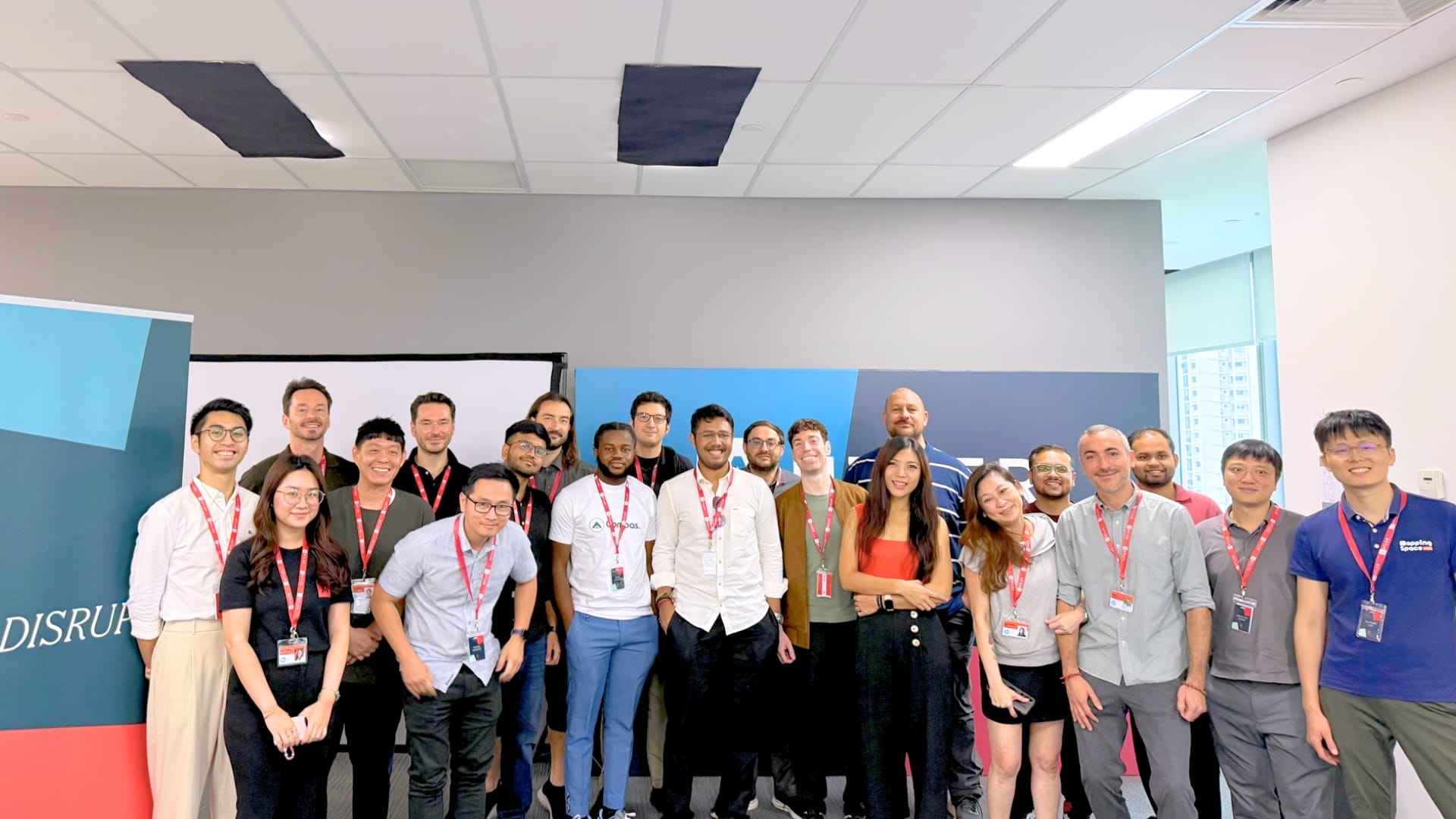
Antler has unveiled its 2025 Disrupt AI portfolio, committing a total of US$5.6 million across fourteen early-stage artificial intelligence startups that are already demonstrating signs of commercial adoption. The companies operate across a wide range of sectors, including manufacturing, robotics, enterprise software, infrastructure reliability, energy optimisation, and travel automation. Several are already serving customers in Asia, Europe, and North America, signalling an emphasis on early market relevance rather than purely experimental technology.
The announcement comes amid continued global investment interest in AI, alongside growing scrutiny around how quickly AI-driven companies can build durable and repeatable revenue streams. Antler’s latest portfolio reflects a more disciplined approach, backing teams whose products are being adopted to solve defined operational problems. Rather than focusing on model size or theoretical capability, the cohort centres on applied AI solutions embedded within real business and industrial environments.
The fourteen companies emerged from Antler’s Disrupt 1 and Disrupt 2 cohorts, both launched in Singapore in May and October 2025. These programmes brought together founders with prior operating experience to rapidly form companies and validate ideas over an intensive four-week sprint. Several of the startups report six-figure revenues or multi-million-dollar sales pipelines, highlighting early traction at a stage where many AI ventures are still searching for product-market fit.
Focus on adoption and repeatable use cases
Antler’s Disrupt AI portfolio reflects a growing investor preference for startups that demonstrate repeated usage and tangible value within customer operations. According to the firm, the most important signal in the current AI landscape is not the scale of a model or the size of a funding round, but whether a product is trusted and used consistently inside production systems and business workflows.
The companies in the 2025 portfolio illustrate this approach through a range of applied use cases. IndustrialMind focuses on automating manufacturing process design, production monitoring, and root cause analysis, claiming significant performance improvements and operational cost savings for factories and equipment manufacturers. Enerzyz applies predictive control and digital twin technology to energy asset management, aiming to deliver efficiency gains and eliminate unplanned outages in industrial and commercial facilities.
Other startups address enterprise reliability and trust, areas where AI adoption has traditionally been slower. Nugen develops domain-aligned AI systems with built-in confidence indicators for sectors such as legal, financial services, and healthcare, where reliability and explainability are critical. AppSecAI targets enterprise security teams by automating vulnerability remediation and generating validated code fixes, reducing remediation timelines from months to minutes for organisations with large security backlogs.
Several companies also focus on augmenting human decision-making rather than replacing it outright. Maia Care provides AI-powered emergency response documentation that transcribes speech and auto-fills forms in real time, with the aim of reducing administrative burden on ambulance crews. Lambdai Space combines physics-aware AI with satellite data to generate climate risk insights for industries such as insurance, agriculture, and financial services, supporting more proactive planning and response.
Capital structure and long-term support model
Each of the fourteen startups received US$400,000 in initial funding from Antler following the completion of the Disrupt sprint, marking their first institutional capital. This structure allows Antler to back a focused group of companies with greater conviction, rather than spreading capital thinly across a larger cohort. The funding is intended to support the transition from early validation to more sustained commercial growth.
Beyond the initial cheque, the companies become part of Antler’s wider portfolio and gain access to ongoing operational support, introductions to downstream investors, and opportunities for follow-on funding. Antler’s model extends support through to Series C, positioning the firm as a long-term partner rather than a short-term accelerator. This approach is designed to help founders navigate the increasingly selective funding environment by providing both capital and access to networks as they scale.
The broader portfolio reflects a balance between infrastructure-focused AI and applications designed for specific workflows. Mapping Intelligence offers an AI modernisation layer that upgrades legacy enterprise systems without requiring costly replacements, while AlchemystAI provides a context engine that enables developers to build production-ready AI applications more quickly by incorporating persistent memory and verifiable sources. In robotics, Drift acts as an AI co-pilot for robotic development, using realistic environment simulation to test and train autonomous systems.
Consumer-facing and creative tools are also represented, though with a clear emphasis on commercial traction. Swapify offers an AI-powered face-swapping platform capable of producing photorealistic media at scale, targeting both content creators and enterprises. i10x aggregates access to more than 500 AI models through a unified marketplace, aiming to reduce costs for entrepreneurs and professionals who require multiple AI capabilities across image and video generation.
Positioning the portfolio for 2026 and beyond
As the AI sector heads into 2026, Antler’s Disrupt AI portfolio reflects a shift in how both founders and investors are evaluating success. The focus has moved away from speculative experimentation towards clear use cases, early revenue signals, and products that integrate into critical systems. This shift mirrors broader market dynamics, where enterprises are increasingly selective about where and how AI is deployed.
The diversity of the portfolio underscores the breadth of opportunities emerging as AI matures. From travel automation platforms like Anamaya, which applies AI to optimise corporate travel costs, policy compliance, and sustainability goals, to Synthium’s cognition-as-a-service platform that blends human intelligence and gamified simulations to train robots, the cohort highlights how AI is being tailored to specific operational contexts.
Antler’s global footprint also plays a role in the portfolio’s outlook. With offices in more than 30 cities worldwide and a history of backing over 1,400 startups, the firm positions itself to support companies aiming for international expansion from an early stage. Several of the Disrupt AI startups are already serving customers across multiple regions, reinforcing the emphasis on building globally relevant products rather than regionally confined solutions.
The 2025 Disrupt AI cohort ultimately reflects a more pragmatic phase of AI investment. By backing fewer companies with stronger early signals of adoption and execution, Antler is aligning its strategy with a market that increasingly rewards discipline, customer relevance, and long-term value creation over rapid but unproven scale.