


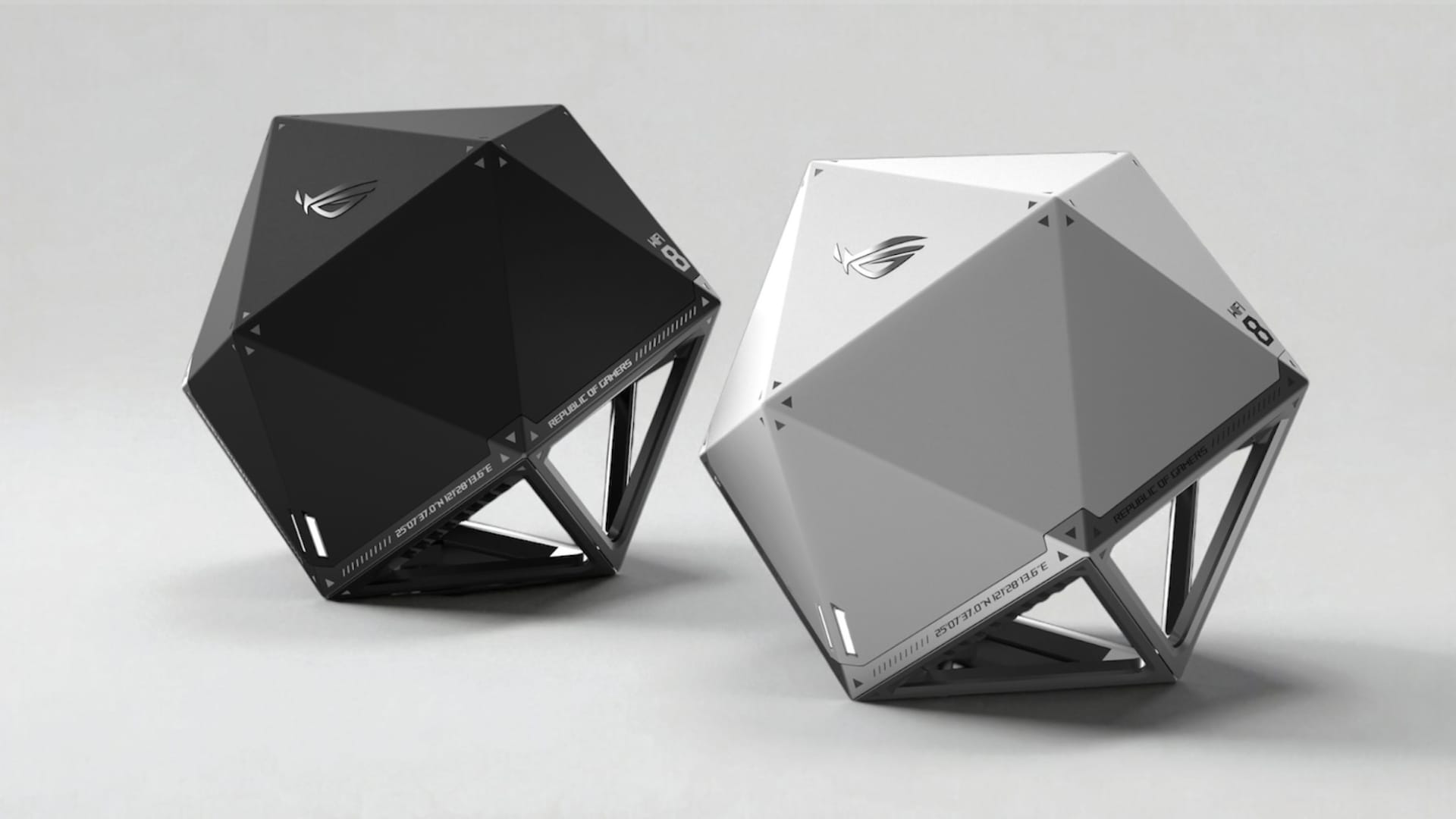
ASUS has unveiled the ROG NeoCore, a WiFi 8 concept router, alongside what it describes as the world’s first real-world WiFi 8 throughput test. Announced at CES 2026, the move signals a transition of WiFi 8 from specification to practical demonstration, with ASUS positioning the technology as a foundation for more reliable and intelligent connectivity suited to the AI era.
The company said the ROG NeoCore represents its first step into the WiFi 8 generation, with commercial WiFi 8 home routers and mesh systems planned for release in 2026. These products will be built on ASUS AiMesh technology and the ASUS AI Network Engine, aligning with ASUS’ broader goal of improving how wireless networks manage complexity as the number of connected devices continues to grow.
Rather than focusing on headline peak speeds, ASUS is highlighting consistency, coverage and responsiveness as the defining improvements of WiFi 8. The real-world testing was designed to show how the next-generation standard performs under practical conditions, where distance, interference and device density often have a greater impact on user experience than raw theoretical bandwidth.
Prioritising stability and everyday performance
ASUS is positioning WiFi 8 as a shift towards stability and reliability in daily use. According to the company, the new standard is designed to slow the rate of speed degradation as distance increases, helping to maintain more consistent connections whether routers are placed indoors, on rooftops or across larger properties.
Another area of focus is the growing number of low-power and intermittently connected devices found in smart homes and offices. WiFi 8 is designed to improve two-way communication for devices such as smart lighting systems and controllers, which often suffer from inconsistent connectivity on existing networks. ASUS said this approach aims to ensure that all connected devices can maintain stable links, not just high-performance endpoints.
Dense urban environments are also a key consideration. In apartment buildings and neighbourhoods where multiple routers operate within close proximity, signal interference can significantly affect performance. ASUS said WiFi 8 introduces more intelligent spectrum coordination to manage overlapping signals, helping to preserve stability even in crowded wireless conditions.
Network congestion is another challenge addressed by the new standard. Through improved spectrum efficiency and more dynamic scheduling, WiFi 8 routers are designed to make better use of available bandwidth, reducing latency and improving overall throughput during periods of heavy network activity.
Supporting AI-driven and multi-device ecosystems
ASUS believes WiFi 8 is particularly well suited to AI-driven applications that depend on predictable, low-latency connectivity. These include cloud-based services, real-time voice communication and multi-device gaming scenarios, where responsiveness and reliability are critical to the overall experience.
In its real-world comparison tests, ASUS evaluated performance differences between WiFi 7 and WiFi 8 under practical operating conditions. While theoretical maximum speeds remained unchanged, the company reported up to two times higher mid-range throughput, twice the coverage for IoT devices, and up to six times lower P99 latency. These gains were attributed to smarter coordination across multiple access points and connected clients, rather than increases in raw bandwidth.
Tenlong Deng, Corporate Vice President and General Manager of Wireless and Networking at ASUS, said WiFi 8 represents a change in priorities for wireless networking. “WiFi 8 is not just about chasing peak speed. It is about making every connection smarter and more reliable,” he said. He added that the technology is intended to support seamless collaboration between smart homes, AI assistants and cloud services, delivering consistent performance across different environments.
ASUS has a track record of early adoption of new WiFi standards, having previously brought WiFi 6, WiFi 6E and WiFi 7 products to market ahead of many competitors. With the debut of the ROG NeoCore and the first real-world WiFi 8 throughput test, the company is positioning itself at the forefront of the next generation of wireless networking.
ASUS said its first WiFi 8 home routers and mesh systems are scheduled to arrive in 2026, suggesting that widespread consumer adoption is still some distance away. However, the early demonstration indicates a broader industry shift towards reliability, coordination and latency control as the key measures of wireless performance in increasingly AI-driven environments.