


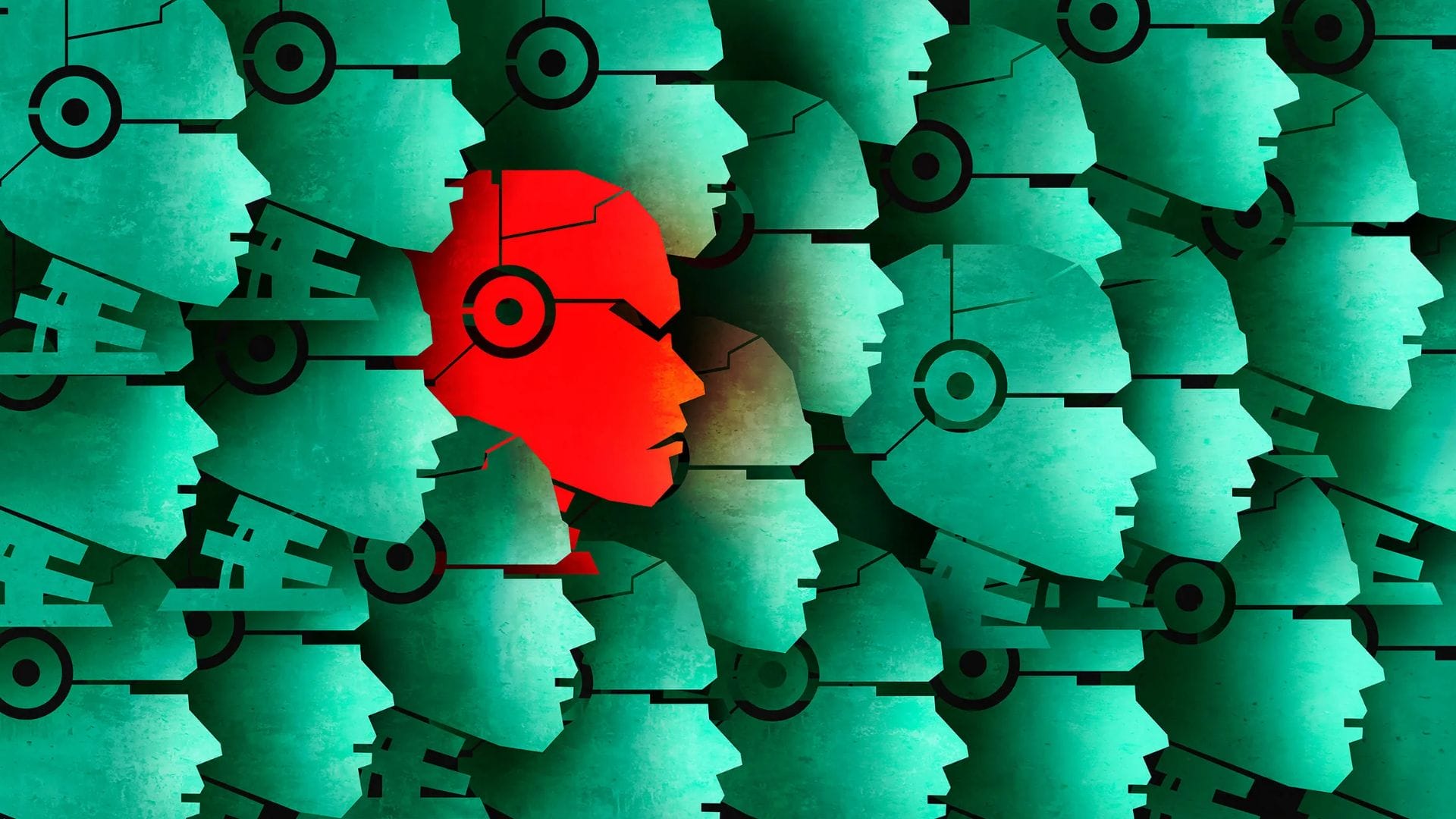
A new study co-authored by Google researchers challenges long-held ideas about how artificial intelligence systems reason and make decisions. Rather than following a single, linear path to an answer, some advanced AI models work through problems in a way that resembles group discussion and debate.
The research focuses on large reasoning models such as DeepSeek-R1 and Alibaba’s QwQ-32B. According to the findings, these systems do more than process information step by step. Instead, they generate and test multiple viewpoints internally before settling on a response, raising fresh questions about what intelligence inside a machine actually looks like.
The paper, titled Reasoning Models Generate Societies of Thought, was published on the preprint platform arXiv. It argues that modern reasoning models may be closer to a “society” of interacting ideas than a single stream of logic. This concept could shape the next phase of AI development.
AI reasoning as internal debate
The researchers suggest that when advanced models “think”, they may be running an internal debate that mirrors how groups of people solve complex problems. Instead of producing a single immediate answer, the models generate multiple perspectives that may conflict before being resolved.
This behaviour is described in the paper as an implicit “multi-agent” process. Although the model is technically a single system, it behaves as if multiple agents are contributing ideas, questioning assumptions and refining conclusions. The study refers to this as “perspective diversity”, meaning the system can hold and compare several lines of reasoning at once.
According to the authors, this internal diversity helps explain why some reasoning models perform better on complex tasks than earlier systems. By considering alternative interpretations and possible errors, the models are less likely to settle too quickly on a flawed answer. The process is similar to a group of colleagues challenging one another during a meeting to reach a stronger decision.
The research also notes that this behaviour is not explicitly programmed. Instead, it emerges from the way these models are trained and structured. As models become more capable, they organise their own internal processes to support reflection, self-correction and comparison between ideas.
Rethinking how smarter AI is built
For many years, the prevailing view in the technology industry was that improving AI performance mainly required larger models, more data and greater computing power. While scale remains important, the Google-led study suggests it is only part of the picture.
The findings indicate that how a model organises its reasoning may matter just as much as its size. The paper highlights the importance of “perspective shifts”, where the system effectively steps back from one line of thinking to explore another. This acts like an internal challenge function, forcing the model to reassess its assumptions.
This approach contrasts with earlier systems that often produced confident but incorrect answers. Those models tended to follow a single chain of logic, even when that logic was flawed. By comparison, a model that tests multiple viewpoints is better equipped to catch its own mistakes before presenting a final response.
The researchers argue that this shift could influence future AI design. Instead of focusing solely on expanding datasets and parameters, developers may pay more attention to encouraging structured internal diversity. This could lead to models that are not only more accurate but also more transparent in how they reach conclusions.
What this means for users and the future of AI
For everyday users, the implications of this research could be significant. AI systems that reason through internal debate may be better at handling ambiguous questions, incomplete information and real-world complexity. This could result in responses that feel more balanced and less rigid.
The study also suggests potential benefits for addressing bias. If a model naturally considers multiple perspectives, it may be less likely to remain trapped in a single, narrow viewpoint. While this does not eliminate bias on its own, it could form part of a broader strategy to build fairer and more reliable systems.
In practical terms, users may see AI tools that are more thoughtful and adaptable, rather than simply faster. These systems could provide answers that acknowledge uncertainty or explain trade-offs, reflecting a more “human” approach to problem-solving.
Ultimately, the research points towards a change in how artificial intelligence is understood. Rather than viewing AI as a powerful calculator, the study presents a vision of systems built around organised internal collaboration. If the idea of “collective intelligence” within a single model proves robust, it could serve as a foundation for the next major advances in the field.