

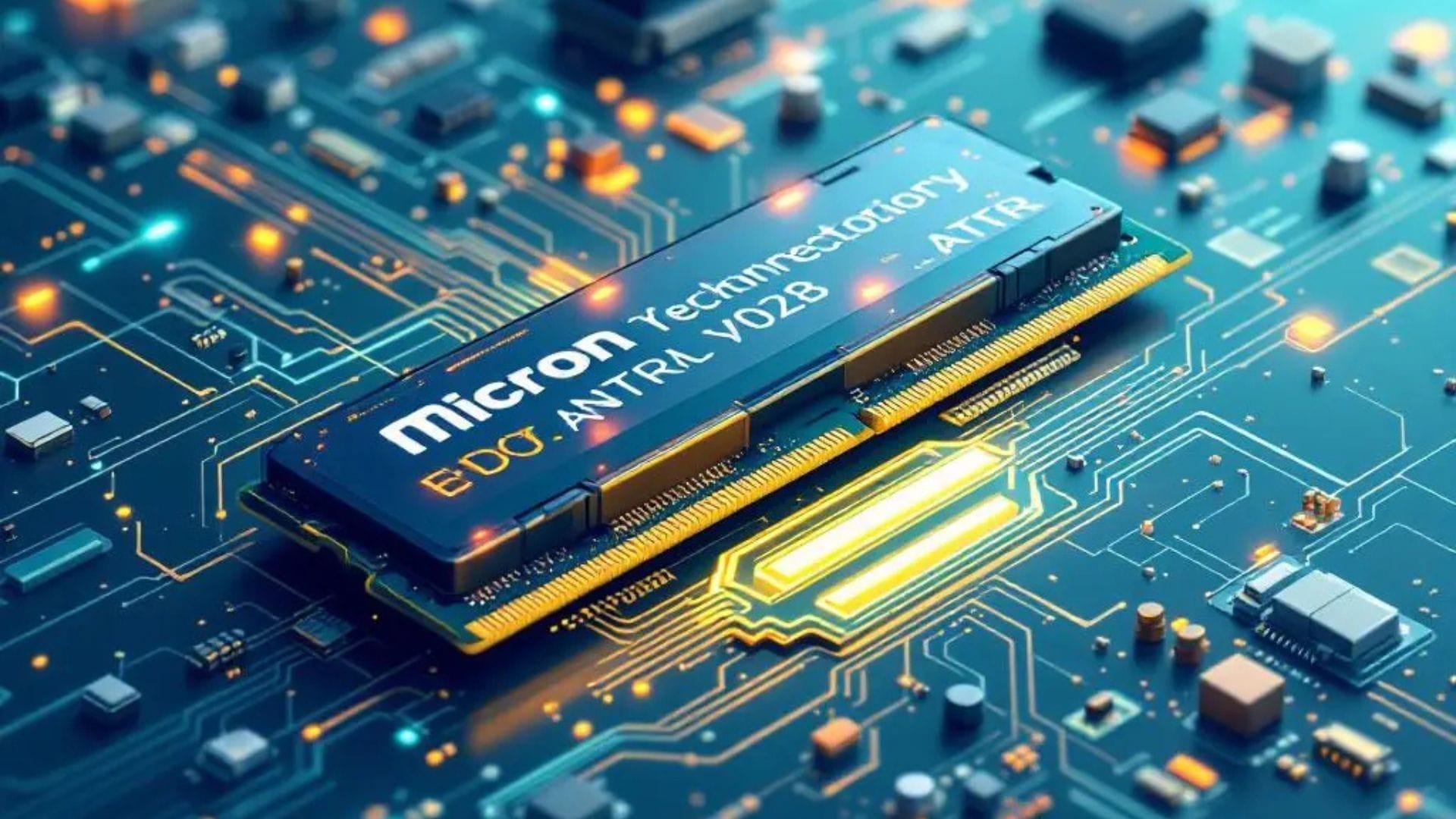
Micron Technology has confirmed that it will withdraw entirely from the global consumer memory and storage market by closing down its long-running Crucial business. The company plans to stop selling Crucial-branded products through retail and distribution channels by the end of its fiscal second quarter of 2026, which falls in February. Existing stock will continue shipping until that point, and customers will still receive warranty and support for all legacy Crucial hardware.
Micron’s decision brings nearly three decades of consumer-facing storage and memory products to a close. It also highlights a broader shift in the semiconductor industry, driven by soaring demand for high-performance memory for artificial intelligence systems and data centre infrastructure. As the company prepares to refocus its resources, analysts say that this marks more than the end of a popular consumer brand. It illustrates how major chipmakers are reorganising production capacity to meet the needs of an AI-driven market.
Micron refocuses on enterprise and AI growth
In its announcement, Micron explained that the company is moving investment and talent toward its expanding enterprise portfolio, where demand is growing at an exceptional pace. The firm is prioritising high-bandwidth memory, advanced DRAM, and high-performance SSD products, all of which have become essential for training and deploying large AI models. These components are also key to cloud services and large-scale server environments, sectors Micron sees as central to its future growth.
The company stated that AI workloads have become a decisive factor in the change of direction. Over the past two years, global demand for HBM has risen sharply, fuelled by data-centre operators racing to support larger and more complex generative AI systems. Micron is positioning itself to compete more aggressively in this space, where margins are higher and long-term contracts are more stable than in consumer retail.
Executives described the transition as a necessary realignment to match industry momentum. As the market for everyday PC memory matures and becomes more price-sensitive, enterprise-grade components have emerged as a stronger source of profit. Micron’s shift mirrors similar moves by other semiconductor companies, many of which are gradually reducing emphasis on consumer hardware in favour of data-centre products.
Impact on consumers and the PC hardware market
For PC builders, gamers, and small-business owners, the shutdown of Crucial’s consumer business raises immediate questions about availability, pricing, and long-term support. Crucial has been widely known for offering reliable and affordable system memory and SSDs, making it a go-to brand for users upgrading or building their own systems.
Micron has reassured customers that warranty and support services for Crucial products will remain in place beyond the end of retail operations. The company also says it will work closely with retailers and distributors to ensure a smooth phase-out of remaining stock. Even so, market watchers expect the withdrawal to influence pricing once supplies begin to decline.
Industry analysts note that Crucial’s exit could reduce competition in the budget and mid-range consumer memory categories. Other brands may attempt to fill the gap. Still, the speed at which production lines across the industry are shifting towards AI-oriented components suggests that the entire consumer segment may face tightening supply. As fewer manufacturers prioritise everyday PC parts, consumers may see slower product refresh cycles and fewer options at lower price points.
For enthusiasts who depend on a wide choice of memory modules and SSDs, this change may alter upgrade habits. Some analysts predict that more consumers will turn to pre-built systems or cloud-based computing as high-performance AI hardware draws production away from traditional components.
A broader shift in global supply chains
While Crucial represents a small share of Micron’s overall business today, the decision underscores a significant transformation in global semiconductor supply chains. Retail-level distribution of PC memory once accounted for a major share of the industry, but the rise of AI and cloud computing is reshaping priorities from the ground up.
Retailers and distributors who have long relied on consumer memory sales now face an evolving landscape. Many may need to adjust inventory strategies as manufacturers divert wafers, tooling, and engineering resources toward enterprise orders. With memory supply increasingly committed to AI-related components, the market for traditional DRAM and SATA or NVMe SSDs may become more constrained over the next several years.
Industry observers view Micron’s announcement as part of a wider pattern. As AI continues to dominate investment and development, the technology sector is seeing a clear shift in how hardware is produced, sold, and supported. Companies that once balanced both consumer and enterprise markets are now being driven toward specialised, high-value segments.
For Micron, the choice marks a decisive embrace of that future. The firm is betting that enterprise memory, cloud infrastructure, and AI acceleration technologies will define the next decade of growth. The closure of the Crucial consumer line may be the first visible sign of this realignment, but analysts believe similar moves across the industry are likely to follow.
For consumers, the transition serves as a reminder of how quickly technology priorities can change. The demands of large-scale computation are now overtaking products that were once cornerstones of the PC market. As Crucial’s presence winds down, its departure symbolises the end of an era — and the beginning of a new one shaped by artificial intelligence.