

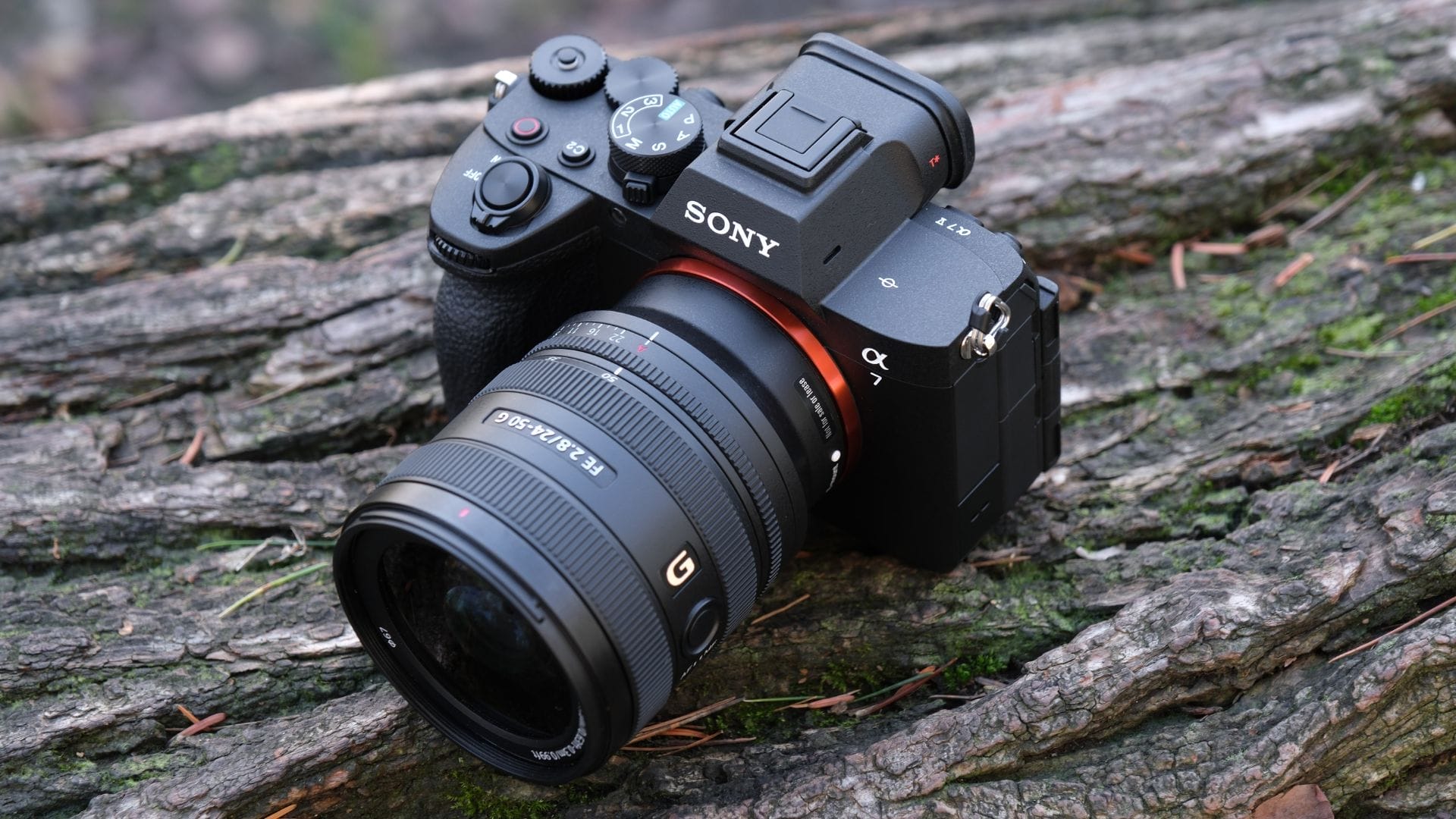
Sony has unveiled the A7 V, the long-awaited follow-up to the A7 IV. The new model arrives with notable upgrades to image quality, processing speed, and video capability, as the company aims to strengthen its position in the competitive hybrid camera market. With a refined design and updated internal hardware, the A7 V is an appealing choice for photographers and videographers who want higher performance without stepping into the more expensive professional range.
Updated sensor and processing power
The most significant change in the A7 V is its new 33-megapixel full-frame sensor. Sony has adopted a partially stacked structure for this generation, which enables faster data readout than traditional back-illuminated sensors. This design aims to reduce rolling shutter, improve responsiveness, and support higher-speed operations across both stills and video recording.
Paired with the sensor is Sony’s latest Bionz XR2 processor. The company has added a dedicated AI chip to handle advanced autofocus, subject detection, and auto white balance. Sony says this update should give users more consistent focus tracking, especially with difficult subjects or fast movement. The AI chip also enhances the camera’s ability to recognise a wider range of subjects, including animals, birds, vehicles, and people, under varied lighting conditions.
The A7 V’s five-axis in-body image stabilisation system has been enhanced, now offering up to 7.5 stops of compensation. This improvement is designed to help photographers achieve sharper handheld shots at slower shutter speeds, while also aiding videographers with smoother footage during motion or panning.
Familiar design with practical refinements
Sony has kept the overall look and handling of the A7 V close to its predecessor. The body size and control layout remain familiar to long-time Alpha users, although the grip has been slightly reshaped for better comfort during long shoots.
The rear screen has received a notable improvement. Borrowed from the A7R V, the fully articulating display now measures 3.2 inches and uses a higher-resolution 2.09-million-dot panel. This should provide clearer viewing for composition, playback, and menu navigation.
The electronic viewfinder maintains the 3.69-million-dot resolution of the previous model, but Sony has upgraded the refresh rate to 120Hz. This change offers a smoother experience when tracking movement or panning, making it easier to monitor fast-paced scenes.
Battery life improves thanks to improved power efficiency. The A7 V continues to use the widely adopted NP-FZ100 battery, but it now delivers up to 630 shots with the EVF and up to 750 with the rear LCD. For hybrid shooters who frequently switch between stills and video, this extended battery performance will be a practical advantage.
Storage flexibility also remains a key feature. The camera includes two memory card slots: one dedicated to SD cards and a second that accepts both SD cards and CFexpress Type A cards. This arrangement gives users the option to upgrade to faster media when needed, without requiring a full switch to CFexpress.
Expanded video features for creators
Sony has placed strong emphasis on video capabilities with the A7 V. The camera can record 4K footage at up to 60p using the full width of the sensor, allowing creators to capture detailed, sharp imagery without a crop. For users who need slow-motion options, the A7 V supports 4K recording at 120p, though this mode crops to APS-C.
The camera does not include open-gate recording, a feature some competitors have introduced for maximum flexibility in post-production. Even so, Sony has equipped the A7 V with a comprehensive range of ports designed for video professionals. These include a full-size HDMI port for external monitors or recorders, a headphone output, a microphone input, and dual USB-C ports for data transfer and continuous power supply.
Together, these changes position the A7 V well in the hybrid market. Its closest competitors include the Canon EOS R6 III, the Panasonic DC-S1 III, and the Nikon Z6 III. Sony appears determined to maintain its reputation for reliable autofocus, robust video features, and solid battery life, while adding refinements that appeal to both enthusiasts and working creators.
Availability and pricing details
Sony expects the A7 V to reach stores in late December. The body-only version will be priced at S$3,699. Customers who pre-order the camera before 31 December will also receive a complimentary 240GB CFexpress Type A card, valued at S$350.
With its updated sensor design, more powerful processor, and practical improvements in handling and battery life, the A7 V signals Sony’s ongoing effort to refine its mid-range full-frame line. Whether it can outpace its rivals will depend on real-world performance. Still, the specifications suggest a camera designed to meet the demands of diverse creators seeking a dependable all-rounder.