


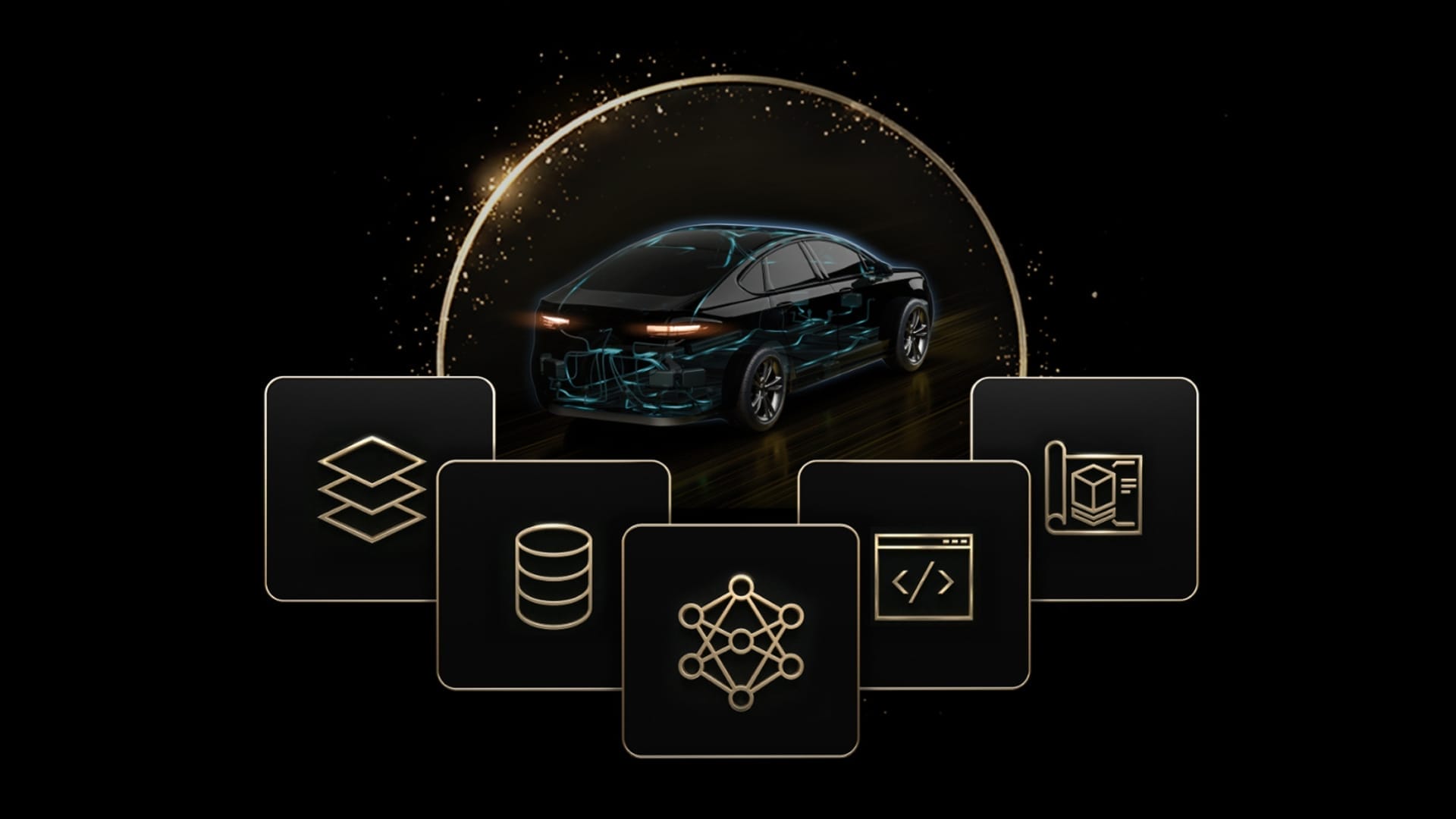
NVIDIA has announced the Alpamayo family of open artificial intelligence models, simulation tools and datasets aimed at accelerating the development of safer, reasoning-based autonomous vehicles. Revealed at CES, the initiative is positioned as a response to some of the most persistent challenges facing the autonomous vehicle sector, particularly the ability to handle rare and unpredictable driving scenarios with humanlike judgement.
Autonomous vehicles are expected to operate safely across an enormous variety of environments and conditions. While significant progress has been made in perception and planning systems, unusual or infrequent events, often described as long-tail scenarios, remain difficult to manage reliably. These situations range from unexpected pedestrian behaviour to uncommon road layouts and extreme weather, all of which can expose limitations in conventional approaches to autonomy.
Traditional autonomous driving systems typically separate perception, decision-making and planning into distinct components. While effective in many cases, this structure can struggle to scale when vehicles encounter situations that differ from their training data. End-to-end learning approaches have shown promise, but NVIDIA argues that achieving consistent safety in edge cases requires models that can reason about cause and effect rather than simply react to patterns.
The Alpamayo family is designed to address this gap by introducing reasoning-based vision language action models that can work through complex driving situations step by step. By incorporating chain-of-thought reasoning, these models aim to improve both driving performance and explainability, which NVIDIA sees as essential for building trust in autonomous systems and supporting large-scale deployment.
Jensen Huang, founder and chief executive officer of NVIDIA, described the launch as a turning point for physical AI. He said that Alpamayo enables autonomous vehicles to reason through rare scenarios, operate safely in complex environments and explain their decisions, laying the groundwork for scalable and trustworthy autonomy.
An open ecosystem built on models, simulation and data
At the core of the Alpamayo initiative is an open ecosystem that combines models, simulation frameworks and datasets into a unified foundation for autonomous vehicle development. Rather than running directly on vehicles, Alpamayo models are intended to act as large-scale teacher models. Developers can fine-tune and distil them into smaller, more efficient models that form part of a complete autonomous driving stack.
The first release in the family, Alpamayo 1, is positioned as the industry’s first open chain-of-thought reasoning vision language action model created specifically for the autonomous vehicle research community. Built on a 10-billion-parameter architecture, Alpamayo 1 uses video inputs to generate driving trajectories alongside reasoning traces that show the logic behind each decision. This approach is designed to help developers understand not just what a model decides, but why it makes those choices.
NVIDIA is making Alpamayo 1 available with open model weights and open-source inferencing scripts, allowing researchers and developers to adapt the model for their own use cases. The company said future versions will expand on this foundation with larger parameter counts, more detailed reasoning capabilities, greater flexibility in inputs and outputs, and options suitable for commercial deployment.
Complementing the model is AlpaSim, an open-source, end-to-end simulation framework intended to support high-fidelity autonomous vehicle development. The framework includes realistic sensor modelling, configurable traffic behaviour and scalable closed-loop testing environments. These features are designed to enable rapid validation and refinement of driving policies before they are deployed in real-world conditions.
The third pillar of the Alpamayo family is a set of Physical AI Open Datasets. NVIDIA said these datasets represent one of the most diverse large-scale collections of autonomous driving data made openly available, comprising more than 1,700 hours of driving footage gathered across a wide range of geographies and conditions. The dataset is designed to capture rare and complex edge cases that are critical for training and evaluating reasoning-based models.
Together, the model, simulation framework and datasets are intended to form a self-reinforcing development loop. Developers can train and refine reasoning models using real-world data, test and validate them in simulation, and then feed insights back into further model improvement, all within an open and collaborative environment.
Industry and research backing for level 4 autonomy
NVIDIA said the Alpamayo family has attracted interest from both industry players and the research community as they work towards level 4 autonomous driving, where vehicles can operate without human intervention in defined conditions. Companies such as Lucid, JLR and Uber, alongside academic groups including Berkeley DeepDrive, have indicated support for the approach.
Kai Stepper, vice president of advanced driver assistance systems and autonomous driving at Lucid Motors, said the shift towards physical AI underscores the need for systems that can reason about real-world behaviour rather than simply process data. He noted that advanced simulation environments, rich datasets and reasoning models are becoming increasingly important as the industry evolves.
From an automotive engineering perspective, JLR emphasised the importance of transparency and openness. Thomas Müller, executive director of product engineering at the company, said that open-sourcing models like Alpamayo helps accelerate responsible innovation by giving developers and researchers new tools to address complex real-world scenarios more safely.
Uber highlighted the challenge of long-tail and unpredictable driving situations as a defining issue for autonomy. Sarfraz Maredia, global head of autonomous mobility and delivery at the company, said Alpamayo creates new opportunities to accelerate physical AI development, improve transparency and support safer level 4 deployments.
Analysts also see the open nature of Alpamayo as a catalyst for broader industry progress. Owen Chen, senior principal analyst at S&P Global, said the model enables vehicles to interpret complex environments, anticipate novel situations and make safe decisions even when encountering scenarios they have not seen before. He added that open-source access allows partners to adapt and refine the technology to meet their specific needs.
From a research standpoint, Berkeley DeepDrive described the launch as a significant step forward. Codirector Wei Zhan said making the Alpamayo portfolio openly available gives researchers access to unprecedented scale and flexibility, enabling new approaches to training and evaluation that could help push autonomous driving closer to mainstream adoption.
Beyond the Alpamayo family itself, NVIDIA noted that developers can integrate these tools with its broader ecosystem, including platforms such as Cosmos and Omniverse. Models can be fine-tuned using proprietary fleet data, integrated into the DRIVE Hyperion architecture built on DRIVE AGX Thor compute, and validated extensively in simulation before being deployed commercially. This end-to-end workflow is intended to support safer, more robust and more scalable autonomous vehicle systems.