

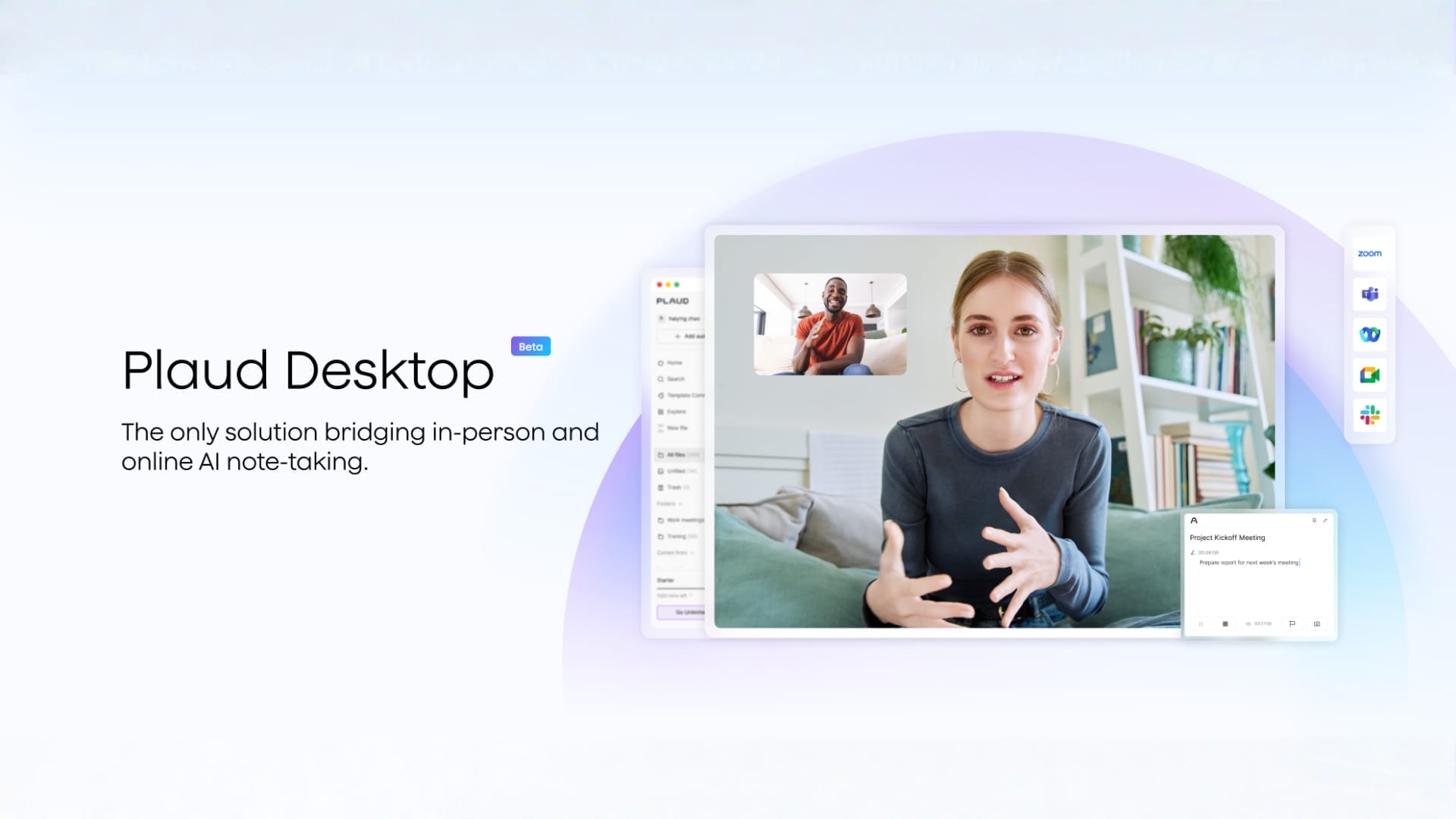
Plaud has announced the launch of Plaud Desktop in Singapore and across the Asia-Pacific region, positioning it as an extension of its AI-powered note-taking ecosystem for professionals working across both physical and virtual environments. The new desktop application is designed to bring online meetings into the same workflow as in-person conversations and phone calls, addressing the growing complexity of hybrid and distributed work.
The company said Plaud Desktop builds on its core aim of creating a single system that captures, organises, and converts conversations into usable insights. With more professionals relying on a mix of face-to-face discussions and online meetings, Plaud Desktop is positioned as a way to reduce fragmented notes and disconnected tools. The launch expands Plaud’s existing mobile and web offerings by enabling native capture of online conversations without relying on intrusive meeting bots.
Plaud stated that the desktop application is designed to operate quietly in the background, allowing users to remain focused on discussions rather than managing recording tools. Conversations captured through Plaud Desktop are synchronised with Plaud App and Plaud Web, creating a continuous and centralised record of work regardless of where a meeting takes place. This approach reflects the company’s view that conversation intelligence should adapt to how professionals already work, rather than forcing changes in behaviour or workflow.
Smart meeting detection without intrusive bots
A core feature of Plaud Desktop is its smart meeting detection capability, which identifies when an online meeting is active by analysing changes in a computer’s microphone or system audio. The system is designed to recognise meetings across widely used conferencing platforms such as Zoom, Google Meet, Microsoft Teams, Slack, and other meeting calls, without requiring the presence of a recording bot in the session.
According to Plaud, this bot-free approach is intended to reduce friction and maintain a more natural meeting experience. Recording only takes place when explicitly enabled by the user, reflecting the company’s consent-first design philosophy. Plaud emphasised that none of its products initiate recording automatically, a stance aimed at meeting the expectations of privacy-conscious professionals and organisations in Singapore and across the wider Asia-Pacific region.
In addition to audio capture, Plaud Desktop supports multimodal inputs, allowing users to collect text notes, highlights, and screenshots during meetings. These elements are captured in real time and preserved alongside the audio record, helping to maintain context that is often lost in traditional meeting notes. By combining multiple layers of information, Plaud aims to create a more complete and reliable representation of professional conversations, particularly in complex or fast-paced discussions.
Unifying workflows and availability across devices
Plaud positions Plaud Desktop as a key step towards unifying in-person and online workflows within a single platform. By consolidating conversations from different settings, the company said professionals can avoid gaps in documentation and reduce the risk of losing important details across tools and devices. The desktop application is powered by Plaud Intelligence, which underpins the company’s broader ambition to turn conversations into actionable intelligence rather than static transcripts.
Nathan Xu, co-founder and chief executive officer of Plaud, said the company’s focus has been on designing a system that works naturally across different communication scenarios. He said, “What sets Plaud apart is our design to work seamlessly across all scenarios — in person, over the phone, or on screen. That’s how intelligence naturally flows. Our mission is to amplify human intelligence, and Plaud Desktop is a key step in delivering that promise for professionals globally, including across Asia-Pacific.”
Early users have highlighted the ability to remain engaged during meetings while relying on the system to handle documentation. Jeff Allen, a senior economic specialist, said Plaud Desktop allows him to stay present during discussions while ensuring that key points are captured accurately. Plaud said this balance between attention and automation is central to its design approach, particularly for knowledge workers who participate in frequent meetings.
Plaud Desktop is currently available at no additional cost to users who already own a Plaud AI note-taking device, including Plaud Note, Plaud Note Pro, or Plaud NotePin. The company noted that the device does not need to be connected to the Plaud App while using Plaud Desktop, although new users are required to complete device binding through the app before accessing the desktop software. Plaud is incorporated in Delaware and based in San Francisco, and said it remains committed to high standards of data security and privacy, with compliance across multiple international frameworks.