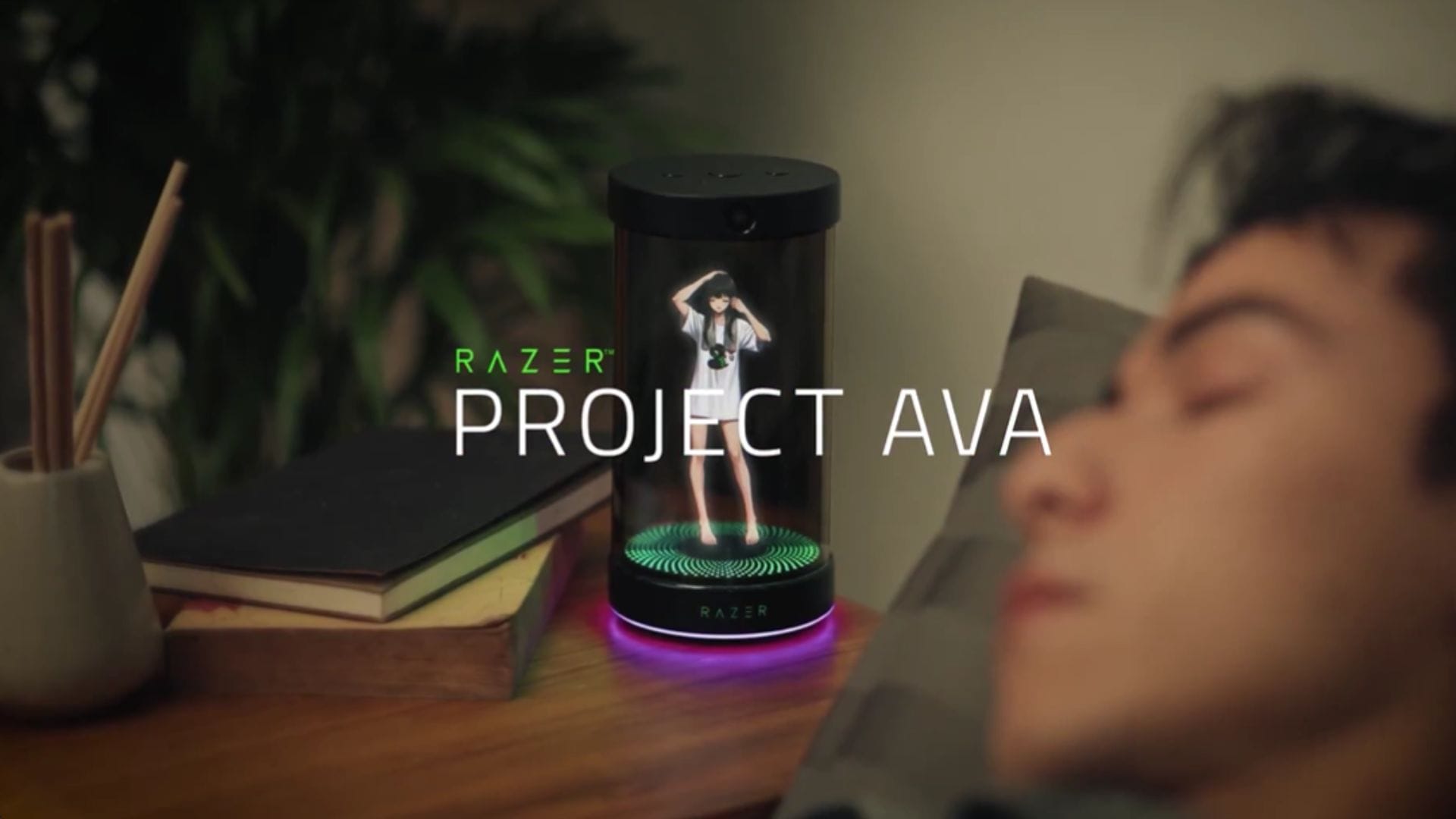
Razer has offered a first look at ProjectAva, an AI-powered desk companion designed to sit beside a PC keyboard and remain active throughout the day. First shown at CES 2026, the device is intended to support work, personal organisation and gaming, presenting itself as a constant on-screen presence rather than a background app.
The company positions Project Ava as a blend of hardware and software, built to observe what is happening on a PC and respond in real time. Razer says its goal is to create an assistant that can seamlessly move between productivity tasks and gaming, adjusting its role as the user switches between them.
A holographic companion built for the PC desk
Project Ava is built around a 5.5-inch holographic display that projects a 3D avatar that appears to stand on the desk. Razer describes the device as a dedicated companion rather than a general-purpose tablet or smart display, with its form factor optimised for use alongside a Windows PC.
The hardware includes dual far-field microphones, an HD camera and an ambient light sensor, all intended to help the system understand its surroundings. A wired USB-C connection provides both power and data, allowing Ava to analyse on-screen activity with low latency. Razer refers to this screen awareness as “PC Vision Mode”, which is designed to let the assistant see what the user sees without the delays common to cloud-based tools.
Razer is currently demonstrating Project Ava using xAI’s Grok engine. However, the company says the system is built on an open architecture that will support other AI platforms in the future. This approach suggests flexibility, but it also leaves questions about long-term software support and feature consistency across different AI back ends.
Reservations are open in the US, with a refundable US$20 deposit applied to the final purchase. Razer is targeting availability in the second half of 2026, although pricing and regional launch plans have not yet been confirmed.
Live coaching designed to sharpen in-game performance
Gaming is central to Project Ava’s pitch, with Razer highlighting live, context-aware coaching as its most distinctive feature. During demonstrations, the assistant offers tactical advice in real time, such as when to call in support, where to aim and when to reposition during a fight. The idea is to provide guidance that responds to what is happening on-screen, rather than generic tips delivered after a match.
Razer is careful to frame this functionality as coaching rather than automation. The company says Project Ava is intended to act as a coach and trainer, not an automation tool, and that it is working to ensure features remain aligned with individual game terms of service. Competitive rules differ widely between titles, and the line between advice and unfair assistance can be thin.
How this guidance is delivered will be critical to its acceptance. Visual prompts, spoken suggestions and timing all play a role in whether the system feels helpful or intrusive. Razer has not yet published a confirmed list of supported games, nor detailed how developers are involved in approving or enabling Ava’s features within their titles.
For players interested in competitive gaming, these unanswered questions may matter as much as the technology itself. Without clear assurances from publishers and tournament organisers, even well-intentioned coaching tools can face resistance.
A broader assistant with privacy questions still to answer
Beyond games, Project Ava is positioned as a general AI assistant for daily life. Razer has shown it can manage calendars, suggest outfits, plan meals, and track habits and moods. The company also presents Ava as a work brainstorming partner, capable of helping users explore creative ideas or break down complex problems.
This always-on approach is part of the product’s appeal, but it also raises concerns. A desk companion equipped with a camera and microphones needs clear and transparent controls. Razer has yet to fully explain what data is processed locally, what is stored, and what can be entirely turned off by the user.
Avatar customisation is another area still under development. Razer has demonstrated swappable holographic characters with eye tracking and facial expressions, but says both avatar selection and animations are evolving. The final experience may look and feel different from early demos.
As Project Ava moves towards launch, potential buyers are likely to focus on two areas: privacy and clarity. A detailed breakdown of sensor use, opt-out options and data handling will be essential, as will a clear explanation of how in-game advice works across different titles. Until pricing and privacy details are finalised, the US$20 reservation is best seen as a low-risk placeholder rather than a commitment.