


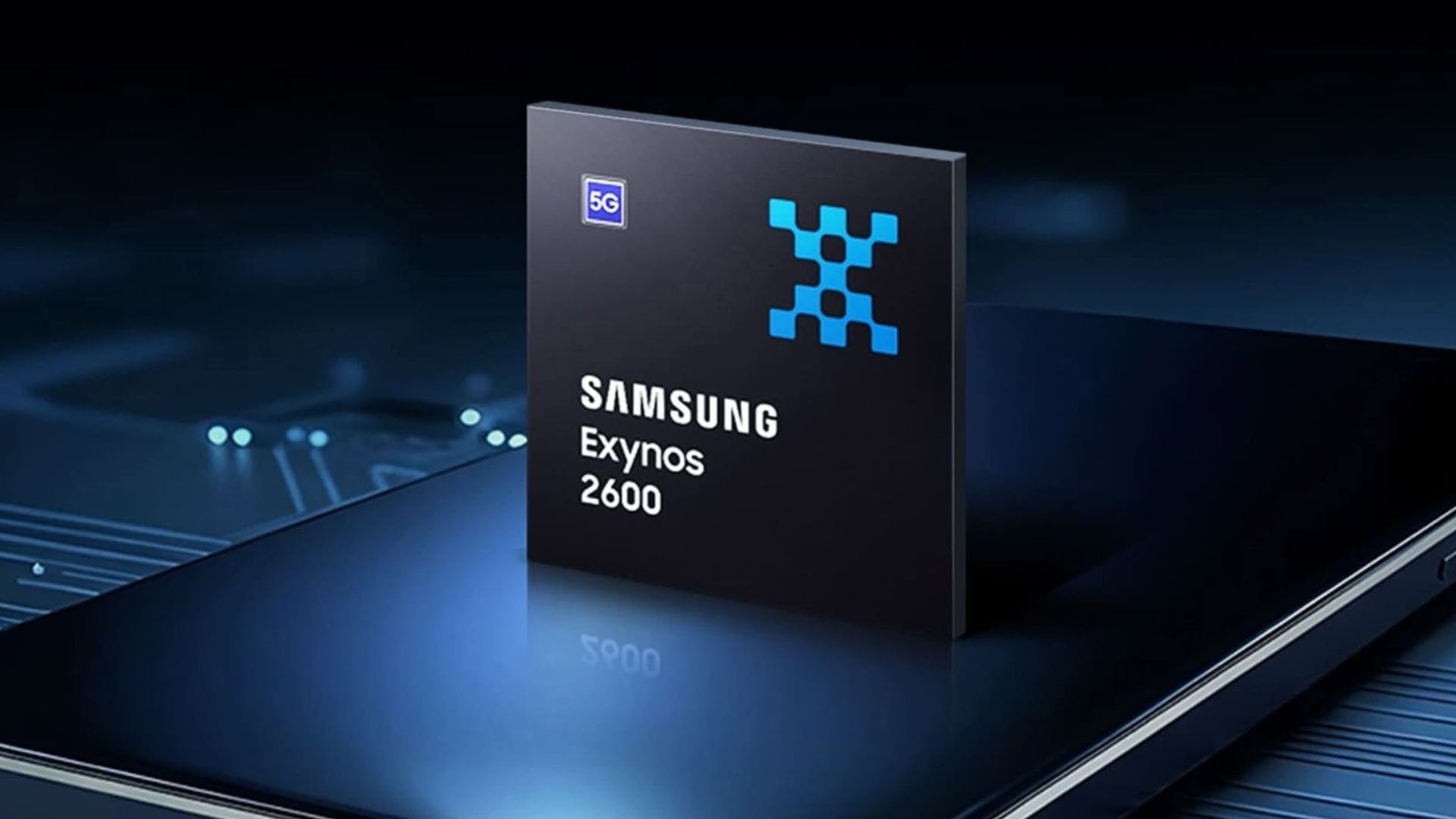
Samsung has revealed the Exynos 2600, a new mobile processor that the company says is the world’s first to be built using a 2nm manufacturing process. The chip is expected to make its commercial debut in the Galaxy S26 smartphone series, which is widely tipped to launch in early 2026. With this announcement, Samsung positions itself at the forefront of next-generation mobile silicon, promising major gains in performance, efficiency and on-device artificial intelligence.
The Exynos 2600 is produced using Samsung’s latest Gate-All-Around process, a technology designed to improve power control and transistor performance as chip sizes continue to shrink. By moving to 2nm, Samsung aims to deliver faster processing speeds while reducing power consumption, an increasingly important balance as smartphones take on more demanding tasks such as generative AI, advanced photography and console-style gaming.
A new CPU design built for performance and efficiency
At the heart of the Exynos 2600 is a 10-core central processing unit based on the ARM v9.3 architecture. Samsung has adopted a three-tier core structure that separates peak performance tasks from everyday background activity. This design is intended to deliver strong performance when needed, without placing unnecessary strain on battery life during lighter use.
The processor includes a single prime core designed for maximum speed and responsiveness. This top-tier core runs at up to 3.8GHz and is intended to handle the most demanding tasks, such as launching heavy apps, performing complex calculations, and handling short bursts of intense processing. Samsung says this core delivers higher instructions per clock, which should translate into smoother performance and quicker response times in real-world use.
Supporting the prime core are three high-performance mid cores, each clocked at up to 3.25GHz. These cores are designed to handle sustained workloads that benefit from parallel processing, such as multitasking, video editing and advanced gaming. By spreading tasks across multiple high-performance cores, the chip can maintain high output without relying entirely on the prime core, helping manage heat and power consumption.
The remaining six cores are focused on efficiency rather than raw speed. Running at up to 2.75GHz, these high-efficiency cores manage background processes and everyday system tasks. Their role is to keep the phone running smoothly during routine activities such as messaging, browsing and media playback, while minimising energy consumption.
Samsung has also paid close attention to thermal performance, which becomes more challenging as chips grow more powerful. To address this, the Exynos 2600 uses a Heat Path Block design combined with High-k EMC materials. This approach is intended to improve heat dissipation from critical components, enabling the processor to sustain high performance for longer periods without overheating or throttling.
A stronger focus on on-device AI
One of the most notable upgrades in the Exynos 2600 is its new neural processing unit. Samsung has redesigned the NPU architecture to improve efficiency when handling generative AI tasks, while also reducing power consumption and latency. This reflects a broader shift across the industry towards running more AI features directly on the device, rather than relying on cloud processing.
According to Samsung, the Exynos 2600 delivers up to 39% better CPU performance compared to its predecessor. More strikingly, it offers a 113% improvement in generative AI workloads. These gains suggest that future Galaxy devices could support more advanced AI features, such as real-time language processing, image generation and intelligent personalisation, all without compromising battery life.
The improved AI performance is expected to feed directly into Samsung’s Galaxy AI feature suite. While the company has not yet detailed specific new features tied to the Exynos 2600, the increased processing headroom could allow for more complex on-device models and faster response times. This is particularly relevant as rivals continue to invest heavily in their own AI capabilities, thereby raising consumer expectations.
Samsung’s focus on reducing latency is also significant. Faster AI processing on the device can lead to more natural interactions, whether that involves voice commands, camera enhancements or contextual suggestions. By handling these tasks locally, devices can also offer improved privacy, as sensitive data does not need to be sent to external servers.
Commercial debut expected with Galaxy S26
The Exynos 2600 is widely expected to power the Samsung Galaxy S26 series, which is rumoured to launch in February 2026. If this timeline holds, Samsung would become the first company to ship a 2nm mobile chip in a commercial product. This would give it a notable lead over competitors, including Apple, which is anticipated to introduce its own 2nm chips in the second half of 2026.
The move to 2nm is not just about prestige. Smaller process nodes typically allow for more transistors to be packed into the same space, improving performance and efficiency. However, they also present significant manufacturing challenges, particularly in terms of yield and cost. Samsung’s decision to announce the Exynos 2600 at this stage suggests confidence in its production capabilities and its Gate-All-Around process.
It remains to be seen how widely the Exynos 2600 will be used across Samsung’s flagship range. In recent years, Samsung has adopted a mixed strategy, using its own Exynos chips in some regions while relying on third-party processors in others. The performance and efficiency gains promised by the Exynos 2600 could influence how the company approaches this strategy for the Galaxy S26 generation.
For consumers, the announcement signals a continued push towards more powerful and intelligent smartphones. As mobile devices take on roles once reserved for laptops and desktops, advancements in chip design play a critical role in shaping the user experience. With the Exynos 2600, Samsung is betting that on-device AI and sustained performance will be key differentiators in the next wave of flagship phones.
If Samsung can deliver on its claims, the Exynos 2600 could mark a significant milestone in mobile computing. Its arrival would not only set a new benchmark for manufacturing technology but also highlight the growing importance of AI-focused performance in everyday devices.